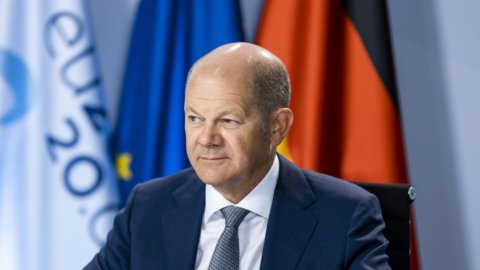
In an expected and inevitable move, the German president Frank-Walter Steinmeier officially Bundestag dissolved, fixing for the Early elections on February 23 in Germany. “In difficult times like these,” the head of state declared with his usual gravity, “it is essential to have a government capable of acting and a reliable majority in Parliament.” Words that mark the beginning of a new political chapter, after weeks of uncertainty and a government crisis that has shaken the country.
Germany: The political crisis that led to early elections
The political crisis that led to the German President's decision is started on November 6th, when the coalition government – composed of the SPD, the Greens and the Liberals – is collapsed due to the exit of the liberals (FDP), caused by the disagreements with the chancellor Olaf Scholz. On December 16, Scholz lost vote of confidence in Parliament, paving the way for new elections. At that point, President Steinmeier had to formalize the process with a swift decision.
What does the German Constitution say about the dissolution of Parliament?
German law is clear: according to the article 68, the president can dissolve the Bundestag at the proposal of the chancellor if the latter is censured, but he must do so within 21 days. Steinmeier, however, did not use all the time available to him. After consulting the leaders of the parliamentary groups, he decided to grant Scholz's request, setting the date of the vote. The Constitution stipulates that new elections must be held within 60 days of the dissolution of Parliament, and February 23 is the official date.
Early elections: a necessary path
With a government now without a stable majority, early elections are the only way forward resolve the crisis and restore stability to the country. Steinmeier stressed that early elections are “the right path for the good of the country.” The president also called for mutual respect between parties during the election campaign, warning against violence, which he called “poison for democracy.”
Scholz's popularity at an all-time low
As Germany prepares to go to the polls, Scholz is located with a popularity at an all-time low, the result of months of instability and disagreements within his coalition. Despite this, the leaders of the Social Democrats (SPD) have chosen to confirm him as a candidate for the next elections, in an attempt to maintain the leadership of the government. This decision could prove a challenge, considering the crisis of confidence that has engulfed the chancellor and the growing dissatisfaction among voters.