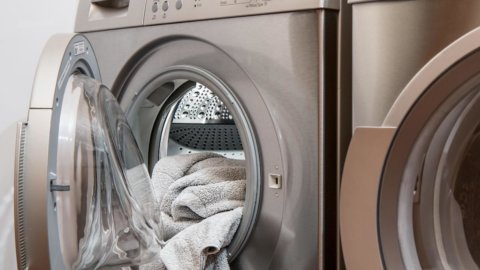
Over 3,5 billion euros in turnover, in the first places worldwide for exports, a considerable quantity of innovations and patents and, above all, the backbone of the entire sector of Italian domestic and professional appliances (19 billion and 12 of exports in 2022). This is Italian components for domestic technology, a sector of true manufacturing excellence. For decades now, finished product companies have in fact transferred the strategic role of research to component manufacturers in order to cut costs. And it is from the 19 billion and above all from the 3,5 billion of component manufacturers that the Minister of Business and Made in Italy Adolfo Urso should start to build the contents, motivations and programs necessary to enforce, in the face of probable sell-offs of the Made in Italy sector, the Golden Power. Because if this patrol of subcontractors of excellence collapses, the entire white sector risks a lot and thousands and thousands of jobs will be lost.
Appliances: the decline with the multinationals
A few decades ago, as resulted from the investigations of the Sole24Ore, this subcontract it was worth at least double. In reconstructing, for the first time, the completely unknown history of this sector, it clearly emerges that the arrival in Italy of multinationals - above all from overseas - has held back technological innovation, on the wave - as is well known - of the progressive financialization of these giants. The role of non-Italian CEOs in this progressive decline of Italian R&D centers has been decisive cutting the best skills and therefore not a few production sites. Only from Whirlpool an entire generation of super-experts, top managers and international-level designers has left or been forced to leave – as Firstonline has revealed – in just a few years, including the vice-president Yannick Fierling (now CEO of Haier Europe). With the acquisition of Indesit in 2014, after stealing it from Electrolux and the Chinese Changong, the Americans found themselves a treasure trove of pan-European and global brands such as Indesit, Hotpoint, Ariston, Ignis e Scholtès. Which they didn't know or didn't want to value.
Record-breaking components, Applia data on household appliance subcontracting
All this has also had serious consequences on the subcontracting chain impoverishing what was left of the entire supply chain. What is the consistency of these SMEs? Firstonline, thanks to Apply Italy, the reference Confindustria association which has the merit of having reconstructed and contextualized this strategic sector, is able to reveal some data of this sector. "It's a a role of absolute importance – he declares Marco Imparato, general manager of Applia Italia – this one from the Italian component supply chain, with a largely positive trade balance (more than one billion euro) and a production value of second place overall in Europe behind only Germany, and capable of adding value to finished products of both domestic and foreign manufacture sold mainly on the Italian and European markets”.
In fact, the manufacturing of subcontracting alone with its 3,5 billion it feeds and makes factories work, not only in Italy but also those - the best - Chinese, European, American in the sector because it has built, in its historic districts, since the 60s, a tradition of unparalleled skills, flexibility and reliability. In 2022 Italy was positioned at 4th place in the ranking of the main world producing countries of the sector, behind China, the United States and Germany and confirmed its position as the 3rd world exporter of the sector, preceded only by China and Germany. And, again in 2022, the sector reached an all-time high in euro values; even if, in terms of quantities (tonnes) the production of the sector was downsized last year (-8.4% compared to 2021), on levels in any case higher than the pre-pandemic levels.
Record-breaking Italian and increasingly international SMEs
The opening of a new factory of high-end and medium-high-end household appliances, wherever the company and the country is, is possible if the robotic production lines and the "vital" components of the appliances and often also the design come from these pool of Italian SMEs that have sophisticated, often unique and constantly evolving specializations. The intrinsic quality of a washing machine, a fridge or a hob of the best brands is guaranteed by the presence of equipment, parts and components from Italian districts. Thus, after the crises of the 90s and 2000s, after the contraction of Italian orders, these SMEs have reversed the trend, have become even more international - without relocating - proposing not the cheapest solutions but customized ones in a framework of inimitable flexibility increasing the added value of the proposals, both of products and services. And with particularly high digitization levels. Also because getting to export even 80 percent, as happens more and more often, requires continuous technological updates. The costs of raw materials and energy have also accelerated the process of eco-sustainability and manufacturing efficiency.
Some examples: the leading companies from Campania to Lombardy
The Campania company Pasell, of the Amitrano family, specializes in the production of a fundamental component of washing without which centrifugation would not be possible: the special cement counterweight system. It has become, despite its 36 million euro turnover, the European No. 1 in the sector, and among the international No. 1s. In the constant search for innovation, it has transformed a shapeless mass of stone and recycled plastics into a "talking" stone, an IoT, for remote diagnosis ... The Milanese Rold has established itself as a specialist in an important safety component, the door lock of washing appliances and today 5 out of 10 washing machines worldwide are equipped with this Rold device. And the same goes for dryers, fridges, dishwashers, ovens as well as for professional appliances. Exports reached 85 percent; the company is among the most advanced on the path of digital transformation and innovation. It recently invested 2 billion in the official opening of its spaces and laboratories within the prestigious MIND (Milan Innovation District) where it also already operated as an R-Lab start-up incubator. Because many of these globalized SMEs are ahead of medium and large companies in creating networks, joint ventures and strategic partnerships in the area.
Another example is Lombard CIMA-Belfin which, starting from the construction of special sophisticated steel springs for the suspension of washing machine tubs, has also expanded the range of applications to the automotive sector with customers such as Ferrari. With its seven plants, one of which also in China and with solid collaborations with international research centers and universities, it represents one of the fastest growing companies of the sector.