In the world ofartificial intelligence the question is no longer just which model is more powerful: the real question is who decides how to use it. Around this question the debate has been sparked clash between Anthropic and the Pentagon, with the company of Dario Amodei which has resisted requests from the Department of Defense to remove ethical constraints from its systems, and the White House which has classified Claude as a national security risk. In just a few weeks, the dispute has embroiled federal courts, major tech companies, and millions of users, becoming a landmark case on the private sector's role in controlling artificial intelligence.
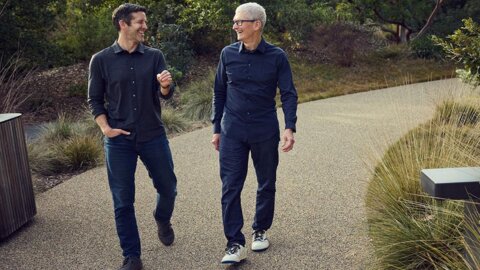
In the background, it also moves OpenAIThe rivalry between Amodei and Sam altman, already well-known in Silicon Valley circles, gained global visibility in February in New Delhi when the two CEOs refused to shake hands in front of Prime Minister Narendra Modi. That simple yet symbolic gesture transformed a private tension into a political and media incident, highlighting that the battle between Claude and ChatGpt is not just about technology, but also about who sets the rules, who controls users, and who decides how AI is used, both in civilian and military settings.
Anthropic vs. the Pentagon: The Choice That Made the Case Explode
The crisis' starting point is the relationship between Anthropic and the Pentagon. Founded by former OpenAI researchers, the company led by Amodei has built its identity around a clear principle: AI models must have limits defined before being used.
When the US Department of Defense he asked about expand the use of systems The San Francisco startup's involvement in military programs has been partial. The company has accepted some collaborations, but has imposed two specific conditions: no AI for mass surveillance and no integration into autonomous weapons without human control.
For Anthropic, these clauses are non-negotiable. For the Pentagon, they represent an operational constraint. This is where the rift arises: the Department of Defense has threatened to revoke a 200 million contract of dollars and imposed a 48 hour ultimatum to get unlimited access to Claude. Amodei refused, declaring that he would be willing to forgo a nine-figure paycheck rather than compromise the company's principles.
The White House's response
The reaction of the White House led by Donald Trump was not long in coming: Anthropic was classified as “risk to the technology supply chain“, a measure normally reserved for foreign companies considered a threat to national security, which has led to exclusion from public contracts and the progressive removal of company systems from federal structuresIn this context, agencies such as the Treasury, State, and Health have replaced Claude with competing platforms, including ChatGpt and Gemini, while the State Department's internal chatbot, StateChat, has switched to OpenAI's Gpt-4.1. Trump has called Anthropic a company run by "left-wing fanatics" and accused the company of trying to impose ideological limits on the development of artificial intelligence, arguing that strategic decisions should remain the prerogative of the state.
Yet, the facts show a more nuanced reality: according to sources of the Wall Street Journal, Claude was also used by the Pentagon in planning the attacks against Iran, despite the presidential ban. Previously, according to the wsj, the technology had been used in the special mission that led to the capture of the Venezuelan president Nicolás Maduro in early January, confirming how these systems are now integrated into strategic military operations.
The cause and the Microsoft twist
Anthropic reacted on two fronts: it started a legal action against the Trump administration for challenge the classification as a national risk and launched tools that allow users to easily migrate from ChatGpt to Claude, strengthening the model's reputation as a safe and independent AI. The strategy appears to have worked: Claude has seen a sharp increase in downloads and new users.
The real twist comes when ecosystem, former senior military officials and AI think tanks, including Michael Hayden, former CIA director, have supported Anthropic, denouncing government abuse of power and the risks to the tech industry and operations like the war in Iran. Microsoft emphasizes that the "supply chain risk" label can have serious economic consequences and reiterates that AI should not be used for mass surveillance or uncontrolled conflict. This surprising position is reinforced by the fact that the Redmond company has been OpenAI's main industry partner for years. But in recent months, the company has also begun integrating Anthropic's models into its own services.
The rationale is clear: no company wants to be associated with incidents or human rights violations, and ethical rhetoric offers valuable reputational protection.
The Opportunity for OpenAI
Meanwhile, the clash between Anthropic and the American government opens up a space that OpenAI is quick to occupy. The company led by Altman quickly sign a agreement with the Pentagon to provide artificial intelligence systems for national security. It's a strategic move: it means entering a multi-billion dollar market and strengthening the relationship with the U.S. government. The move, however, hasn't gone unnoticed within the company. Some employees have protested, fearing that AI could be used for surveillance or controversial military operations, even causing the resignation of responsible of robotics after the agreement with the Pentagon. In the following weeks, Altman admitted that the agreement had been signed too hastily and called for renegotiate some conditions.
The game of ethics
The controversy brings back to the fore a topic that has been discussed for years: Who sets the limits of artificial intelligence? Anthropic argues that manufacturers should set clear rules before distribution, while the government considers these systems strategic tools that cannot be unilaterally restricted. Other Big Tech companies are maneuvering in the middle, weighing political pressure, economic interests, and social concerns.
However, it's not just a matter of ethics. Anthropic's choice to maintain strict limits on the military use of Claude certainly has a moral value, but it also represents a strategic positioning: protects the company's reputation, consolidates the brand as synonymous with safety and reliability, and makes Claude more attractive to enterprise customers, investors, and talent. In other words, ethics becomes an integral part of a complex strategy, where values, markets, and politics intertwine, transforming Claude into a "safe and responsible" AI not only by virtue, but also by competitive edge in an increasingly contested global market.
The Anthropic case today
Today, the Anthropic case is one of the first major clashes between an AI company and the U.S. government over the use of the technology. It's not just about military contracts or market share: the very definition of AI is at stake. rules for instruments capable of to influence of your digital ecosystem. , -promote their right to information, education and organisation to safeguard their interests' (TFEU, Article XNUMX). e Rights Civilians. The game remains open, between courts, Silicon Valley labs, and the daily choices of millions of users. And in the midst of it all, the rivalry between Anthropic and OpenAI continues, two companies born from the same ecosystem but now embodying very different visions of what artificial intelligence should become.