Climate change, resource scarcity, network losses, water quality, new contaminants and increasingly stringent environmental standards are making water management more complex. water serviceTo address these challenges We need more efficient and resilient infrastructures, but also technologies capable of better understanding networks, identifying critical issues, and transforming data into decision-making tools.
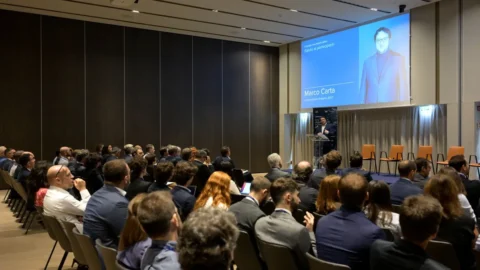
This is the picture at the center of the new Agici study "Innovation and smart water: the new frontiers of SII. Technologies and investments for the sector's development.”, presented in Milan on the occasion of the ninth OSWI Water Observatory Annual ConferenceThe event brought together Integrated Water Service managers, technology providers, and institutions to take stock of the technologies needed to make the sector more efficient, sustainable, and resilient. During the conference, the “Water Manager 2026” Award.
The water service accelerates technology with 2,8 billion euros of investments
The report analyses the technological investments of 102 administrations, which serve over 46 million inhabitants, equal to 78% of the Italian population. Between 2018 and 2029, the overall resources mobilized will reach around 40 billion of euros, of which 2,8 billion allocated to digitalization and innovation technological: 1,9 billion have already been invested between 2018 and 2025, while over 900 million are planned for the period 2026-2029.
Digitalization plays the largest role, with 2,3 billion euros of investments. smart meters remain among the most widespread technologies, while the use of remote control, whose share increases from 19% of digital investments in the 2018-2023 period to the 34% forecast for 2024-2029.
The transformation also involves the infrastructure: over 79% of the aqueduct networks and almost 83% of the sewerage networks are georeferenced, while the share of the district-based and remotely controlled network has risen from 22% in 2016 to 39% in 2024. Smart meters, sensors and remote control are also supported artificial intelligence, machine learning algorithm , Advanced GIS e digital twin, tools that allow you to use the collected data to anticipate critical issues and support decisions.
Digitalisation, the study underlines, must however proceed together withprocess innovationDigitalization forms the information and decision-making backbone of the system, while process innovation directly impacts the physical management of the resource. This area is largely influenced by more than 400 million euros of investments between 2018 and 2029, with a particular focus on energy recovery and water reuse. The former accounts for 69% of the innovation investments planned between 2024 and 2029, while the latter increases from 12% to 17%.
The picture thus highlights a growing focus on reuse, desalination, the circular economy, and energy efficiency. However, solutions for the treatment of emerging contaminants and nature-based solutions remain in the development phase.
After the PNRR, the challenge of financing
Technology requires investments continue. The Pnrr has accelerated the digital transition, but now the challenge is to ensure continuity of programming without passing the costs entirely on to users. It is also necessary digital skills, interoperable data and greater collaboration between managers, technology companies, universities and research centres.
“We started from the concrete challenges that the water sector must face – from climate change to leaks, from water quality to purification, up to an increasingly demanding regulatory framework – to understand which technologies can help managers respond and what investments are necessary”, commented the director of the Observatory. Alessandra Garzarella, by Agici.
Many technologies, from smart meters to remote control, are now mature, but their diffusion remains uneven. In an increasingly connected system, even the cybersecurity It must therefore accompany innovation. In 2025, 62 cyber events related to the drinking water supply were recorded in Italy, 28 of which were attributable to DDoS attacks. This figure does not necessarily imply system compromise or service interruption, but confirms the need to integrate security in the digitalization process.
“The point today is no longer just to demonstrate that these technologies work, but to be able to scale them up and integrate them stably into the management of the water service – he added Marco Carta, CEO of Agici -. The sector has the opportunity to transform data, automation, and new process solutions into a new management standard." To do so, Carta emphasizes, requires expertise, investment, collaboration with the technology supply chain, and regulation capable of supporting innovation.
The “Water Manager 2026” Award
During the conference the award was also assigned “Water Manager 2026” Award ad Armando Quazzo, CEO of Smat, for his commitment to the company's digitalization and investments in increasing infrastructure resilience.
"Receiving this recognition is a source of great personal satisfaction, but it would be wrong to consider it an individual award. This achievement belongs to the more than 1.200 people who, every day, with professionalism and commitment, ensure integrated water service to nearly the entire Metropolitan City of Turin, serving over 2,2 million residents," Quazzo stated. "From the fountain attendants to the field workers, from the administrative and technical staff to the executives and managers, everyone has contributed to building the results achieved. Each and every one deserves the true recognition and moral merit of this award, which represents the value of teamwork and the pride of serving our region."