The 1980s ushered in another era, one in which tourism began to flourish worldwide. The onset of globalization, the dramatic advances in air travel and the development of the internet, and the improving economic conditions of Westerners and, later, Asians, led to unprecedented growth in tourism, which affected beaches, mountain resorts, cities of art, and beyond. People visited everything, stayed everywhere, everywhere.
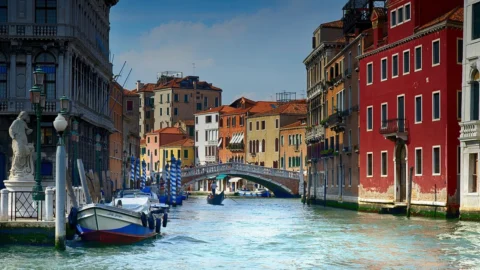
Venice has always been a destination for centuries: in the distant past a business center and in recent centuries a tourist destination. Since the 1980s it has begun to become a destination that "everyone" wants to visit. Another turning point for Venice is the rediscovery of Carnival, in 1979, which intersects the development of world tourism with its winter offerings.
Opportunities for making money in Venice are skyrocketing, and with the tourists come investors large and small. Rents are rising in price as well as consumer goods and are factors behind the abandonment of the city for Mestre or nearby mainland locations. The water city has only 45 inhabitants!
Two phenomena are affecting Venice. Cruise ships that pass through the San Marco basin, a route now blocked by the Draghi government, in reality by its advisor Francesco Giavazzi, who knows the city well. The other phenomenon is the rise of Airbnb platforms, a business model that consists of “renting a room by the day”, which is also supported by a large Venetian population with excess rooms.
If this is a quick look at the current situation, we must not forget the cultural tourism that appreciates a particular city where you can go on foot or by boat and where there are numerous cultural institutions, from the Biennale to the Fenice and to the many institutions and cultural centres that are still purchasing ancient palaces in competition with the large hotels.
The 4 issues at the heart of the Venice elections
Wave motion, urban maintenance, tourist flow management, city repopulation, and the launching of research and studies to combat tourism monoculture—all issues that have been on the table for years, problems—to quote Montanelli—that will only fester over time if they aren't addressed urgently.
On the other hand, Mestre has others, the suburbs, urban decay, drug-related crime, mobility, and livability in the city. For some time now, even the mainland city has been witnessing populations abandoning for other parts of the province. These are complex problems that require specific attention! The city's ruling class, not only political, and especially the economic interests at stake, agree to keep the two cities united.
The Venice brand, Given its international importance and the attraction it exerts, it's too tempting a morsel to pass up. It offers benefits to everyone, but it undermines the city's preservation. A human asset not only for the monuments and artistic treasures that stand here, in harmony with the landscape, but also for the original "city model" it has managed to preserve, balancing modernity with a lifestyle from another era! Do we want to help destroy it?
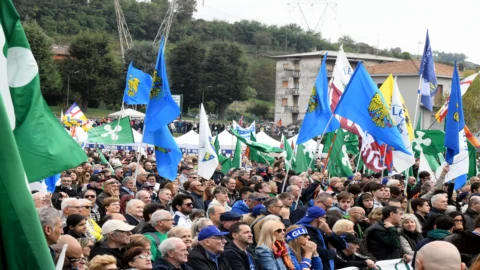
At the end of the month there will be the municipal elections. For eleven years, a local businessman who certainly didn't shine was mayor, very close to the current government. He even published a thousand-page volume to promote one of his councilors as a candidate.Simone Venturini; this is countered by a senator from the Democratic Party who represents the "lake camp", Andrea Martella.
The basic objective is to oppose the “hunger for profit” of animal spirits, local, national and international. In addition to more effective regulation of tourist flows, another path to pursue is the repopulation both by offering housing, on favorable terms, for those who already work in the city. In Venice, there are 3.000 apartments in need of renovation, not counting those vacant. This is also necessary by encouraging the establishment of national and international companies capable of providing qualified employment. Scholarships, hostels, and residences for researchers, recreating the living conditions of a “normal city”: encouraging the presence of artisan workshops (including those offering maintenance work, which is essential for the city), neighborhood shops, and even art-related businesses and establishments (something is moving here too). At the same time, continually offer special conditions to promote education and research, supporting universities, and also attracting international research centers by offering their operators living arrangements in Venice.
Let's not forget the public safety situation, both in Mestre and the historic center. There are many proposals, but one that seems interesting is to increase the Municipal Police's presence in the area with adequate intervention methods.
Defense against the rising tide
Another fundamental theme for the survival of the water city is to defend itself from'rising tide. By the end of the century we will have an extra meter, and it is not the most catastrophic scenario" warns Professor Andrea Rinaldo, a life dedicated to hydraulic engineering, winner of the Nobel Prize for Water, relaunches his appeal to involve the best minds in research to find a solution for the Venice of the near future.
Rinaldo continues: "Today there is a very strong lobby that works for the monoculture of tourism, it will become just a theatrical backdrop. Instead, we need to return to a complete city model, working not on access, but on the diversification of residence, on the innovation factory. Everything needs to be rethought, and it must be done with high-profile, international initiatives."