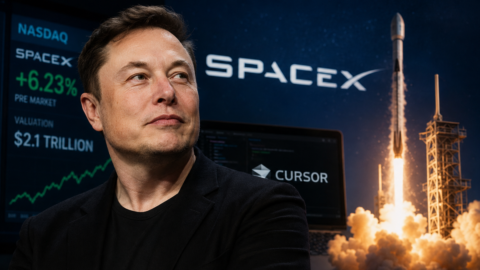
The last nights of Elon Musk They must not have been calm, while his SpaceX he was collecting failures left and right, with the failure of the launch Starship and the collapse of the stocks on the stock exchange below the IPO level which some analysts saw as the trigger for this morning's market crash.
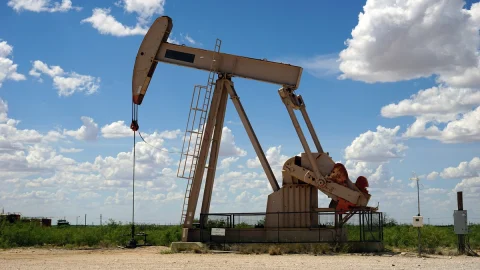
Starship It was supposed to leave Texas last night (Italian time). For the superstitious, the blame lies in the fact that it was the 13th test flight, but the fact remains that something went wrong right at the last second, literally, of the countdown, when the 33 engines were about to ignite: Starship, 124 meters tall, the largest rocket in the world he remained on the groundThe problem was quickly identified: "To ensure a successful flight, two Raptor engines will be removed and replaced. The launch is now scheduled for early next week," he stated in real time. Elon Musk su X.
NASA's breathing down your neck
The Starship problem goes beyond the failure of a single launch. NASA is also breathing down Musk's neck. count on the Starship to land its astronauts on the Moon. The US space agency has in fact commissioned both SpaceX and Jeff Bezos' Blue Origin to build and launch the lunar landing modules which will bring the human being back to the surface of the Moon after 50 years. Both companies must have their own landing modules – Starship and Blue Moon – ready for flight within the next year, so that the crew of the newly named Artemis III mission can practice docking their capsule to them in Earth orbit. The next mission—Artemis IV, scheduled for no earlier than 2028—would use one of those lander modules to deliver two astronauts to the lunar south polar region.
SpaceX falls well below its IPO price. Short sellers are taking action.
But Musk's worries don't end on the launch pad. He's getting bad messages from the operations rooms. Yesterday, his stock price... SpaceX closed down 3% at $131,11 and lost another 4% in subsequent after-hours trading, hitting new post-IPO lows around dollars 127, well beyond below the initial offering price of $135The market capitalization has shrunk to $1.725 billion.
Meanwhile i short sellers, who borrow shares to sell and then buy them back at a lower price at a profit, have stepped up their bearish bets on SpaceX. SpaceX's high valuation makes it a target for short sellers skeptical of its high price, but strong interest from retail and institutional investors, as well as Musk's public battles with short sellers, make bearish bets against the company a risky proposition.
Between yesterday and Wall Street and today on Asian and European squares we witnessed another bloodbath in the tech sector. “It is probably a combination of factors: the collapse is partly due to profit-taking on many stocks in the artificial intelligence sector, combined with recurring doubts about a speculative bubble in the sector. The fact that the IPO of SpaceX had such a disappointing outcome makes many investors even more nervous,” he told Reuters Johan Javeus, senior economist at Seb in Stockholm:
What will happen when the “lock-up” restrictions end?
A series of measures will be revoked in the coming months. sales restrictions additional shares from executives, employees and early investors, potentially flooding the market with further shares.
In the first Of these issuances, employees and certain initial investors will be free to sell 911,5 million shares on the second trading day following the release of the company's first quarterly report. The company has not yet announced the release date of its first quarterly financial statements, which analysts expect to bebeginning of AugustThe current value of such eligible shares is approximately $123 billion, far exceeding the $86 billion of shares currently available for trading on the Nasdaq.
More 455,8 million shares will be eligible for sale if the SpaceX share price remains above $175,50 for at least five of the 10 consecutive trading days leading up to the company's next quarterly report. However, this is not a current topic given the latest prices. Overall, the restrictions lifted until December 8th will increase the portion of SpaceX's potentially tradable shares to 40% of the company, while the remaining 60%, including Musk's stake, will remain restricted until mid-2027.