The Council of Ministers has on Friday 2 October the Public Finance Planning Document (DPFP), that is, the text that updates the macroeconomic and public finance framework and defines the framework in which the 2027 Budget Law will be built. Together with the DPFP, the government also approved the report to Parliament linked to the request for budget deviation for energy and defense.
The growth picture
The document updates the forecasts for the Italian economy in an international context marked byrising energy costs and greater uncertainty. According to the data released after the green light, the GDP growth forecast for 2027 is raised to 1%The DPFP therefore contains the new macroeconomic framework on which the choices of the next budget will be based.
The Minister of Economy Giancarlo Giorgetti He emphasized the difficulty of the forecasting framework: "The DPFP arrives in a particularly complex context, where making forecasts is difficult." The minister added: "We are confirming the spending path that was in the plans."
Deficit: below 3% in 2026, 3,5% in 2027
The programmatic framework indicates a deficit expected to remain below 3% of GDP in 2026, rising to 3,5% in 2027 and 3,3% in 2028, before falling to 2,4% in 2029. The new forecasts take into account the increased spending allowed by European rules through the flexibility clauses for energy and defense. The path outlined in the document therefore maintains the deficit within the framework foreseen for 2026, while in the following years it incorporates the effects of the greater flexibility requested by the government at European level.
The demand for flexibility in energy and defense
The central chapter of the deviation report concerns the activation of the national safeguard clauseThe government is requesting greater flexibility equal to 0,3% of GDP for energy and 0,3% for defense in 2027. The same structure is also foreseen for 2028.
Translated into absolute values, the request is worth approximately 14 billion euros for 2027 and another €14 billion for 2028, for a total of approximately €28 billion over the two-year period. The amount is then divided, for each year, between energy-related and defense-related interventions.
The debt profile
The DPFP also updates the path of the public debt-to-GDP ratio. According to the numbers illustrated by the minister, the trend profile is equal to 138,1% of GDP in 2026, to 138,6% in 2027, to 137,7% in 2028 and to 136,3% in 2029. The data therefore describes a debt-to-GDP ratio still rising in 2027, before a reduction begins in subsequent years. This process remains within the framework of the new European public finance rules.
What comes into play in the framework of the maneuver
The Dpfp represents the formal step that Construction of the 2027 Budget Law beginsThe document updates not only the macroeconomic variables, but also the public finance framework within which the budget measures must be defined.
Among the interventions discussed by the government in recent weeks are: support for purchasing power and fiscal interventions, but the final details of the measures will be contained in subsequent provisions of the budget session. The DPFP therefore constitutes the financial framework, while the specific definition of the interventions will be the responsibility of the Budget Law.
The line indicated by Giorgetti
After the Council of Ministers, Giorgetti insisted on the need to maintain a prudent approach in the face of uncertainty. The minister explained that “The DPFP arrives in a particularly complex context” and that “making predictions is becoming increasingly difficult.”
The minister's position is accompanied by the confirmation of the already planned spending pathIn statements made in the hours preceding the approval, Giorgetti had also defined the request for greater flexibility linked to inflation as "obvious," explaining that rising prices make it more difficult to maintain a nominal spending path based on lower inflation assumptions.
The next step
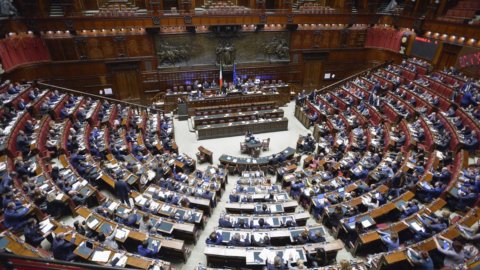
With the approval of the DPFP and the deviation report, the government has completed the first step of the 2027 budget session. The request for greater flexibility will now have to be follow the European path provided for the activation of the clause and, internally, the deviation will have to be submitted to Parliament.
The next step of the maneuver will therefore be the definition of the Budgetary Planning Document and the budget bill, which will have to translate the financial framework outlined today by the DPFP into concrete measures.