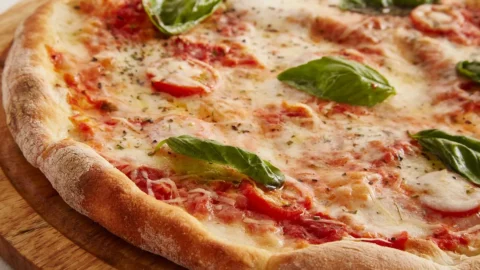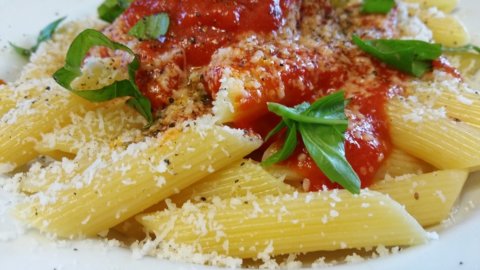
Candidate for UNESCO Intangible Cultural Heritage, as happened for the Mediterranean diet for the art of the Neapolitan "pizzaiuolo", the Italian cuisine with its heritage of "social practices, rituals and gestures based on the many local knowledge" with his "mosaic of traditions that reflects the biocultural diversity of the country” it has long been promoted with the highest marks by foreign tourists who flock to our country every year. Synonymous with excellence and authenticity for the variety and richness of products, is the main item of the holiday budget in Italy with over a third of the expenditure destined for the table to consume meals in restaurants, pizzerias, trattorias or agritourisms, but also for street food or food and wine souvenirs in markets, festivals and country festivals.
For Coldiretti it is an economic impact assessed only for food expenditure over 30 billion euros in 2023, divided between Italian and foreign tourists who increasingly choose the beautiful country as a holiday destination for the primates at the table. A result that demonstrates the immense historical and cultural value of the national food and wine heritage which is widespread throughout the territory and on whose valorisation many of the opportunities for economic and employment development depend.
Italian cuisine as a lever for the promotion of Made in Italy food in the world: in 2022 it reached the record value of almost 61 billion euros,
But the kitchen also represents an extraordinary lever of promotion of Made in Italy food in the world where in 2022 it will reach according to Coldiretti estimates. The record value of almost 61 billion euros,
The reasons are many: Italian cuisine can count on the greenest agriculture in Europe of 5450 specialties obtained according to traditional rules protracted over time for at least 25 years surveyed by the Regions, 320 Dop / Igp specialties recognized at community level and 415 Doc / Docg, the leadership in the organic sector with about 86 organic farms, 25 agritourisms that have kept the secrets of peasant cuisine for generations, 10 farmers in direct sales with Campagna Amica and the numerous enhancement initiatives, from festivals to wine roads.
A unique phenomenon in the world that the anthropologist Marino Niola wittily explains in the preface to the book “Fuori Menu – Entrepreneurs who have revolutionized made in Italy taste” published by Fernanda Roggero for Luiss editions.
“All the bad of Italy comes from anarchy, but also all the good”, wrote Giuseppe Prezzolini, author of the unjustly forgotten Spaghetti dinner. Fully targeting that inextricable knot of customs and habits, trends and skills, vocations and dispositions, similarities and mistrust that lies in the depths of national identity. From that knot – explains Marino Niola – it descends the made in Italy which, even before being an economy, is an anthropology, a profound structure of mentality and customs, a way of being and feeling characterized by the coexistence of tradition and innovation, municipalism and globalism, familism and competition .
It is the set of the advantages of the Belpaese. And even its flaws. Sanitized, amended, optimized and transformed into virtues. And this combination of typicality and quality makes our gastronomy particularly in step with our times. Who has made a passion and an obsession of food. Oscillating between cibomania and cibophobia. But also the raw material of a new idea of development and security, ecology and economy, equity, happiness, health and pleasure. The great themes of the present such as the quality of life, the defense of the environment and the living, the protection of biodiversity, animal bioethics, the protection of short supply chains, the modernization of productions and traditions, the protection of identities and communities , pass above all through food choices and sensitivities.
And this – continues Niola – is particularly true in a country like Italy which has always made food one of its figures in the carpet. The identity marker of the thousand bell towers, of the small and large gastronomic homelands of which the boot is made. A myriad of excellences and specialties that have made the tricolor table a planetary legend. Appreciated by all and imitated by too many. And of our Mediterranean diet the very image of tomorrow's food, good, democratic, seasonal, convivial and supportive.
Marino Niola: behind every flavor there is a historical and human, social and personal story that comes from far away.
Behind every food there is a story to tell. Because, in reality, the made in Italy to eat comes from a centuries-old symbiosis between masterpieces of art and cathedrals of taste, which are products of the same genius loci. Where behind every flavor there is a historical and human, social and personal story that comes from far away.
From medieval apothecaries, from municipal pride, from Renaissance workshops, from the emporial dynamism of the maritime republics, from the orientalism of Venetian merchants and craftsmen, from the Greek, Arab, Norman and Spanish moods and flavors of the South, from the transforming energy of the Lombards and from the reclamation of the monastic orders, from the refined aestheticism of the Byzantines, from the sumptuous gastronomy of the palace and from the talented popular kitchens, from the masters of the courts. But also and above all by the mistresses of the courtyards, the anonymous queens of those hearths, farmyards and barchesse, where for centuries the anonymous peasant wisdom was practiced, the humble creativity of the women, forced to marry dried figs, transforming the scarcity in goodness, indigence in excellence. This is the lowest common cultural denominator of the small food countries, yesterday and today, which are the widespread capitals of Made in Italy”.