Once a symbol of American technological supremacy, Intel finally shelves its ambitious plans of industrial expansion in the Old Continent. The “mega-factories” provided in Germany e Poland, billion-dollar projects and thousands of jobs, they are cancelled without appeal. After suspension announced in 2024, now the decision has become irreversible.
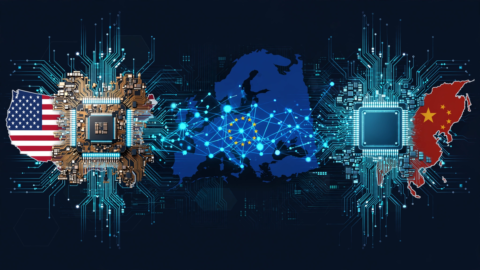
Berlin suffers the hardest blow. German government had promised 10 billion euros in public subsidies for the Magdeburg site, considered one of the spearheads of the European strategy for technological autonomyBut the dream was shattered by numbers and market priorities. "Large-scale industrial policy projects are not a good idea," commented Professor Friedrich Heinemann of the ZEW Center for Economic Research, certifying the failure of one of the symbols of Europe's so-called "digital sovereignty."
But it is not just a geographical retreat, the crisis also has a human face. Mass layoffs are also coming.
Unprecedented layoffs: a quarter of employees gone
Intel, in fact, is preparing to cut a huge chunk of their workforceThe company expects to close 2025 with approximately 75.000 employees, up from nearly 100.000 the previous year. 25% cut in staff, equal to approximately 25 thousand jobs, partly already started in recent months.
“We are making difficult but necessary decisions to simplify our structure, improve efficiency and strengthen accountability at every level,” the new CEO wrote in an internal memo. Lip-Bu Tan, installed in March after the Pat Gelsinger's removal.
The plan includes direct layoffs, voluntary exits and turnover freezes, with a particular impact in countries where industrial projects have not met expectations: in addition to Germany and Poland, the site in Costa Rica will also be downsized, with operations moved to Vietnam and Malaysia.
Record losses, but revenues surprise Wall Street
I second quarter 2025 accounts show the extent of the crisis. Intel recorded a net loss of $2,9 billion, equal to 0,67 dollars per share. A decrease of 81% compared to the previous year, largely due to the extraordinary costs of restructuring (1,8 billion).
Yet, there's a light in the tunnel. The quarterly revenues, in fact, remained at 12,9 billion dollars, above analysts' expectations (11,9 billion). Even the Forecasts for the third quarter they indicate a possible stabilization, with an estimated turnover between 12,6 and 13,6 billion.
Intel: Betting on AI to Stay in the Game
At the heart of the new Intel is one key word: artificial intelligenceThe company wants return to the protagonist in the advanced chip sector, after having lost ground both on the design front (dominated by Nvidia) and on the production front (controlled by TSMC).
Intel is betting everything on new production technology 18A, expected to debut in volumes during 2025. But the future node 14A, even more advanced, will be developed only in the presence of a "significant external customer". "In recent years we have invested too much, too soon, without proper request. Now we have to correct the course“, Tan said. The new CEO has also taken direct responsibility for approving new designs before production begins, a sign of a shift in mentality and governance.
Tan also sent a clear message to the markets: Stop projects without tangible returns. "I will only invest when I am certain those returns exist," he reiterated to analysts. The principle This also applies to Intel Foundry, the manufacturing division created to challenge TSMC, but so far unable to produce sustainable results.
The new plan includes a operating expenses cut to 17 billion by 2025 and 16 billion by 2026, with the goal of increasing profitability and creating long-term shareholder value. The priority is to optimize existing assets, slowing down, and in some cases canceling, new industrial projects.
Intel Today: David Between Two Goliaths
The competitive environment today is ruthless. Intel is worth approximately $98,7 billion on the stock market., a value that pales ahead of Nvidia's 4.240 billion and the TSMC's manufacturing supremacyThe group's shares, despite recovering 13% since the beginning of the year, remain down almost 30% on an annual basis.
Intel is no longer the king of chips, but looking for a new role in the global semiconductor ecosystem. The bet on artificial intelligence, the simplification of the internal structure, and the concentration on strategic assets are the cards that Lip-Bu Tan intends to play. time will tell whether they will be enough to bring the company back to the center of the ongoing technological revolution.