Flying could cost more already in second half of the 2026The account of the expensive-fuel Indeed, it risks reaching passengers not only through the price of the ticket, but also in a less obvious way, with increases in additional services: from luggage to seat selection, up to other options that can be purchased separately.
This is the scenario outlined by IATA, theInternational Air Transport Association, in its latest financial forecasts for the sector. If the Oil prices will remain high, the pressure could continue also in 2027.
Fuel spending to rise to $350 billion by 2026
The problem starts with the fuel. airline companies will spend this year about $350 billion for jet fuel, compared to 252 billion in 2025. An increase of 39,3%, despite consumption being expected to remain substantially stable.
Fuel is one of the biggest cost items for the airplane transport, but the crisis in the Middle East has worsened the situation, pushing up prices and increasing volatility. The result is that jet fuel now accounts for almost a third of airlines' operating costs.Europe It is particularly exposed. Over the past twenty years, the continent's refining capacity has decreased by 20%, and today approximately 60% of the kerosene used by aircraft must be imported. More than a third of these supplies come from the Middle East.
Protection from high oil prices is about to run out
However, not all airlines are immediately exposed to market prices. Some European carriers have in fact set the cost in advance of a significant part of the fuel through hedging contractsIn some cases, up to 70% of the projected demand for 2026 has been blocked. But this protection will lose its effectiveness as the months go by. When the hedges disappear, a growing share of fuel will have to be purchased at current prices.
This is especially why the impact on flight prices could become more evident in the second half of the year.
Company profits almost halved
A pay il energy cost account first of all they will be the balance sheets airlines. In Europe, net profits in the sector are estimated at $9,6 billion in 2026, down from $13 billion in 2025. Globally, the slowdown is even more severe: profits are expected to drop from $45 billion to $23 billion, virtually halving in just one year. Average earnings per passenger are also expected to decline, from $9,1 to $4,5. Airlines will therefore remain profitable overall, but with increasingly thin margins.
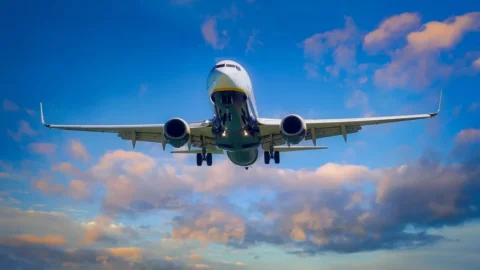
Airplanes: Higher fuel prices mean more expensive tickets, but not only that.
To recover at least part of the additional costs, companies could increase ratesBut the price increase could be distributed less visibly. According to IATA, bagagli, choice of location and other services Accessories They will have an increasing impact on airline revenues. In other words, the price displayed for the flight may no longer reflect on how much the passenger will actually spend.
In 2026, ticket revenues are expected to reach $839 billion, 9,2% more than in 2025. Passenger traffic, however, will grow by just 2,1%, while average revenue per passenger kilometer will increase by 7%.
This does not mean that all flights will increase by 7%: this is a global average that includes very different markets, airlines and routes. The ones that will grow even more rapidly will be: revenues from ancillary services and other activities: $165 billion, up 12,6%. For the first time since 2019, it will surpass freight transport revenues, expected at $162 billion.
However, the high cost of fuel could also change the flight connections mapTo contain costs, carriers could reduce frequencies or cut the least profitable routes, Especially where fares aren't sufficient to cover costs. IATA doesn't identify specific Italian routes at risk. The principle, however, is clear: when the cost of flying an aircraft increases and margins shrink, the routes with the lowest profitability become prime candidates for review.
The second problem: there are no planes
As if fuel were not enough, the sector has to deal with another emergency: the aircraft shortageAccording to IATA, the industry is effectively short about 3.170 aircraft. The backlog of orders has reached 18.100, nearly 60% of the global fleet currently in operation.
Airlines are therefore forced to use the available aircraft more intensively and to postpone the retirement of older modelsThe average age of the fleet has now exceeded 15 years, with an inevitable impact on fuel and maintenance costs.
For those who travel, the result could be a more expensive summer and autumn 2026And with oil prices still high, the bill could continue to rise into 2027.