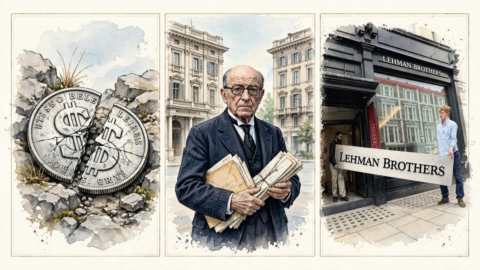
It is true that in August the trading on the stock exchange is limited and the exchanges are thin and that it takes very little to make a stock soar or sink another, but woe betide anyone who thinks that Ferragosto i Mercatie la finance go on vacation. History tells us the exact opposite, and that August is often the month of surprises and major financial shocks. So keep an eye on what's happening in the markets and in the world of big business these days, too. Older readers still remember the sensational turn of events in 1971 when the then-president of the United States, Richard Nixon, held – on August 15th – a famous televised speech in which he announced the abolition of convertibility of the dollar into gold, the end of the system of Bretton Woods, the dawn of the era of floating currencies and the revolution in global finance. On August 15, 1971, many were vacationing on the beach or in the mountains, but before their eyes the Nixon shock was literally changing the world. But that event, which forced many financial journalists to rush back from vacation—there were no computers, cell phones, or the Internet back then—wasn't the only August earthquake in the effervescent and unpredictable world of finance.
The subprime mortgage crisis began in August 2007.
In August, precisely on August 9, 2007, the crisis of the subprime mortgages, mortgages granted too cheerfully by American banks even to customers who would not be able to repay them and which was the prelude to the great financial and then economic crisis throughout the world. August 9, 2007 is the symbolic date of the beginning of the subprime crisis when the French bank BNP Paribas He froze three of his investment funds, which were now illiquid because they were overflowing with American junk bonds. This was a warning bell that was initially underestimated because the subprime mortgage segment was, after all, quite limited. But the following year, the financial crisis transformed from a sectoral one into a systemic and global one after the sensational and unexpected bankruptcy of Lehman Brothers, one of America's leading investment banks, bankrupted by the obstinacy of US Treasury Secretary Henry Paulson by denying the bank's arrogant CEO, Richard Fuld, a state bailout. Who doesn't remember the epochal images of Lehman employees hastily and sadly leaving Lehman headquarters with their boxes? Lehman's bankruptcy in September 2008 marked a quantum leap in the financial crisis, which went from being a sectoral crisis to a global one, spreading to the real economy and ushering in a worldwide recession.
Enrico Cuccia's August Holidays in the Office
But even a cursory review of the major financial shocks of August would be incomplete if it forgot the proverbial habit of giving up summer holidays and working alone in his Mediobanca office in the centre of Milan. Henry Cuccia, the most important Italian banker of the second half of the twentieth century. While Italy was on vacation, Cuccia's fertile imagination was hatching top-secret plans, often destined to revolutionize Italian finance and capitalism in the weeks that followed. Cuccia liked to play counterattacks. Who doesn't remember his hunched figure crossing Piazza della Scala, oblivious to the scorching heat and concerned only with dodging journalists and not missing a single syllable? Different times, certainly. But then, as now, finance is always lurking. Even on August 15th. Happy holidays everyone, but never let your guard down.