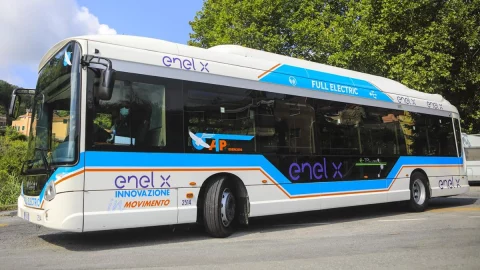
Latin America reaches a new milestone in the transition to low-emission urban mobility. According to data released by the C40 Cities network, the cities of the region have exceeded the threshold of 10.000 electric buses in service, distributed in over 80 urban centers in 13 countriesA result that places the continent among the areas of the world where the electrification of public transport is accelerating.
The environmental impact is significant: according to C40, electric buses will allow you to avoid over 10 million tons of CO₂ every yearThe transformation is especially important in large cities, where public transport represents one of the main levers for simultaneously reducing emissions, fossil fuel consumption, and air pollution.
Santiago, Bogotá and São Paulo
The heart of this transformation is concentrated in some of the largest Latin American cities: Santiago de Chile, the capital of Colombia Bogotá, and the city of São Paulo, in Brazil, which is the continent's most populous metropolis with over 20 million inhabitants including its hinterland. These cities are now the main regional hubs for electric mobility and, together, have over 7.000 electric buses in operation.
Santiago was one of the pioneering cities. Bogotá subsequently built an even larger system, while São Paulo is further accelerating the replacement of traditional buses. In June alone, the capital city of São Paulo put 500 new electric buses into service. Mayor Ricardo Nunes emphasized the environmental value of the project, claiming that a single delivery of 500 electric buses equivalent, in terms of annual climate benefit, to planting 3,2 million trees.
Enel's role: not just electric buses
Vehicle manufacturers aren't the only ones behind this transformation. A crucial factor is the energy infrastructure needed to power and manage fleets of hundreds or thousands of vehicles. A significant role has been played in this area. Enel, the division of the Enel Group dedicated to advanced energy services. The model developed in Latin America is not limited to bus supply, but understands electrical terminals, charging systems, energy management, digital services and financial solutions.
In Santiago, Enel collaborated with Metbus and BYD to the introduction of the first electric buses in public transport. In 2020, Enel X and AMP Capital also created a joint venture to invest in electric buses and infrastructure for storage, charging, maintenance, and vehicle management. The company initially had 433 electric buses operational and their charging infrastructure in Santiago.
Bogotá, an industrial model
The second major laboratory was Bogotá. In 2021, Enel X was awarded a contract to supply 401 fully electric buses and two new electric terminals to the Colombian capital's public transport system. The operation was in addition to a previous agreement for the construction of four terminals for charging approximately 500 buses. The project would have led to approximately 900 e-buses served by Enel X in the Colombian capital.
The two new terminals included approximately 200 charging systems and the buses would be powered by energy from renewable sources. This is precisely the core of the model: electrifying an urban fleet means simultaneously building a new energy infrastructure.
From the bus to the “service”
Enel has also experimented with the model Ebus-as-a-Service, in which electrification is offered as an integrated service. The package can include fleet financing, charging infrastructure, electrical terminals, and digital management systems.
The model enables public transport operators to reduce the need to immediately sustain all initial investments and focus the transition on an integrated service. In 2021, Enel already indicated Ebus-as-a-Service among its solutions for Latin America.
A network that goes beyond individual projects
The Enel case demonstrates that the electric bus revolution isn't simply about replacing a diesel engine with an electric one. It's about transforming the entire system: vehicles, depots, electricity grid, charging, renewable energy, software and finance they must be designed together.
The size that Latin America has reached makes this experience particularly significant. The 10.000 electric buses now represent a critical mass capable of transforming the daily functioning of large cities. And the role of energy companies like Enel shows how the transition has also become an industrial issue: not just purchasing cleaner buses, but building the infrastructure that allows thousands of vehicles to operate every day.
The next challenge will therefore be to further increase the fleets and, above all, replicate this model in an ever-increasing number of citiesFor Latin America, the 10.000 electric buses are not a point of arrival, but the foundation of a new phase in urban mobility.