For a long time, Ferragosto was the symbol of escape: beaches, seaside resorts, and mass tourism. Today, however, August 15th also represents a different Italy, that of the new generations who choose museums, archaeological sites, exhibitions, and cultural parks as an integral part of their travel experience during their holidays. This is not a marginal trend, but a profound shift in the way we understand leisure time and the value of knowledge.
Young travellers, Generation Z and Millennials
They no longer seek simply a destination to photograph, but a place to understand. A visit to a museum becomes a narrative experience, capable of connecting history, identity, landscape, and innovation. Digital platforms have changed visitor behavior: before traveling, people study collections, book themed tours, research architecture, contemporary installations, and places symbolic of collective memory. Culture is no longer an ancillary activity to vacation, but one of the criteria used to choose a destination.
This transformation has a significant economic significance
Every visit to a museum generates value that goes far beyond the ticket price: it supports restorers, curators, museum educators, researchers, creative businesses, specialized publishing, and digital professions linked to the valorization of heritage. The museum thus becomes a productive infrastructure of knowledge, capable of generating skilled employment and retaining human capital in local communities. This change is particularly evident in smaller towns and cities of art. Many young people prefer itineraries centered around an archaeological museum, a distributed collection, or a historic building rather than concentrating their entire vacation in the most crowded destinations. This choice redistributes tourist flows, reduces pressure on major destinations, and restores centrality to areas often excluded from traditional itineraries. Culture thus becomes a tool for territorial rebalancing as well as economic growth.
Even museum language is changing to engage with these new sensibilities.
The most dynamic museums are not necessarily those with the most renowned collections, but those capable of building relationships: workshops, immersive itineraries, accessible research, digital archives, collaborations with universities and contemporary artists. The new generations demand participation rather than contemplation; they want to understand the context of the works, the stories of the people, the civic value of heritage. This gives rise to a strategic reflection. If 20th-century tourism was based on the consumption of places, 21st-century tourism will increasingly be based on the production of knowledge. Museums become permanent laboratories of citizenship, innovation, and regional development, capable of attracting not only visitors but also talent, cultural enterprises, and investment. Italy's competitiveness will depend less and less on the quantity of visitors and more and more on the quality of the experiences it offers. Thus, Ferragosto takes on a different meaning: not just a holiday, but the moment when millions of people choose how to invest their time. And when a new generation decides to dedicate that time to culture, heritage ceases to be a memory of the past and becomes the most valuable investment in the future.
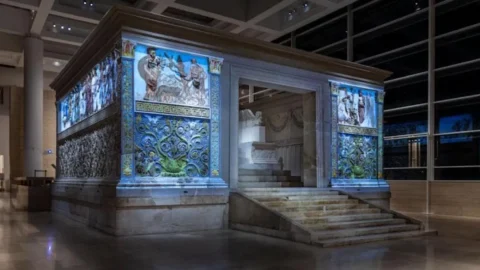
Cover image: For Ferragosto, the Ara Pacis also takes on a symbolic meaning. The altar dedicated to Pax Augusta celebrates the idea of a peace that generates prosperity, fertility, and civil order: a surprisingly timely message at a time when culture is called upon to become not only a memorial of the past, but an infrastructure for regional development. An immersive multimedia experience that reconstructs the colors, meanings, and symbolism of the monument through projections and audiovisual narration.