When in March 2025 the President of the EU Commission, Ursula von der Leyen, launched the Safe (Security Action For Europe) action tool within the Rearm Europe Plan (later renamed Readiness 2030), he bet heavily on a massive Italian participation to European defense projects due to the great capabilities of our companies in the sector.
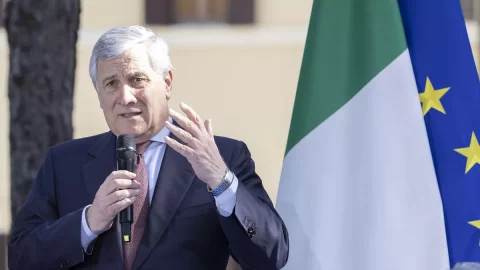
After having used 15 billion in subsidized loans last year, now very late, the Italian Government, through the voice of the Deputy Prime Minister and Foreign Minister Antonio Tajani announces that he has "reserved" the 14,9 billion specifying that it will use no more than €6-7 billion of the €15 billion earmarked for the year. These statements have caused confusion and concern among the EU executive. In fact, these funds are not "reserved," as the EU is making €150 billion in subsidized loans available to member states, with a 45-year maturity and a ten-year grace period.
This is what the Security Action for Europe instrument provides
Safe supports the procurement of defense products from missiles and munitions to drones, from air defense to cyber security, from critical infrastructure protection to military mobility. Procurement contracts must ensure that: no more than 35% of the cost is due to components originating from third countries, Ukraine, or countries belonging to the European Economic Area and the European Free Trade Association: Iceland, Liechtenstein, Norway, and Switzerland. Outside the EU, Albania, Canada, South Korea, Japan, India, North Macedonia, Moldova, Norway, and the United Kingdom may participate in joint procurements, subject to approval by the EU institutions.
Brussels asks Italy for greater clarity because it is in a hurry to close all contracts with the 18 countries that have had their loan applications approved (Hungary's €16 billion is still being assessed) to establish by the autumn whether the unspent resources can be reallocated by the December 31 deadline, when the window for requesting financing closes.
Currently 19 states have applied for fundingThe amount ranges from the €43 billion requested by Poland, followed by Romania with €16 billion, and France with €15 billion, all the way down to smaller amounts like the €1 billion requested by Spain. Among the countries that have not applied is Germany, for example, because its solid public finances and high AAA rating allow it to borrow on the markets at more favorable rates than those applied to loans. The first payments have already been made to Poland, Cyprus, Croatia, Lithuania and Greece.
On May 29th, Warsaw has already seen the disbursement of 6,6 billion euros (equal to 15% of the request) which will finance 139 projects, including the production of anti-drone batteries that will be made together with NorwayGreece received its first payment of €118 million a few days ago (out of €787 million requested); Lithuania received €956 million (its request is €6,375 billion), Cyprus received €177,2 million (out of a total request of €1,18 billion), and Croatia received €255 million out of €1,7 billion requested.
Ambassador Benassi to FIRSTonline: "Talking about reservations is inappropriate."
“Talking about reservations for Safe funds is at the very least inappropriate” Ambassador Piero Benassi explains to FIRSTonline, former Italian representative to the EU. "A lack of knowledge of European mechanisms," adds Benassi, "risks penalizing our country, whose government seems more divided than ever among its allies over defense funding."
At the same time, the entire European defense industry is being challenged by the Ukrainian crisis and the one in the Middle East which is rapidly changing, as explained the former president of Leonardo, Stefano Pontecorvo Current president of Avio Solution, which produces an innovative G250 Eagle helicopter, president of Sealight Technologies in Varese, and most recently president of the National Drone Hub. Small companies, says Pontecorvo, are growing rapidly even outside of the large consortia, developing cutting-edge technologies.
Rheinmetall Italia's CEO tells FIRSTonline: "The paradigm is changing."
Transformations in the defense industry that are indicating new directions for development such as Alessandro Ercolani, CEO of Rheinmetall Italia, explains to FIRSTonline"We are witnessing," Ercolani observes, "a paradigm shift between supply and demand, an imbalance in the latter, with strong pressure on industry to meet high production capacities, quality standards (for the real battlefield), and delivery times reduced by more than 50%. The European context has responded well, with defense industries gaining market share with significantly higher market capitalizations compared to the past." According to the CEO of Rheinmetall Italia, numerous mergers and consortia are shaping the idea of a common defense (GCAP, JV Leonardo Rheinmetall, KNDS), and at the same time, "small and medium-sized companies are emerging that can meet a supply model that reduces delivery times with sustainable costs."
The two major crises on the Eastern European flank and in the Middle East have demonstrated, Ercolani continues, that economic sustainability "remains one of the fundamental factors for the final outcome. Companies capable of meeting new battlefield requirements quickly and at sustainable costs have interesting growth prospects. The technological dimension relating to drones, missiles, satellites, communications and AI are offering development spaces not only to the big players but to all the companies capable of developing technologies with new business models." Two points of observation on the Italian supply chain concern, Ercolani specifies, the investment part and access to credit, "aspects necessary to implement a supply model that reduces lead times and increases production capacity."