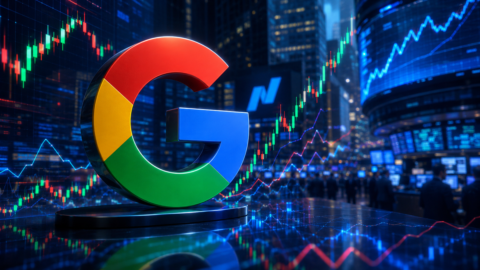
On August 19, 2004, Google entered Wall Street. It was just six years old, had already become the symbolic search engine of the new Internet and was presented at the Nasdaq with aIpo destined to break more than one custom. The price was set at $85 per share through an unusual auction, designed to broaden access to supply and reduce the power of intermediaries in determining the price.
Twenty-two years later, that company is called A, controls an ecosystem that ranges from online search to YouTube, Android, cloud and artificial intelligence and is worth on the stock exchange about 4.200 billion dollarsAt the IPO, its market capitalization was just over $23 billion. Among the factors contributing to this were the meteoric rise of the stock, stock splits, the creation of different share classes, and, above all, Google's transformation from a search engine to one of the largest technology groups in the world.
August 19, 2004, Silicon Valley's Most Unconventional IPO
The listing came at the end of a far from linear process. In the fall of 2003, Microsoft had even explored a possible partnership or merger with Google, but the negotiations never reached an agreement. A few months later, the company definitively embarked on the stock market, entrusting the organization of the offering to a group of investment banks.
Google, however, wanted to do things its own way. The IPO was built through a sort of Dutch auction in which investors indicated how much they were willing to pay. The goal was to identify a price that better reflected real demand and, at the same time, open the offer to investors other than the large institutional clients normally favored in new listings. The result was a price of $85 per share, significantly lower than the levels initially hypothesized by the company. A total of 19.605.052 shares, of which approximately 14,1 million issued directly by Google and 5,5 million sold by shareholders already present in the capital. The operation raised 1,67 billion dollars and gave the group a higher rating than 23 billion.
When the stock actually began trading on the Nasdaq, the interest was immediate. There was even a false start before the official opening, with Google apparently trading at $136 due to two trades that, according to Nasdaq, should not have been executed. The real debut was around 100 dollarsThe first session ended in dollars 100,34, with a rise of approximately 18% from the $85 offering and over 22 million shares changing hands. A leap that, paradoxically, fueled doubts about the auction experiment. The IPO certainly immediately changed the wealth of those who had built Google. Larry Page and Sergey Brin became billionaires, at least on paper, each holding stakes worth over $3 billion. According to estimates at the time, between 950 and 1.050 employees, out of a total workforce of approximately 2.300 people, found themselves millionaires thanks to stocks and stock options.
Google shares: From $100 to over $800, then the splits
August 19th was just the beginning. Google hit the mark $200 in January 2005 and surpassed the 300 dollars in June of the same yearLess than nine years after the IPO, in March 2013, the stock closed at a new all-time high of dollars 821,50. From around 100 dollars on the first day of trading, the gain had already reached 721 %. It wasn't just dominance in online search that was driving the group. Android was establishing itself in the smartphone market, while Google was trying to transfer its advertising leadership from the desktop to the new mobile world.
Meanwhile, another feature that the founders had wanted since their stock market listing was becoming increasingly evident. Being a listed company would not have meant handing over control of the strategy to external shareholders.
The actions intended for the public, today identified in the Class A with Google ticker, each grant one vote. The shares of class B, concentrated mainly in the hands of the founders and the first managers, instead assign ten votes per share. Subsequently, shares of Class C, traded today with Google ticker, without voting rights. The structure allowed the company to issue shares, use them in compensation plans, and finance its expansion while limiting the dilution of the founders' power. Making the comparison between the 2004 price and the current one even more difficult was the arrival of the 2014 and 2022 stock splits. Therefore, simply comparing the IPO's $85 price with today's $300+ price would give a distorted picture of the performance shareholders have actually achieved.
The philosophy, after all, had been stated from the beginning. Google didn't want to provide financial forecasts designed to satisfy the market quarter after quarter and claimed it wanted to prioritize long-term potential. This choice was made possible precisely by a governance structure that gave Page, Brin, and management a voting power far greater than their economic weight.
From Google to Alphabet, as the Internet became mobile and then “AI first”
La decisive corporate transformation arrived in 2015, when Google was incorporated into the new holding company AlphabetThe idea was to more clearly separate the gigantic business built around the search engine from the group's other initiatives and allow the various activities greater autonomy.
Larry Page explained that the new structure would allow for the maintenance of a strong focus on the opportunities within GoogleLeadership of the search engine and its core businesses passed to Sundar Pichai, while Alphabet became the home of the group's various technology bets.
In just over ten years, the Internet had also changed. When Google was founded in 1998, Pichai recalled in his 2015 letter to shareholders, there were around 300 million online users, mostly browsing from desktop computers. They had grown to around 3 billion, increasingly connected via smartphone. Google accompanied that transformation by building an ever-expanding ecosystem around search. Maps, Photos, YouTube, Android, Chrome, and Google Play took the company far beyond the blank page with its search engine. But the vision outlined then was already clear what the future would be. new frontier. The machine learning algorithm It was described as the engine that would improve voice search, translation, image recognition, and anti-spam systems. AlphaGo's victory over Lee Sedol demonstrated the potential of artificial intelligence.
Pichai summarized the direction with a formula that was destined to become central to the group's strategy: “We will move from a mobile-first world to an AI-first world”.
Google IPO: twenty-two aYears later, a colossus worth approximately 4.200 billion
And it is precisely on artificial intelligence that a decisive part of the new phase of the history that began with that $85 IPO is being played out today. On the twenty-second anniversary of its landing on Wall Street, Alphabet is worth approximately $4.200 trillion on the stock market.. Based on the latest available prices as of August 18, 2026, Class A shares are trading around dollars 344, while those of Class C are found just above the dollars 341Please note: The two values do not represent different companies, and their respective market capitalizations should not be added. Google and Google are simply two classes of shares in the same group, with different voting rights.
The number that best captures the distance traveled remains the capitalization. From over $23 billion in August 2004 to the current $4.200 trillion, the stock market value has increased approximately 180 times.
On August 19th, Google entered the Nasdaq amidst doubts about the auction, controversies over governance, and questions about its ability to transform online search into a sustainable business. The first session closed at $100,34 and already seemed like a remarkable success. Twenty-two years later, that listing appears above all as the first day on the stock exchange for a company that would span three major technological eras. Internet, smartphones and artificial intelligence, until it transformed from a search engine into Alphabet.