The game for the future of theformer Ilva gets to the heart of the matter. Or so it seems. Federacciai and 14 Italian steel companies they presented the 18th of August expression of interest for the Taranto, Genoa, Novi Ligure, and Racconigi plants. This is the first concrete step by the Italian consortium, which now must determine whether the conditions are right to convert this interest into a real offer. The future of the hot-zone area, the workers, and the role of the government remain on the table.
Signing the demonstration, together with Federacciai, are Abs Acciaierie Bertoli Safau, Steelworks Goodbye, Steel Plants Venice, Advanced Steel Solutions (Asonext Group), Afv Beltram Steelworkse, Alfa Steels, Italian Steel Company, Dufferco Travic e Profiles, Feralpi Steel industry, Ironworks Valsabbia, Lucchini Rs Holding, Marcegaglia Carbon Steel, ORI Martin e Rubiera Special Steel.
The decision comes after the meeting on August 5th between the president of Federacciai, Antonio Gozzi, and the Minister of Enterprise and Made in Italy, Adolfo Urso. "We're in the field," said Gozzi. "Now it's a matter of verifying the existence of the enabling conditions. We'll do this with the Italian government in the coming days."
Former Ilva, the Italian consortium focuses on the cold-processing area
The project has a well-defined perimeter. The Italian consortium is looking above all atcold area, that is, to the plants that process steel downstream of primary production. However, there remain blast furnaces out of the project and, more generally, the hot area of Taranto.
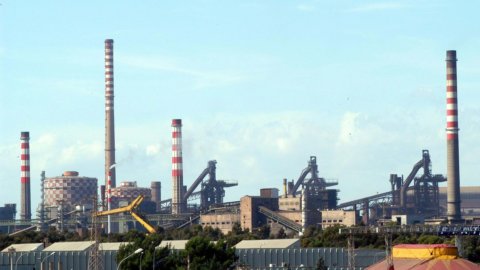
It is a central point because one of the most delicate passages of the entire affair is concentrated precisely on the hot area. On July 27th the Court of Appeal of Milan he arranged it plant shutdown within 90 days, in light of the environmental concerns related to emissions. The commissioners of Acciaierie d'Italia have appealed to the Supreme Court, but the ruling continues to weigh on the future of the Taranto plant.
For Italian steelmakers, the challenge is therefore to build a new industrial structure starting with cold-rolling plants. Some of the plants would require investment and renovations to return to full capacity. Then there is the slab problem, essential to fuel processing. With this in mind, Federacciai has also indicated a possible temporary solution: Marcegaglia would be willing to send 200 tons of slabs to Taranto starting in early October, on a processing basis, to support production.
In the medium term, the possibility of creating a electric oven in Taranto. The goal would be to reduce dependence on imported slabs and ensure greater autonomy for the future steel hub. However, it is a project that would require significant investments and a timeframe compatible with the new industrial structure.
The consortium's position is also linked to the request that the state retain responsibility for the legal, environmental, and social legacy of the hot spot. This is one of the points that will need to be clarified in discussions with the government.
Former Ilva, from expression of interest to offer: what happens next?
The event presented on August 18th It is not yet a binding offer. The next step will be accessing the data room, which will allow the 14 companies to examine in more detail the accounts, facilities, industrial situation, and terms of the potential acquisition. This analysis will determine whether or not to submit a full-blown offer, as well as defining its scope.
The consortium will have to evaluate not only the value of the assets, but also the investments needed to relaunch the facilities, the costs of restarting operations, and the conditions required to make the project sustainable. Gozzi's goal is to potentially close the operation by the end of the year, with operations in 2027.
The Italian proposal is part of a competition that already sees other bidders interested in the former Ilva. Among these are: Jindal, which has expressed interest in a wider perimeter, including the hot area, and the American fund Flacks.
The novelty, compared to the previous phases of the long crisis of the former Ilva, is however the common front of Italian steelworkersFourteen companies are presenting themselves together, focusing on cold-processing activities and seeking to build an industrial project around factories that can continue producing even in the new Taranto scenario.
Now the data room will have to determine whether the numbers hold up. And above all, whether, between investments, slabs, employment, and management of the hot area, the conditions are truly in place to transform the expression of interest into a concrete industrial project for the future of the former Ilva.