Eni e Petronas they announce the constitution official of Searah, a 50/50 joint venture that integrates key activities in Indonesia e MalaysiaThe operation comes seven months after the signing of theInvestment Agreement of November 3, 2025 and sixteen months after the memorandum of understanding was signed in February 2025. Since then, all regulatory, government and partner approvals in both countries have been obtained, making the agreement fully operational.
The new company was born with the ambition of becoming the leading independent integrated energy operator in the Southeast Asia, combining complementary assets, skills and industrial capabilities across the entire gas value chain. The title a Square Business: the six-legged dog rises by 1,19%, approaching 24 euros per share.
Searah: a 19-asset portfolio and production over 300 boe/d
Searah is structured as a 50/50 joint venture without exclusive control, with shared governance between the two groups and a scope that includes Eni and Petronas' upstream activities in Indonesia and Malaysia. However, a 10% stake in the assets contributed by Eni Indonesia will be sold to a third party. In parallel with the finalization of the corporate structure, all Eni Indonesia and Petronas Indonesia personnel will be transferred to the new entity, along with the creation of Searah Malaysia Sdn Bhd, dedicated to managing activities in Malaysia.
Overall, Searah brings together a portfolio of 19 assets including gas production and development, of which 14 in Indonesia and 5 in Malaysia. Initial production exceeds 300.000 barrels of oil equivalent to day (boe/d), with the aim of reaching over 500.000 boe/d over the next three years in a sustainable manner.
Financing and Investment: Over $20 Billion
The industrial plan includes investments exceeding 20 billion of dollars over the next five years, earmarked for the development of over 3 billion barrels equivalent of discovered resources and the valorization of further exploration potential.
To support growth, Searah has already obtained a 6 billion revolving credit line of dollars, a flexible credit line that can be used and repaid over time based on operational needs. This transaction reflects the financial markets' strong confidence in the project's soundness.
Strategic assets, production and new discoveries
The launch of Searah is part of a portfolio already strengthened by recent final investment decisions on the Searah fields. Gendalo and Gandang (South Hub) and Geng North and Gehem (North Hub). The projects contain approximately 283 billion cubic meters of gas initially in place and approximately 550 million barrels of associated condensate, with production start-up expected in 2028 and plateau expected by 2029. In addition to these, there is the discovery “Geliga-1” in the Kutei Basin, estimated at approximately 140 billion cubic meters of gas and 300 million barrels of condensate, with excellent reservoir quality and significant production potential.
Comments
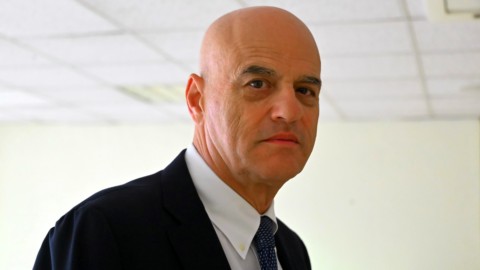
For Claudio DescalziSearah represents an evolution of the group's satellite strategy: “A new and robust entity in Southeast Asia, the first and largest of its kind in the region, combining our expertise with that of Petronas to support the development of energy resources with a focus on technology, innovation and sustainability.” According to Tengku Muhammad Taufik, Chairman and CEO of Petronas: “by leveraging the complementary portfolios and capabilities of Petronas and Eni” aims to strengthen “financial resilience and growth capacity”, contributing to the region’s energy security.