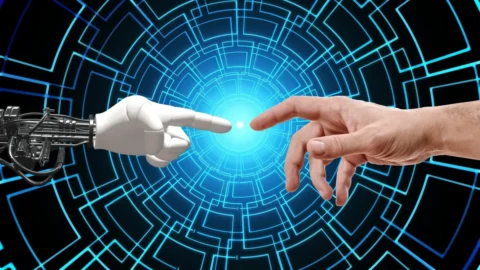
L'artificial intelligence is entering the Italian companies at an ever-increasing pace, but the lack of skills It risks slowing down the transformation. In just one year, the share of companies using it has doubled, reaching 19,5% of the total, according to recent surveys. Unioncamere-DintecHowever, its adoption is uneven: AI is used by over 50% of large companies, while among small ones the percentage is only 15%. And while the technology is increasingly accessible, for many companies the main challenge remains knowing how to use it: at least six out of ten companies, despite being interested in adopting artificial intelligence, are giving up due to a lack of skills.
"The real obstacle has a name: skills, not technology. 58,6% of Italian SMEs cite the lack of digital skills as the primary obstacle to AI adoption, yet only 7% have initiated structured training courses on the topic." Highlighting the gap between interest and preparation is Giuseppe Francesco Italian, full professor of Computer Engineering and Pro-Rector for Artificial Intelligence and Digital Skills at Luiss Guido Carli, among the speakers of the Second Day of the Southin scheduled for September 24, 2026 at the Levante Fair in Bari.
AI is growing, but training is still not keeping pace.
The comparison between the two data – 58,6% of SMEs consider the lack of digital skills the main obstacle AI adoption, and just 7% having initiated structured training programs, illustrates one of the key issues of the digital transition. Technology can be purchased, but transforming it into a work tool requires people capable of understanding how it works, identifying its uses, and assessing its limitations.
The chamber system is already committed to training and Chamber of Commerce of Bari intends to join this process. It's not just about acquiring new technical skills, but also about strengthening traditional capabilities that, with the arrival of AI, can take on new value.
“Our second Southern Italy Day aims to contribute reflection and proposals on some issues that the advent of Artificial Intelligence poses to all of us, to public institutions, to the world of education, to that of entrepreneurship – declared the president of the Chamber of Commerce of Bari, Luciana of Bisceglie -. Those related to adequate cultural education, still insufficient, are paramount, because they involve acquiring new skills and reaffirming old ones that were thought to be obsolete. These include language, organization, ethics, and a series of soft skills, starting with critical thinking, flexibility, and pragmatism. The Chamber of Commerce system,” Di Bisceglie concludes, “has already taken action; there is no shortage of initiatives, incentives, collaborations, and initial results. Our Day on September 24th is part of this journey.”
From Skills to Rules: The Italian and European Challenge
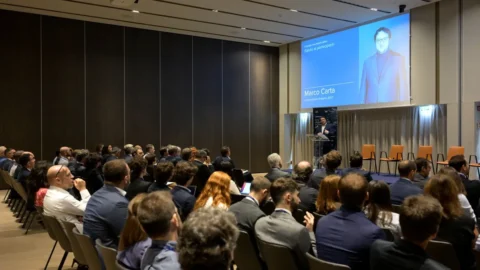
The question of training is intertwined with that of rules and ability to govern the development of artificial intelligenceThe proceedings of the Day on September 24th will be opened by Marco Camisani Calzolari, an expert at the National Cybersecurity Agency and the Department for Digital Transformation of the Presidency of the Council of Ministers, as well as a member of the Coordination Committee for the National Strategy for Artificial Intelligence 2026-2028.
Italy is the most advanced European country in regulating Artificial Intelligence. It was the first country in Europe to pass a dedicated law. However, when it comes to cutting-edge models, Europe lags behind China and the US. But there's a path forward, and the South can become the central hub for Italian AI.
The issue, therefore, is not only how quickly companies will adopt AI, but also what role will be able to take on Italy and Noon in the development of a sector destined to impact the economy and the labor market.
Opportunities and risks of artificial intelligence
The comparison, moderated by Thomas Labate, will broaden its gaze to social and cultural consequences of the spread of AI. Alongside opportunities for businesses and public administrations, the discussion will address issues related to rules and dependencies, ethical and environmental concerns, and reflections offered by Pope Leo XIV's encyclical "Magnifica Humanitas" and the apocalyptic warnings that have been generating widespread media attention in recent days.
From the ability of companies to use technology to need to train people, the debate thus brings together economics, work, education, institutions and ethics: all areas on which artificial intelligence is destined to have a growing impact.
Two Days to Read the Changes in Southern Italy
The event on artificial intelligence is the second part of the Southern Italy Day, promoted by the Bari Chamber of Commerce as part of the 89th Fiera del Levante. The series opens the 22 September, with a day dedicated to the reflections in Italy of the numerous crisis geopolitical that are affecting the planet. Among the guests and speakers on the first day there will be Massimo D'Alema e Antonio DeCaro.
Il September 24th, instead, the focus will shift to theartificial intelligenceFrom data on corporate adoption to the issue of skills, from training to regulations, and the opportunities and risks of a technology that is already changing the way we work.