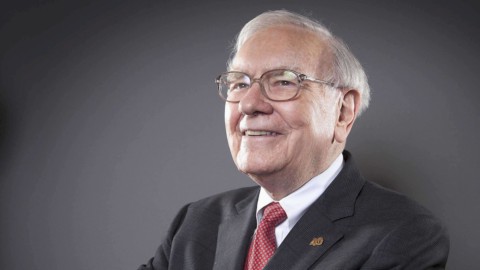
Warren Buffett, which transformed the Berkshire Hathaway Inc. into a company valued at more than $1,16 trillion and which has itself become a famous billionaire for its investment acumen and his jokes, he will resign at the end of the year after six decades at the helm of the company, but will not sell its shareholding.
Greg Abel, Buffett's longtime deputy and vice president for non-insurance operations, 62, will take over the leadership of the group after theapproval of the board of directors, Buffett, 94, said at the annual shareholders meeting Saturday in Omaha, Nebraska. He added that the board of directors plans to meet today.
The announcement stunned the board of directors and even Abel himself, who, despite having long been indicated as Buffett's successor, was unaware that the news would come just as the annual meeting was coming to an end. Then, right during the Q&A, Buffett did not fail to be biting and original, as is his habit, in his answers, criticizing the tariffs decided by Donald Trump (“trade should not be a weapon”) and downplaying recent market declines (“nothing happened, if Berkshire shares were to fall by 50% next week it would be a disaster for me extraordinary purchasing opportunity").
Its earnings were double those of the S&P 500
Berkshire has grown dramatically over the decades with Buffett as chairman and CEO, choosing acquisitions and stocks for the company portfolio alongside his trusted advisor and vice chairman, Charlie Munger, passed away in 2023 at the age of 99. The group acquired a incredible variety of companies, which Buffett often said mirrored the U.S. economy as a whole. A bet on Berkshire, he said, was a bet on America.
Buffett consistently captured the attention of other CEOs and presidents around the world and was able to draw crowds of tens of thousands of shareholders to Omaha each year for the annual meeting.
His success in investing, a 20% compound annual gain between 1965 and 2024, compared to around 10% of the index S&P 500, gave him the power to move stocks and helped him close major deals with Goldman Sachs Group Inc. and General Electric Co. during times of crisis.
It all started with textile companies
Buffett began managing money as a young man, a disciple of Benjamin Graham's investment style. He became more involved in the corporate world when his Buffett Partnership Ltd. purchased shares of Berkshire. In 1965, he took control of the rest of the company. Composed mainly of textile activities in trouble that was destined to disappear, Berkshire became the foundation of Buffett's modern giant. Piece by piece, it developed and acquired businesses in a wide range of sectors, including insurance, which provided him with liquidity, or “float,” to support his investment strategy.
Now, Berkshire owns companies ranging from BNSF railway to the car insurance company Geico, passing through vast activities in the energy sector even to Retailers such as Dairy Queen and See's Candies.
Operating profits of $2024 billion in 47,4, cash of $347,7 billion
His group of companies has generated 47,4 billion dollars di to evaluate operational in 2024. Buffett also expanded the stock portfolio, populating it with huge investments in companies like Apple Inc. and American Express, offering Berkshire another way to participate in the profits of companies it did not directly own.
Abel, 62, Buffett's longtime deputy, will take the reins of a company in full health. While Berkshire just announced a 14% drop in operating profits in the first quarter, at $9,6 billion, following the huge losses suffered by its insurance division due to the wildfires in California, the increase in invested capital in Treasury bonds helped increase investment income.
Buffett has been slow on the deal front during the pandemic, which has left him with a huge cash reserve and few attractive opportunities to invest the money. So Buffett has preferred to buy back his own shares to invest the capital, and as of March 31, Berkshire's cash has reached the 347,7 billion dollars.
Buffet: From his jokes, to his charity, to his hereditary indications
There were also some missteps occasional. Buffett admitted he overpaid for aerospace equipment maker Precision Castparts, a deal that resulted in a $10 billion writedown in 2020. And Buffett and Munger have been notoriously slow to recognize the value of tech stocks, though they later accelerated purchases of Apple shares.
However, his long experience has attracted fans for years. At annual meetings held in a crowded Omaha sports arena, he and Munger would opine on topics ranging from the stock market to cryptocurrencies to even life and success. The annual event, dubbed Woodstock for the capitalists, and his widely read annual letter, both fueled the investor's passion for teaching.
Fans of the billionaire often quote his jokes most memorable. Buffett had one of his quips in 2018 about whether troubled Wells Fargo & Co. — then a longtime Berkshire investment — could uncover further wrongdoing: “There’s never a cockroach in the kitchen.” And he said of financial firms that were overleveraged during the 2008 global crisis: “Only when the tide goes out do you find out who’s been swimming naked.”
Despite Buffett’s large following, his day-to-day management of Berkshire was simple. He had long favored a decentralized management approach, allowing the heads of Berkshire’s various businesses to run operations as they saw fit and to check in from time to time. He reportedly spent a lot of time reading in his corporate office in Omaha. Last year, that office had just 27 employees.
It is known that Buffett, after having already made donations billionaires, plans to allocate 99,5% of its remaining assets to a charity fund managed by his three sons after his death. Less known is his mantra for hereditary passages: leave your children enough money to provide them with a good standard of living, but not enough to allow them to do nothing.