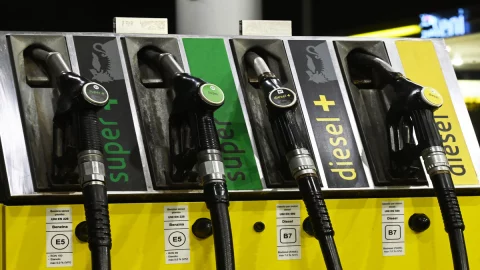
In recent days, despite the geopolitical tensions that usually make oil prices inflame, we have instead seen crude oil prices under control. Instead, when you go to petrol stations to fill up you are surprised by rising prices. How can this situation be explained? Salvatore Carollo, energy trading expert, tries to give an answer, as he reports Milano Finanza. The expert identifies, along the supply chain of the production of black gold, one good quantity of production upstream, but then one scarcity of the refining process downstream. “It's as if we had a dam with a lake full of water, but without enough water transport capacity to get it to the city. We would have excess water upstream and drought downstream” says Carollo.
We have wars in Ukraine and the Middle East. There has just been an Iranian attack in Israel. Yet the price of crude oil, after a fleeting surge on Friday the 12th, has returned below the psychological level of 90 dollars a barrel for Brent.
Crude oil production already meets global demand
Carollo immediately clears the table of the hypothesis of a crisis in the supply of oil as a raw material on a global level. There world demand of finished oil products hovers slightly above 100 million barrels/day. To satisfy this demand it is necessary produce crude oil at a rate of at least 100 million barrels/day. And this, somehow, is happening. So there is ample availability of crude oil and the increase in petrol prices cannot be derived from an oil shortage. If anything, it is the opposite: the high price of products pushes up the price of crude oil.
However, refinement is lacking. Crude oil inventories are very high
The point is that the ability to global refining, of transformation into finished products, is between 83 and 85 million barrels/day. So between 15 and 17 million barrels/day are missing compared to global demand for products. In particular, OECD countries have lost 2 million barrels/day of capacity over the last five years.
Il rest it remains in the state of raw material in stocks scattered around the world. The stocks floating or traveling on oil tankers are very high. Global commercial gasoline stocks at refinery systems are at their lowest levels in 10 years and there is no prospect that they will be replenished in time for the summer campaign.
Refining is in a deep crisis, says Carollo. There are no longer significant investments, apart from the minimum maintenance of existing plants, to ensure adaptation to the new quality demands of the most profitable markets. Having refining capacity to transform crude oil into finished products that serve its national market is a strategic and economic choice of each individual country, not of the producing countries.
In Italy, 13,5 million tonnes of refining capacity have disappeared
Italy it has been for decades the main refining country in Europe and exporter of petrol and diesel to the profitable markets of Northern Europe and North America. It was one of the world's four oil hubs, along with Rotterdam, Houston and Singapore. We were decisive in determining the price of petroleum products and could secure supplies at the lowest possible price.
The contingent situation, which guarantees very high refining margins due to the lack of products on world markets, delays the closure of many of the existing plants over time. Yet, as if that were not enough, existing capacity is being reduced surreptitiously, calling the closure something different, says Carollo: as a transformation into a bio-refinery.
In reality, all the refinery plants stop, leaving only one or two smaller plants operational to process biomass. This so-called transformation has so far led to the disappearance of 15 million tonnes of refining capacity compared to the 1,5 million tonnes of bio-refinery remaining, with a net reduction of 13,5 million tonnes, lost forever, concludes Carollo as reported by MF.