

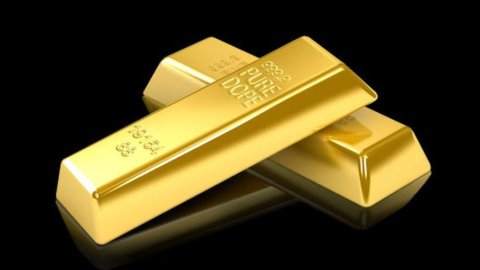
We don't know why, but financial crises often erupt during the summer. I have personally experienced several. But the first, and the most important one, from which the problems we are experiencing these days derive in part, exploded precisely on August 15th forty years ago when the President of the United States Richard Nixon (the one who would later be forced to resign over the Watergate crisis) proclaimed the non-convertibility of the dollar into gold. Since 1944, that is, since in the midst of the war, an international conference of economics and finance experts meeting in Bretton Woods had established the rules to give impetus to an orderly expansion of international trade, the dollar was the reference currency to which they were linked all other currencies had fixed exchange rates, while the dollar itself was pegged to gold at a fixed price of 35 dollars an ounce.
This system had certainly favored a great expansion of international trade and therefore encouraged the development of all the countries, mostly Western, which were part of it. However, such a system had given the dollar the enormous power not to be subjected to any balance of payments constraint (as other countries were) because it was used as a reserve currency by all the other states. This allowed the US Treasury to print as many dollars as it needed and then place them in the rest of the world.
The French president, General De Gaulle, already in the early 60s began to say that there were too many dollars in circulation and to ask for the reserves held by the Bank of France to be converted into gold. Over time, doubts about the actual ability of the USA to meet all requests for the conversion of dollars in circulation into gold increased considerably and many states, perhaps without making any controversy, began to ask for the conversion of their dollar reserves. The situation became explosive when the needs of the Vietnam War imposed on the United States the need to print more and more dollars which were placed on world markets to buy from every corner of the globe the goods necessary to satisfy the immense needs of the American army .
As a young editor who had just arrived at the Milan editorial office of Il Sole 24 Ore, I was, like the great mass of people, largely unaware of the seriousness of the international financial situation, and I had left a few days earlier in my Fiat 127 for a short vacation on the Gargano, a rather wild place at the time and little valued from a tourist point of view. The journey was long and had to be done by car without air conditioning, with the windows half open and therefore with the risk of stiff neck always lurking. Communications were rather rudimentary compared to today. There was no internet, there were no cell phones, the hotels didn't have TVs in all the rooms. When it came to economic news, the radio gave information in a very concise form, almost as if it feared getting its hands dirty with money matters. I therefore learned of Nixon's decision on the morning of August 16 from fragmentary radio news, from which, also due to my cultural shortcomings, I was unable to understand exactly what had happened, and above all what the consequences could have been on the financial markets (at the time I was dealing above all on the Stock Exchange and bonds) and on those of exchanges. Then, once I found a public telephone equipped for long-distance calls, I managed to get in touch with the newspaper and with my boss at the time, Alfredo Recanatesi, with whom I agreed on the times for my return which, considering the state of the roads and of my modest means of transport, they certainly weren't lightning fast.
From then began years of turbulence on the exchange markets, a stagnation of the economies accompanied by high inflation (which was called Stagflation), corporate restructuring, with consequent unemployment, social malaise, and in certain countries, such as Italy, a widespread and violent terrorism that bloodied our cities for a decade. Without going into the history of all the crises we have experienced up to now, we can certainly draw some lessons from the past that can be valid these days, when, following a crisis of confidence on our public debt, we have to face yet another fiscal sting .
Firstly, a relatively rich country like Italy can, if it achieves a certain national cohesion towards an objective, succeed once again. So we need a little optimism and the ability to roll up our sleeves to do better and better what we know how to do.
Secondly, it is becoming more and more evident that, forty years ago as today, the real cause of the crises is the short-sightedness of governments. No government has the courage to slow down the economy at the right moment and prevent the bubble from bursting. It is said today that it is the fault of the markets that there is a debt crisis in Italy and in Greece and Spain. But is it really the speculators who created the imbalances in the balance of payments or in the amount of debt that many operators today refuse to continue to finance? The dollar, while no longer tied to gold, builds on the strength of the US economy. But if this is challenged by the government's inability to address twin federal budget and trade balance deficits, what should investors do to safeguard their assets? And so for Italy. After so many years of stagnation and having ascertained that the government lacks the will to tackle those reforms capable of raising our growth potential, savers cannot be expected to continue to have faith in our country's ability to repay its huge public debt.
In Italy then we have an excess of levels of government. Nothing can be decided, or the things that can be done cause other problems. Politics is then reduced to a little theater without even the ability to make people laugh. We need to hear Bossi breaking his balls at meetings with Berlusconi. And what should we who are the victims of those decisions made in such long and boring meetings say? We can only express the hope that, once again like forty years ago, the sting of August XNUMXth will not bend our optimism and our will to rebuild a prosperous but healthier and more balanced country.
Of course: https://www.firstonline.info/bitcoin-in-caduta-libera-con-volatilita-alle-stelle/
Interesting how this article, written 7 years ago, from the ashes of the dramatic crisis of 2008, only strengthens my faith in a cryptocurrency capable of acting as a solid alternative to coins "printed" at will by governments and central banks arm in arm. not only for holding a value that is not relative.