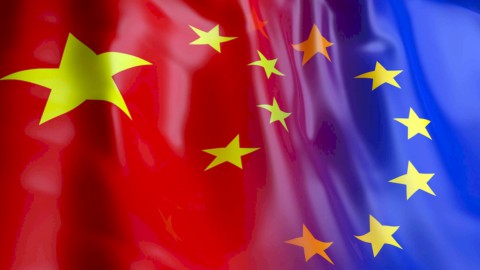
An duty war it broke out betweenEuropean Union , China. After Brussels decided last week to increase import duties of Chinese electric cars, with increases of up to 38%, bringing the total up to 48,1%, the clash with Beijing intensifies. Waiting for a (now) probable one Chinese response that increases duties on European cars, (with Chinese electric car manufacturers having asked Beijing to adopt the "severest measures possible, including 25% duties on large-displacement cars coming from the EU), meanwhile, in retaliation, the Chinese Ministry of Commerce has started aanti-dumping investigation on pork products imported from the EU.
The new duties on Chinese electric cars
The European Commission has decided to increase duties on Chinese cars in response to months of investigations which highlighted unfair competition practices by Chinese manufacturers. These benefited from public subsidies that allowed them to sell vehicles at lower prices to production costs, damaging European producers.
Currently, cars imported from China into Europe are taxed at 10%, while European cars imported into China are subject to a 15% duty. THE new European duties, expected by the Commission, will be able to add up to 38% to Chinese vehicles, bringing the maximum total at 48,1%. These duties will vary by manufacturer: BYD will face a 17,4% increase, Geely 20%, and SAIC 38,1%. Other Chinese producers who cooperated in the investigation will face a weighted average duty of 21%, while it will be 38,1% for those who did not cooperate.
The new tariffs will also hit Western manufacturers that assemble models in China, such as BMW with the iX3 and Mini, Mercedes with the new Smart models, Renault with the electric Dacia Spring and Tesla which ships Model 3s from Shanghai to Europe. THE new European duties will be temporary, retroactive, will take effect in July and will remain in effect for five years, subject to ratification by Member States by 2 November.
The Chinese response: tariffs on European cars of 25% soon
The analysts, they had predicted that China would have responded to increases in European duties with similar measures, increasing tariffs on European car imports by 15 25% to% and applying new tariffs on other goods. THE Chinese producers of electric cars they have pressed Beijing to adopt severe measures, including the imposition of 25% duties on large cars coming from the EU.
In a closed-door meeting held at the Ministry of Commerce in Beijing on Tuesday, four Chinese, six European automakers and representatives of industrial and research bodies made these requests. In particular, it has been suggested to apply thigher provisional rates on large-capacity petrol cars imported from Europe, in accordance with WTO rules, up to 25%, in line with carbon emission reduction objectives.
According to reports, Chinese companies they criticized the EU for abusing its investigative powers in arbitrarily expanding the scope of the investigation, going so far as to ask for details on Chinese battery technology during the anti-subsidy investigations.
But in the meantime, China is taking revenge: tariffs on EU pork
China, meanwhile, responded to the new duties announced by Brussels with theinitiation of an anti-dumping investigation on imports of pork products coming from the EU.
The investigation, opened at the request of a local association on behalf of the national pig industry, concerns both fresh and frozen meat, as well as offal and other pork by-products. Covers a four-year industrial damage assessment period, by 2020 to 2023, and could be extended for six months beyond expected period of one year initially. According to the Chinese Ministry of Commerce, Brussels has twenty days to respond to the issue. Chinese industries, explains the ministry spokesperson, “have the right to request the opening of investigations into subsidies and anti-dumping measures, which the competent authorities will examine in accordance with the law. The investigation will establish whether European products are sold at a price that does not accurately reflect production costs."
The decision to impose tariffs on pork could only represent the first of a potential series of retaliatory measures against the European Union, as suggested by Chinese industrial sources who also mentioned the automobile as the next target.
Beijing had communicated to the EU institutions that the proposed tariffs would damage Europe's interests, expressing condemnation of the "protectionism" of European Union.