The world of meat becomes increasingly crowded: after the vegetable meat, That vegan the green light comes to the consumption of synthetic meat In the USA. The decision of the Food and Drug Administration, the American government body that regulates the administration of medicines and food, could pave the way within the EU, and therefore in Italy. But what is synthetic meat and what are they the pros and cons?
Synthetic meat is also known as clean meat, because it has a low environmental impact and eliminates intensive farming and, with them, the mistreatment of animals. For now he is experimenting with hamburgers produced in the laboratory and born from animal stem cells. But among the fears, more or less legitimate, there is the risk that "food becomes the object of technological drift that deprives it of any cultural meaning, of the link with the territories and with the communities that live there, with their knowledge and traditions". It is the alarm raised by Barbara Nappini, president of Slow Food Italy, commenting on the first green light in the United States.
Synthetic meat is not vegan
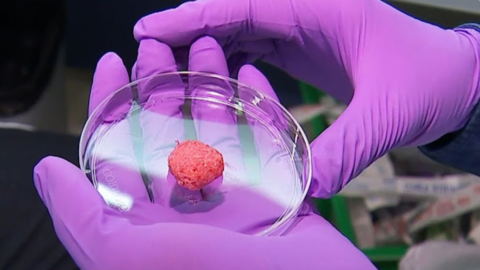
The "Frankenstein meat", as Coldiretti defines it, is not vegan. It is created in the laboratory from stem cells taken from live animals (without causing any pain). Which multiply in vitro or in bioreactors according to the principles of regenerative medicine. The meat obtained with this procedure is equivalent to the "real" one from a biological point of view and is also very similar in taste.
The synthetic meat turnover could reach 460 billion dollars in 2040
Il turnover of laboratory-produced meat could reach 450 billion dollars in 2040, or 20% of the world meat market. 8% of vegans are in favour, while the greatest opposition comes from Italian farmers and meat producers. In Europe the situation is different. The synthetic steak "sooner or later will also enter the EU food market" as "it is no longer something surreal, but reality". He stated it Wolfgang Gelbmann, senior scientific officer of EFSA, the European food safety authority, in an interview with Politico.
Synthetic meat: pros and cons
But let's see the pros and cons of synthetic meat. Between pro la artificial meat it would drastically reduce animal slaughter, waste, soil consumption, and limit the bleeding of water. However, if the market expands, it could lead to soil pollution problems, due to the large quantities of chemicals, hormones and growth factors used to grow cells.
In reality, the impact of synthetic meat on the environment is far from indifferent, due to the large energy consumption of the bioreactors necessary for its production. An insufficiently noted, but extremely important fact is that the products based on cultured meat are hyper-processed, they contain colourings, flavourings, thickeners, necessary to give them crafts, consistency e flavor of meat. The meat is developed thanks to GMO hormones and yeasts. As well as i plant-based meat substitutes.
Furthermore, the marketing in favor of cultured meat and meat substitutes obtained from plant cells could affect not only the industrialized farming that is undermining the planet's resources, but also the sustainable farmersalready penalized by the market.
Among the against there are the Costs. Producing meat in the laboratory (at least initially) is very expensive, given that there are also indirect management costs to be included together with the costs of the material and skilled labour; costs of reagents and nutrient media and costs of bioreactors.
Transparency on the label is crucial
The EU will soon face important decisions to protect consumers. For example, if it will be possible to define cellular agriculture products on the label with terms such as "meat" or "hamburger" or "steak", in order not to create confusion on the market.
Therefore, transparency on the label is crucial for consumers to know what they put in their cart.
Slow Food: “The right diet? Choose your proteins carefully
Sparing the suffering of many animals and reducing the environmental impact are certainly two objectives to be achieved. Now it remains to understand which is the right path to take. “According to Slow Food, the future of good, clean and fair food production for everyone lies in the more conscious choice of proteins to bring to the table. We must reduce the consumption of meat and favor, as an alternative to meat from industrial farms, products from sustainable companies where the animals are raised with respect. The reduction in meat consumption can be compensated with legumes from crops that respect the earth and not with soy from other continents, the result of monocultures that impoverish and poison communities and territories. There is no need for other highly processed substitutes,” concluded Nappini.