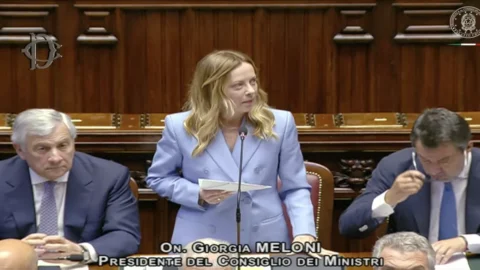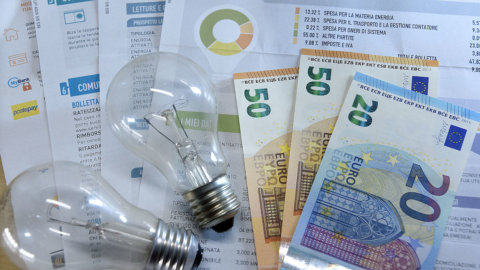
A new one is coming decree bills. This was announced by Economy and Finance Minister Giancarlo Giorgetti during question time in the Senate. The decree will be worth around 5 billion and will be discussed on Tuesday 28 March by the Council of Ministers and the measures should affect the April-June period. It is a race against time given that the current incentives will expire on March 31, while inflation continues to bite into the accounts of Italian families. But what does the new 2023 bill bonus?
The new interventions against high bills, said the minister, will have to "take into account the available resources". This is because he will expect "the new economic framework provided by the Economic and Financial Document", but also some negotiations on the European tables, such as the one "on the RePowerEu and on the negotiations with the European Commission regarding the Pnrr". And while the ECB calls for aid cuts, the Government is preparing to launch a new decree to control bill costs and help less well-off families. But let's see in detail what these measures are.
2023 bill bonus: new and "old" measures against expensive energy
The first confirmation is the social bonus. Also for the second quarter of 2023, families with an income of up to 15 thousand euros will be able to take advantage of the bill discounts. If the new decree were to confirm the structure currently in force, then those with an ISEE below 9.530 euros would continue to receive the full subsidy, while those with an ISEE between 9.530 and 15 thousand euros and with less than 4 dependent children bonus would be recognized to the extent reduced by 80%.
Another measure towards the extension is theVAT on gas. This will remain reduced to 5%, instead of returning to 10% or 22% depending on the type of user. In addition, the minister announced that "structural measures to support the companies“, but in the meantime “the tax credits will be confirmed for the next quarter”. Here too there are still no detailed numbers on the size of the credits and the type of companies that will be able to have them, even if the minister specified that "they will take into account the price changes that have occurred in the last period". There could therefore be a drop, therefore, compared to the figures of recent months.
2023 bill bonus: compensation and system charges
The most important news, however, will come from 1 October. Regardless of income, from the beginning of the thermal year, a new form of compensation for the heating costs "which will be disbursed to households through the electricity bill". The intention is then to reward those who reduce consumption in the form of a bonus or discount on their bills. Also in this case, fundamental details are missing: for example, how much the refund will consist of.
Instead, Giorgetti did not speak of the system charges which will no longer be reset and will therefore return to the invoice. At least on the electricity front, bill prices can be expected to rise again from April onwards.
The Intesa Sanpaolo office
The price of energy is gradually decreasing, but the emergency cannot be considered completely over. In Amsterdam, prices fell by 1,36% to 42,6 euros per megawatt hour. Since the beginning of the year, the price has dropped by 47,6%. But is it just a momentary slip?
Un Intesa Sanpaolo report reported by Milano Finanza curbs enthusiasm. It is true that we are far from the peaks of August 2022, but it will be difficult to go back down to the 20 euros of the pre-Covid period. The analysis by Daniela Corsini, cfa (Chartered Financial Analyst) and Senior Economist Rates, Fx & Commodities Research of Intesa Sanpaolo, announces it from the title: “Gas & power: further potential for short-term downside, long-term upside potential”.
Prices are decreasing, but many unknowns still weigh
Today's picture is positive: i TTF prices have suffered a sharp decline and there are "adequate import flows of gas and LNG (liquefied natural gas)". The reduction in consumption by industry and households together with an exceptionally mild winter have reduced the demand for heating. The increase in nuclear energy production in France and the lack of competition with Asia on the LNG markets also limited the erosion of European gas stocks, which are close to the seasonal record. In fact, Europe could start the new filling season with stocks 50-55% full, facilitating re-accumulation in view of next winter.
But pay attention to risks. There are several unknowns that lead the report to one conclusion: the cut in consumption must continue. First, the weather conditions; then the uncertainty about nuclear and renewable generation or the hydroelectric generation crisis due to the drought in Italy and France and, finally, the uncertainty about pipeline flows (especially from Russia), LNG flows, the restart of the Freeport's LNG export, on competition with Asia.
Gas, why is it necessary to cut consumption?
“If Europe abandons the current cuts in demand and consumption increases, driven by a recovery in industrial production and above all in energy-intensive activities, the process of filling stocks will be more difficult and prices will rise accordingly”, observes Corsini. But what are the price predictions of Entente? In the short term, the study sees further downside potential of between €35 and €45 per MWh. "In our opinion", reads the report, "prices below 30 euro/MWh are not consistent with the structural changes that have taken place in the last two years for supply and demand".
The best case scenario? “23 euros per MWh is probably the minimum reasonable support,” according to Corsini.