The importance of the next few days for the future of the newly installed government is not lost on anyone. Often, the quality of the first moves, the game setup can be half the game. And here on the agenda for the new Prime Minister, Giuseppe Conte, burning dossiers are underlined in red, you are spoiled for choice. Among these, however, one stands out in particular: the application of the new law on the renewal of Rai top management, which expires at the end of this month.
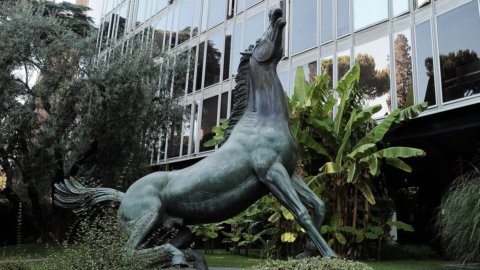
This newspaper wrote a lot about it, but when the difficulties in forming a new executive seemed insurmountable. Now, however, the scenario has changed and shortly thereafter in Viale Mazzini the new Chief Executive Officer (no longer General Manager) and a new President with relative board will sit. As known, this will be made up of seven members: 4 from parliamentary sources (two House and two Senate) two from government sources and one elected among Rai employees. On May 31, the nominations for those who will be nominated by the Chambers closed, as well as for the one proposed by the employees who will have to be elected with an internal referendum.
Why does the appointment of the new leaders of Viale Mazzini take on particular significance, precisely at the opening of the political game, at the beginning of the legislature? For a simple and fundamental reason: the Public Radio and Television Service, directly and indirectly, participates substantially in the formation of consensus among citizens. He is not the only creator, and in fact in recent years we have witnessed and still witness the emergence of another dynamic capable of seriously shaking the codes, languages, behaviors and perceptions of political action. We are speaking of the Web, of social networks, of the various applications which have partially replaced the assemblies, the rallies, the meetings in the sections. Rai is therefore in good company in this process and, due to the position of strategic importance it occupies, its "control" contributes not a little to determining the perception of the work of the new Government. It therefore appears evident that tackling this "trouble" immediately and trying to resolve it in the best possible way is a strategic move for the new government.
Put in these terms, it is above all a question of guaranteeing the necessary governance of the Concessionaire, but it is also a question of correctly setting up Rai's new logic according to the new rules. What are the main stakes: essentially two. The first is the role, the mission, of the public radio and television service in the near future and, consequently, the representation of society that it will have to reflect. They are two cyclopean tasks. We have written a great deal about the former: a sort of Copernican revolution will start as early as next September with the application of the Community directives on the reallocation of frequencies around 700 Mhz. It is likely that it will not have an impact on the strategic choices of Viale Mazzini in the short term, but in the background we can glimpse the mother of all battles, the outcome of which could also be devastating: the end of digital terrestrial television. In recent days The Guardian reported the news of a possible "TV exit" scenario involving the BBC, precisely in view of the need to counter the hemorrhage of viewers, especially young people, in favor of Netflix, Amazon and others like them.
To keep to a closer calendar, the next Board of Directors will find the agenda full of the commitments posed by the application of the recently renewed Service Contract right at the autumn recovery: the new business plan and the editorial plan will have to be presented, together with the one channel in English and one institutional. It doesn't really look like cheap stuff. And here the picture is composed and the weights that the new directors will have to be able to lift are well understood.
The first four, elected by the Chambers, will inevitably be the result of complex negotiations between the parties and it is not at all clear whether an attempt will be made to achieve a balance between the majority and the opposition. It may happen that the parties supporting the Government want to extend their control directly over the Concessionaire. In the procedures for presenting the applications, has it not been specified in any way how these will be evaluated: degree mark, previous experience as an administrator or something else? Among the many who have nominated themselves, there are important and authoritative names and, among these, few of them are absolutely "neutral". The case of competing names among Rai employees is different. Anyone could be a candidate with 150 signatures or with the support of trade union organizations.
It is difficult to imagine that the task of the new administrators, both those from parliamentary and internal Rai sources, can be limited to the sole role of verification and control. Something more is needed that cannot be improvised. Skills and professional history are not invented from scratch. Similarly, the complexity of Italian society that Rai reflects, for better or for worse, cannot be relegated, once again, to a mere political alchemy of convenience. The game is about to start, we'll see.