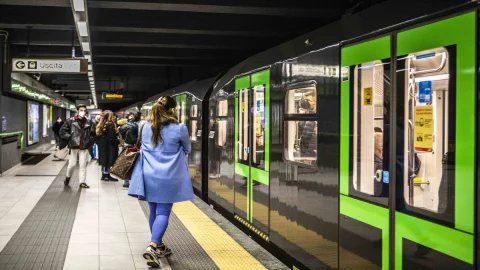
In Italy, over 7 million people are not adequately served by public transport. This is a very high number, corresponding to more than one in ten citizens live in conditions of "transport poverty", that is, a still little-known form of social vulnerability that manifests itself in the inability to afford the costs of public or private transportation and in the lack or limited access to the transportation needed to access essential services, employment, and economic and social opportunities.
The data emerges from the first Green Paper on transport poverty in Italy, presented by Transport Poverty Lab promoted by the Foundation for Sustainable Development, with the support of Tper and Nordcom, the patronage of the European Commission, the Ministry of the Environment and Energy Security and the Ministry of Infrastructure and Transport, and the technical collaboration of the Sharing Mobility Observatory and the Transform Transport Ets Foundation.
According to the study, approximately 1,2 million families are simultaneously at risk of poverty and face particularly high mobility costs. At the same time, 7,3 million citizens live in areas with insufficient public transport provisionThe regional divide is marked: in the South, the availability of local public transport drops below 200 seat-km per inhabitant in some areas of Sardinia and Sicily, compared to a national average of 4.623 and over 16.000 seat-km in Milan. At the regional level, the highest proportion of vulnerable families is recorded in Calabria, where it exceeds 10%, while the figure drops below 2% in Trentino-Alto Adige.
The 4 types of vulnerable citizens
The Green Paper has developed a first matrix of transport poverty which identifies 4 macro-typologies of citizens, as a key to interpreting this phenomenon, which often sees two main components overlap—the difficulty of sustaining mobility costs and the difficulty of accessing the transportation needed to reach essential opportunities and services. These include citizens experiencing the most acute form of exclusion, where low income is compounded by the lack of available transportation options in the area (absolute vulnerability); citizens with adequate personal resources, but penalized by a local context lacking mobility services. They often compensate for these limitations by extensively relying on private cars (territorial vulnerability); citizens living in a well-served area, but with limited personal capabilities. Economic, physical, or social barriers reduce the availability of services (personal vulnerability); citizens with adequate personal capabilities, in an area offering multiple, efficient mobility options (availability and accessibility).
The European Regulation establishing the Social Climate Fund adds to this "structural" vulnerability an "induced vulnerability," which occurs when a European measure designed to promote sustainable mobility has an economic impact on citizens and micro-enterprises. To counteract this, The Fund will mobilize approximately 85 billion euros, to be used in the period 2026-2032, allocating 9 of them to Italy.
Here are the possible solutions at European level
In Europe more than 25 million residents are unable to buy a car, More than 10 million cannot afford public transport and nearly 90 million lack accessible public transport. The European Regulation identifies two broad categories of measures that Member States can invest in to mitigate the social and economic impact on vulnerable users and microenterprises:
1. Facilitate access to zero- and low-emission vehicles.
2. Facilitate access to shared and sustainable mobility.
In particular, by proposing a first operational taxonomy, the Guidance on the Social Climate Plans offers a clear and structured set of measures, a real Ten Commandments of Measures to Combat Transport Poverty:
1. Financial support and tax incentives for the direct purchase of low and zero-emission vehicles;
2. Schemes for the rental or leasing of zero-emission vehicles for vulnerable groups based on factors such as income, accessibility of public transport, and commuting times and distances to avoid regressive effects.
3. Investments in public charging infrastructure smart and bidirectional at competitive prices, in areas with vulnerable users and transport poverty.
4. Subsidies for the purchase or leasing of zero-emission vehicles intended for micro-enterprises (e.g. taxis, vans, trucks, special-purpose vehicles or cargo bikes).
5. Additional bonuses for scrapping diesel and petrol vehicles, with the guarantee that no polluting replacement vehicles are purchased.
6. Promotion of the use of bicycles, e-bikes, cargo bikes and micromobility solutions, promoting both the creation of safe cycling infrastructure that connects low-income areas with key destinations, as well as subsidies for the purchase, long-term rental or leasing of bicycles, e-bikes or cargo bikes.
7. Incentives for the use of affordable and accessible public transport, supporting public and private entities, including cooperatives, in the development of sustainable on-demand mobility, shared mobility, and active mobility options.
8. Public support for on-demand services, “mobility as a service (MaaS)” and shared mobility, to cover the entire chain of journeys, including the first and last mile, taking into account the needs of vulnerable groups in remote and disadvantaged areas, including through subsidized vouchers.
9. Extension of public transport offerings and related infrastructure, especially in underserved rural and urban areas, benefiting vulnerable transport users.
10. Investments in mobility hubs, to facilitate exchanges and connections between public transport, shared mobility, cycling and walking in suburban, peri-urban and rural areas.
Some solutions already proposed at international level
Various intervention tools within these macro-categories have recently emerged internationally, some of which are also being implemented in Italy. Here are some examples:
· Mobility Wallet: Income-linked digital wallets offered by the state to pay for public transport, shared mobility, and taxis (e.g., Los Angeles, Brussels, France).
· Bonus for purchasing electric cars and bicycles intended for families with low ISEE (Italy, California, Germany).
· Social leasing for zero-emission vehicles, aimed at families and micro-businesses based on factors such as income, accessibility of public transport, and times and distances between home and workplace
· Discounted rates on taxis and ride-hailing: discounts for women, seniors, unemployed (e.g. Rome, Trento).
· Subsidized public transport: free or reduced-price passes (e.g. Transport Bonus Italy, “Solidarity Pricing” model in France).
· Demand Responsive Transit: services with social or free rates for rural or peripheral areas
· Carpooling encouraged: premiums or discounted fares for low-income commuters (e.g. France, Karos project).
The statements of the protagonists
“The transport sector – he said Edo Ronchi (President of the Foundation for Sustainable Development) – is the only one in Italy that has not reduced greenhouse gas emissions since 1990, with a negative impact on citizens' health and the livability of our cities. To achieve decarbonization goals, it is crucial to support the most vulnerable segments of the population, both in purchasing less polluting vehicles and in accessing shared mobility services, because the ecological transition is not a constraint, but must represent an opportunity for everyone.
“Promoting and supporting mobility as a determining factor for the quality of life of every single individual – he instead affirmed Fabrizio Garavaglia (President of Nordcom) -, represents a decisive objective towards equity and equal opportunities for citizens. Nordcom, a company that offers digital solutions for transportation, has supported the Analysis and Study Laboratory dedicated to transport poverty in Italy since its inception. Digital tools, technological innovation, and artificial intelligence are all enabling levers for combating transport poverty. The first Report, which we are presenting today in Milan, clearly highlights the importance of combining strategic and systemic choices with adequate digital planning, which is essential to achieving the objectives set out in the Report.