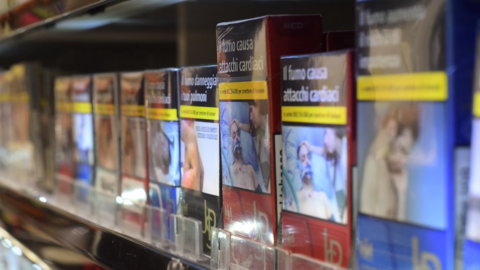
Il National Health Service (SSN) has been facing a growing financial and organizational crisis. Among the many proposals to ensure its sustainability, a measure emerges discussed for some time but which now seems to be gaining more concreteness: increase the price of cigarettes by five euros per pack, allocating the proceeds to public health. This idea, advanced by the Italian Association of Medical Oncology (Aiom), aims to collect significant resources and, at the same time, reduce tobacco consumption, the main cause of lung cancer. A measure that, according to Aiom, would allow raise up to 13,8 billion euros, a vital sum to ensure the sustainability of the health system.
Cigarette prices, tax to support healthcare
The idea of increasing the price of cigarettes by 5 euros per pack was born from a double objective: raise funds to support the NHS, which is in critical conditions, and reduce the number of smokers in the country. “Smoking is a risk factor for numerous diseases, especially lung cancer, and reducing cigarette consumption is fundamental for public health and the sustainability of the NHS,” he stressed Francesco Perrone, president of Aiom.
The proposal, in addition to targeting regular smokers, aims to reduce the rate of new addictions, especially among young people. This mechanism could prove effective, as demonstrated by the examples of other European countries where similar tax policies have reduced the number of tobacco consumers.
Cigarette prices, the impact of smoking on the health system
Every year in Italy, the smoking causes over 93.000 deaths, 90% of which are related to lung cancer. Prevention is essential, considering that the health and social cost of smoking exceeds the 26 billion euros year. Saverio Cinieri, president of the Aiom Foundation, reiterated: “There is no safe threshold for cigarette consumption. Even at low levels, smoking poses high health risks.”
A worrying fact is theincrease in tobacco use among women, with a corresponding increase in lung cancer mortality of 16% between 2007 and 2019. Aiom estimates that 75-80% of lung cancer cases are diagnosed in an advanced stage, drastically reducing the chances of recovery. A situation that weighs not only on patients and their families, but also on the healthcare system, already at the limit.
Cigarette prices, political support and cross-party consensus
The proposal to increase the price of cigarettes has already received a broad political consensus. Maria Domenica Castellone, vice president of the Senate, confirmed the intention to include the amendment in the next budget maneuver, explaining that the measure could also be extended to heated tobacco. In addition to the budget law, a presentation of amendments is also expected in the decree against violence against health workers, recently discussed in the Senate.
even the Democratic Party has shown its support, with the senator Beatrice Lorenzin, who had already attempted to introduce an increase in cigarette prices in 2014. “At the time we encountered resistance from some institutions, but today I believe that we have understood how right and necessary this measure is for the country,” commented the former minister.
The idea of further taxing cigarettes would extend even to heated tobacco products, in an attempt to regulate all forms of nicotine consumption. The amendment, therefore, is configured as a complex measure that aims to affect both regular consumers of traditional cigarettes and those who use alternative products
Cigarette prices in Italy among the lowest in Europe
In Italy, The average price of a pack of cigarettes is among the lowest in Europe, settling at around 6,20 euros. In comparison, countries like Ireland e Norway exceed 12 euros, while in UK the cost is around 12-13 euros. In Germany e Spain, prices are closer to those in Italy, between 6 and 7 euros, with Spain having the lowest prices, around 5,54 euros. In other European countries, prices are around 8 euros (Romania), 6,90 (Netherlands) and 6,46 (Poland).
In France, where is the current cost is 12,50 euros, a 5% annual increase on cigarettes, with the aim of reaching 25 euros per pack by 2040, was discussed in June as a measure to reduce smoking, which causes more than 73.000 avoidable deaths each year. The French Senate's Social Affairs Committee believes that higher taxation could encourage healthier lifestyles.
Other countries have also adopted strict anti-smoking policies: in United States the average cost of a package is around 8 dollars, while in Australia can exceed 20 euros. The New Zealand, instead, has decided to ban the sale of cigarettes to anyone born after 2008, with the aim of eliminating smoking by 2025.
The Risk of Smuggling: Myth or Reality?
One of the main concerns related to the increase in cigarette prices is the potential increase in the black market. However, international studies have shown that, with adequate countermeasures, illegal trade does not necessarily increase in response to price increases. Maria Domenica Castellone commented that “this belief is not supported by the data. It is a wrong perception, which can be disproved with effective controls.”
The experience of other European countries has confirmed that the Illegal market can be managed through enforcement strategies and awareness campaigns. The Aiom proposal aims, in fact, not only to generate funds, but also to promote awareness of the harms of smoking through advertising campaigns and prevention programs.
The economic burden: effects on the basket and public health
The increase in cigarette prices could have repercussions not only on consumers, but also on the economy as a whole. Silvano Gallus, of the Mario Negri Institute, highlighted that “a 10% increase in the price of cigarettes leads to a 4% reduction in consumption.” This suggests that the price increase would have a direct impact on consumer behaviour, leading to a decrease in the number of smokers and, consequently, to a improving public health.
Despite concerns about the effect on consumers' baskets, the price increases could be offset by the benefits in terms of reduced long-term health care costs. Fewer smokers would mean fewer smoking-related diseases and less spending on the treatment of chronic conditions, such as lung cancer and cardiovascular disease.
A health policy measure, not just a fiscal one
The proposal to increase the price of cigarettes should not be seen exclusively as a fiscal measure. The introduction of a specific tax would have a double effect: to ensure a stable source of funding for the NHS e Strengthen smoking prevention policiesThe initiative of the Aiom, called #SOStenereSSN, aims to raise public awareness of the dangers of smoking and to promote healthier lifestyles, especially among young people.