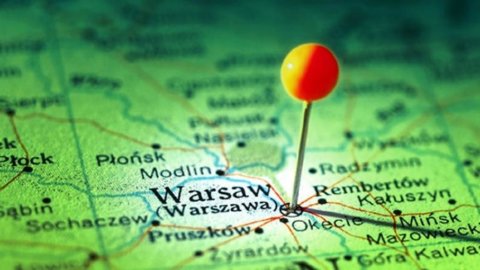
During the 2008/2009 credit crisis the Polish currency, the zloty, depreciated heavily against the euro. However, since then the exchange rate has been relatively stable, fluctuating between 0,26 and 0,22. It is currently, there is no reason to expect a major currency fluctuation. All in all, Poland enjoys solid investment grade ratings and the government can borrow capital at good interest rates on the financial markets. But nevertheless rates on 10-year government bonds have decreased since 2011, following the "safe haven" model, the rate remains well below the pre-crisis level. The Polish economy grew at an average rate of over 4% in the ten years prior to the Credit crisis 2008/2009, during which it continued to grow despite the unfavorable economic situation and the recession of the Eurozone countries, albeit at more modest rates (+1,6%). However, after a rebound in 2010 and 2011, the economy slowed to 1,9% in 2012 and only 1,3% in 2013, mainly due to the particularly slow domestic demand and low level of investment.
Earlier this year Atradius saw signs of another recovery. The economy grew by .9% in the third quarter of 2013 after just an average of 0,8% in the previous three months, thanks to the increase in net exports. In 2014 a further acceleration of growth is expected (+2,9%), driven by a increase in domestic demand and investment. These improved conditions have led to increased consumer confidence and it is desirable an increase in household consumption (+2,5%). The Polish economy will also continue to benefit from the improvement of economic conditions in the Eurozone. Given the increasing orders, exports will play an important role for Poland's economic growth in 2014.
Inflation hovered above the Eurozone average from the onset of the financial crisis in 2008 until the end of 2012, embarking on a downward path from mid-2012, reaching a peak of 1,0% during the of last year. For its part, unemployment increased to 10,6% during 2013 given the moderate economic growth, still below Eurozone levels. Since the middle of last year, the number of unemployed has started to decline again, albeit slowly, and this process is expected to continue in 2014, bringing with it higher wages and prompting a recovery in consumption. In this situation, given the slowdown in economic growth in the years 2012-2013 and the lower general level of prices which remained below the Central Bank's target rate (2,5%), minor cuts in interest rates are expected to support the recovery in GDP, thus increasing consumer confidence and boosting private investment.
The government's fiscal position is under pressure, with the budget deficit increasing to 4,7% of GDP in 2013 due to lower revenues. A slight improvement (to 3,7% of GDP) is expected this year, given its consolidation efforts undertaken by the government, which extended to 2015 the agreement with the International Monetary Fund for a flexible credit line (FCL ) worth $33,8 billion. However, the focus now is on financing operations without having to draw on the credit line. on closer inspection, public debt rose to almost 55% of GDP last year from 44% in 2007. A stabilization is likely in the coming years as a result of higher economic and budgetary growth. For its part, the current account deficit is expected to be around 2% of GDP in 2013, increasing slightly in 2014 due to strong domestic demand, with imports growing faster than exports. In this way the current account balance will probably remain in deficit in the coming years, with the public and private actors vulnerable to exchange rate volatility and external investor sentiment who have to refinance their current loans.