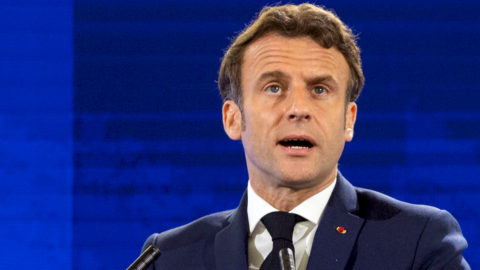
"A failure". This is the word used by the leader of the CFDT (Confédération française démocratique du travail) Laurent Berger coming out of the eagerly awaited meeting between the French premier, Elisabeth Borne, And sindacati summoned for the purpose of end the protests which have been bringing France to its knees for months and which show no sign of diminishing even after the disputed approval of the pension reform wanted by the President of the Republic, Emmanuel Macron. At the end of the meeting, in fact, the unions said they were ready to take to the streets again on Thursday 7 April.
The meeting between trade unions and the Government
During the meeting, which lasted less than an hour, the unions asked the Premier to withdraw the pension reform, receiving an obvious refusal from Borne. “We repeated to the Prime Minister that there can be no other democratic outcome than the withdrawal of the text. The prime minister replied that he wanted to keep his measure,” the unions explained. “We refuse to move on and open, as the government wants, other consultations on topics as diverse as full employment or the sharing of wealth”, said the confederal president of the CFDT, Laurent Berger.
The words of the general secretary of the CGT (Confédération générale du travail), Sophie Binet, were also harsh, who defined the outcome of the meeting as "a slap in the face to the opponents" of the law. "We have come to ask for the withdrawal of the pension reform on behalf of the millions of employees mobilized for three months", said Binet, adding that "the Prime Minister and has chosen to send us back to the square“. Binet defined the government as "radicalised, narrow-minded and disconnected".
In the coming days, new protests are expected from the workers who have already occupied streets and squares in recent weeks. A new mobilization is scheduled for Thursday.
What does the pension reform include?
The measure most contested by the trade unions and by the opposition, but also by public opinion concerns the raising of the retirement age from 62 to 64 years. Expected an overall increase in the number of years needed to have a full pension (up to 43 years of contributions in 2027, rather than in 2035 as required by the law in force today). It should be remembered that in Germany people retire at 67 and in Italy at 64. However, the French reform establishes exemptions for those who carry out strenuous duties, introduces measures in favor of career reconstruction (also taking into account "jobs of collective utility" ) and increase to The minimum pension is 1.200 euros gross per month for those who have paid the maximum contributions. Finally, another measure strongly opposed by the trade unions is the abolition for future hiring of the special arrangements, which guarantees social security privileges to certain categories, which in Italy were eliminated some time ago with the consent of the trade unions.
The reform became law on 16 March with a "coup de main" by the French government which resorted to thearticle 49 paragraph 3 of the Constitution which allows the measure to be approved without the vote of the National Assembly. However, there are two other hurdles to overcome. Next April 14, the Constitutional Council he will have to decide whether or not the text of the reform complies with the Constitution, while next April 20 he will decide on the possible admission of the popular referendum on raising the statutory retirement age from 62 to 64.