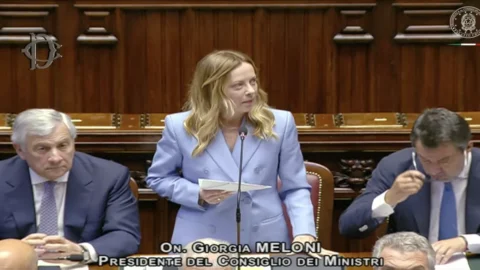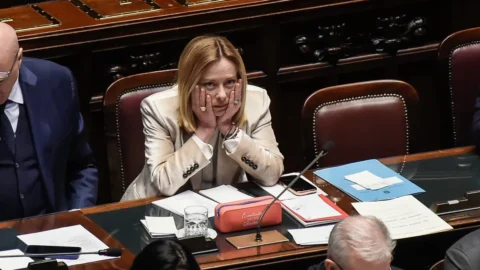
Today, Tuesday, December 30th, the House of Representatives ha The 2026 Budget Law was definitively approved with 216 yes votes, 126 against and 3 abstentions, following the declarations of vote by the majority and the opposition. The confidence vote in the Chamber had already been obtained on Monday evening with 219 yes votes and 125 no votes, at the end of a brief discussion in the Committee which left no room for change, given the third reading precluded. The opposition They have harshly criticized the government, accusing it of transforming Parliament into a "paper pusher" with a "mortified" debate. With this approval, the fourth maneuver signed Meloni concludes a 63-day parliamentary process in the Senate, defined by the Minister of Economy Giancarlo Giorgetti “tortuous but necessary.”
Having arrived in Montecitorio in a state of emergency, what was supposed to be a manoeuvre capable of giving impetus to the Italian economy appears, numbers in hand, to be more of an exercise in caution that a project of growth. The growth estimates for 2026, equal to +0,7%, largely supported by the latest resources from the National Recovery and Resilience Plan (NRRP), paint a different picture: rather than creating new opportunities, the measure seems designed to avoid worsening conditions, keeping public finances in order without significantly impacting the real economy. As underlined by the government itself, the main objective remains technical: to restore the deficit below 3% as early as 2025, avoiding EU procedures and “adjusting” military spending calculations.
Budget 2026: Rising numbers, questionable concrete effects
The overall value of the interventions for 2026 is € 22,3 billion, Divided between €7,9 billion in tax cuts and €14,4 billion in spending, ranging from income tax reductions for the middle class to bonuses for families, from healthcare refinancing to incentives for businesses and young people. But the balance of concrete benefits remains controversial. Cuts and bonuses serve more plug problems that create prospects: growth remains weak, citizens find themselves bearing much of the burden with excise duties, parcel taxes, and tobacco and insurance price increases, while large public finances and banks are being called upon to contribute with new taxes.
In short, the maneuver confirms an already known portrait of the Italian economy: a country that tries to navigate by sight, between prudence and inertia, trying to avoid immediate problems without putting in place tools that are truly capable of restart growthThe government's vote of confidence and the swift approval by the Chamber formally close the process, but they don't erase the feeling that, behind the triumphal declarations, the country remains stagnant, waiting for measures that will truly push it forward. Let's look at the details. main measures.
Irpef reduction and tax breaks
The Budget Law confirms the reduction of the second Irpef tax rate from 35% to 33% For incomes up to €50, with maximum benefits of €440 per year. The reduction extends up to €200, but with the elimination of benefits above this threshold. For incomes up to €33, contractual increases will be taxed at a micro-rate of 5% from 2024 to 2026. result awards and forms of participation in corporate profits up to 5.000 euros will benefit from a substitute tax of 1%, while extraordinary components of the salary for night, holiday and shift work will have a flat tax of 15%.
Family and work: bonuses for working mothers and longer leave
Support for families receives approximately 1,6 billion more, with the bonus for working mothers which increases from 40 to 60 euros for those with an ISEE of up to 40 thousand euros and at least two children, also extending to those with only one child. optional parental leave It can be requested up to the child's 14th birthday, with an allowance equal to 80% of the salary for three months, while sick leave for children doubles from five to ten days per year. The measure provides for incentives for female employment by promoting part-time work, completely reducing employer contributions, and strengthening fixed-term contracts. It remains to be seen how effectively these tools will promote female employment.
ISEE, DSU, and cryptocurrency news
The maneuver also changes the ISEEDisposable income now includes foreign currency holdings, cryptocurrencies, and significant cash remittances. Equivalency scales are also updated, with specific increases for households with two or more children, to better reflect family composition. Pre-compiled DSU It will be made available by INPS, with data from the Revenue Agency, the Ministry of the Interior, and the ACIE (National Resident Population Registry), and must be used primarily through CAF (Italian Assistance Funds). The new rules will benefit approximately 14 families for the inclusion allowance, 2.300 for training and work support, 12 for the nursery bonus, 3.200 for the newborn bonus, and approximately 10 euros per month for the single allowance.
Pensions and social security: higher minimums and age adjustments
The raising the retirement age linked to life expectancy will be gradual: one more month in 2027 and two months in 2028, while in 2026 the requirements remain unchanged (old age pension at 67 years or early with 42 years and 10 months of contributions). minimum allowances They increase by 20 euros per month, but the funds for early retirement for early and arduous workers are reduced. It disappears Option Woman and it will no longer be possible to use the supplementary pension income to retire early. For the young new hires Automatic enrollment in supplementary pension plans will begin in July, with 60 days to communicate any withdrawals. The obligation to pay the severance pay to the INPS fund extends to companies with more than 40 employees.
First home and renovation bonuses: incentives confirmed
Il ISEE exclusion ceiling For a first home, the price rises to €200 in metropolitan capitals. Building incentives are confirmed: restructuring bonus 50% for the first home and 36% for the second, with a 50% deduction for furnishings e large appliances up to 5.000 euros. Amended properties are also eligible for the incentives. House plan receives new resources, along with funds for housing support for separated parents and family caregivers. dry coupon short rentals it remains at 21% for the first property, rises to 26% for the second and becomes a business activity from the third.
Healthcare, businesses and incentives
Il healthcare sector The Italian government will receive an additional €2,4 billion in 2026, with increases in allowances for doctors, nurses, and healthcare professionals, and up to €450 million annually for new permanent hires. The pharmaceutical spending cap for direct purchases will increase by 0,3%, while the Fund for Innovative Medicines will be reduced. Businesses will benefit from: hyper-depreciation up to 180% for investments in EU capital goods valid until 30 September 2028, with green investments amounting to 237,7 million in 2026, 842,6 million in 2027 and 1.445,2 million in 2028. Additional resources are coming for the Zes tax credit (532 million) e Transition 5.0 (1,3 billion), while the New Sabatini is being refinanced and will be introduced in 2028 a withholding tax for businesses 0,5% in the first year and 1% from 2029.
Education, culture and support for young people
Expected book bonus for high schools for families with an ISEE of up to 30 euros and contributions of up to 1.500 euros for those who choose private schools, with possible IMU exemption. 60 million are allocated for socio-educational activities and 3 million for the Italian Erasmus Fund. Here comes Cultural Value Card for 18-year-olds who graduate by the age of 19, with 180 million annually from 2027 to be spent on culture, entertainment, and training courses. The cuts to funding for the movies drops from 150 to 90 million in 2026, while 60 million arrive for the fund publishing. No cuts for the local TV, while for Rai the funding deriving from the license fee for operators decreases by 10 million.
Other tax and fiscal news for 2026
La fifth round of tax bills 2020-2023 allows payment for up to 9 years with 3% interest. The tax on non-EU parcels will affect packages up to 150 euros. excise duties on fuel and tobacco increase by 552 and 213 million respectively in 2026. Tobin tax goes from 2% to 4%, while the rate on cryptocurrency earnings rises to 33%. Sugar and Plastic Tax will remain sterilized until the end of 2026, guaranteeing a reduction in revenue of 385 million in the first year.
An amendment clarifies that the gold reserves held by the Bank of Italy they belong to the Italian people, a purely symbolic clarification.
The final bill: ministries, banks and citizens
But who pays the bill? ministries will suffer overall cuts of 7,15 billion over the three-year period, of which 2,2 billion in 2026, while the restructuring of the PNRR will guarantee coverage of approximately 5 billion, equal to 0,22% of GDP. banks e insurance will be affected by the increase in IRAP (1,2-1,3 billion) and by a reduction in the deductibility of previous losses. Citizens will contribute to the financing of the measure through excise taxes on fuel (552 million), the tobacco price increases (213 million), the increase of'rate on car insurance policies for driver injuries (12,5%) and the mini-tightenment on short-term rentals, which will generate 138 million from 2027.
Last updated Tuesday, December 30, 2025, at 13:10 PM