It was in the air and so it was: the Federal Reserve, the US central bank, has left interest rates unchanged in the range of 3,50-3,75%, after three consecutive cuts last year (in September, October and December), thus ignoring the strong pressure from the White House for a reduction in the cost of money and preferring to wait and see how the economy evolves before making further cuts.
“Available indicators suggest that economic activity expanded at a robust pace,” the statement reads. “Employment growth remained low and the unemployment rate showed some signs of stabilization. Theinflation remains quite high“. According to the Committee, theUncertainty about the economic outlook “remains high” and says it is “conscious of the risks to both parts of its dual mandate.” In assessing the size and timing of further adjustments to the target range for the federal funds rate, the Committee will carefully assess incoming data, the evolving outlook, and the balance of risks, while remaining “strongly committed” to supporting the maximum employment rate and returning inflation to its 2% objective.
Voting in favor of the monetary policy action were Jerome H. Powell, Chairman; John C. Williams, Vice Chairman; Michael S. Barr; Michelle W. Bowman; Lisa D. Cook; Beth M. Hammack; Philip N. Jefferson; Neel Kashkari; Lorie K. Logan; and Anna Paulson. Voting against this action were: Stephen I. Miran and Christopher J. Waller, who in this meeting would have preferred to lower by a quarter of a percentage point the target range for rates.
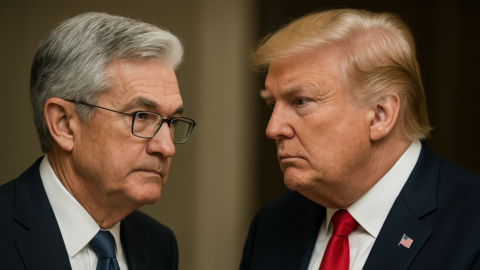
The decision came at the end of tensions between the Federal Reserve and Donald Trump, which reached their peak last January 11th when the monetary institution had received subpoenas from the Department of Justice as part of a criminal investigation into his testimony to Congress regarding a $2,5 billion housing renovation. It's now clear, even more so given the Fed's wait-and-see stance, that Trump is eager to appoint a new chairman, given that Powell's term is now approaching its expiration in May.
“Economic activity grew at a solid pace last year,” Powell said in an analysis that appears to open the door to a pause of several months for the Fed on rates, “and is on track to do so in 2026. Consumer spending has proven resilient and the unemployment rate has shown signs of stabilizing"Monetary policy is appropriate," Powell assured. "We will decide on a meeting-by-meeting basis."