Lack of respect for animals
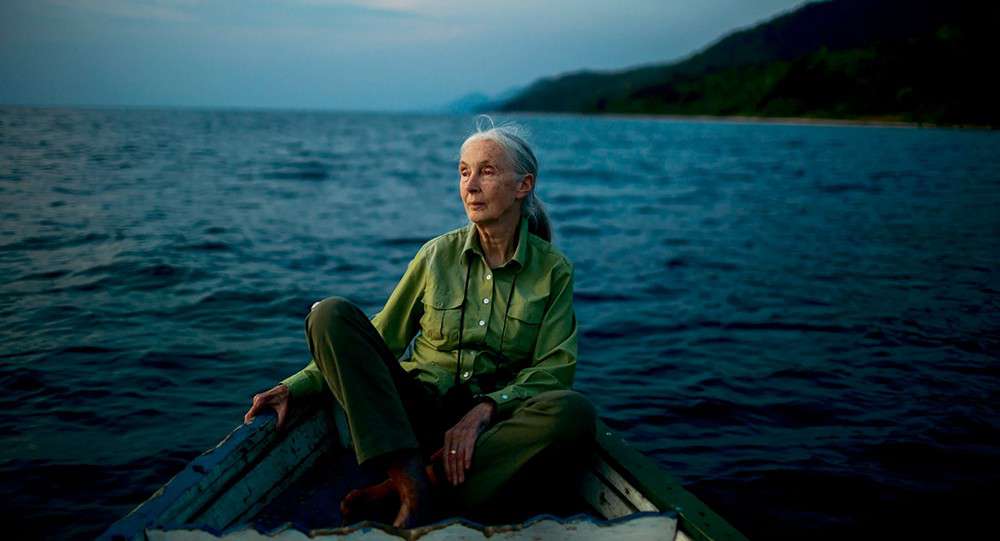
Jane Goodall is the ethologist and primatologist who boasts a well-deserved worldwide reputation for her tireless work as a scientist and animal rights activist. Her pioneering research in Tanzania showed the scientific community and the world the true nature of chimpanzees.
Today she says she is convinced that the pandemic was caused by our agnosticism towards nature and the absolute lack of respect for the animals that we consider part of our food chain or our profit.
During a video conference, for the launch of the new National Geographic documentary Jane Goodall. The Hope, urged the world to learn from past mistakes to avoid future disasters that promise to be catastrophic. The 82-year-old said that each person's actions can truly make a difference between before and after the pandemic.
He said verbatim
“It is our contempt for nature and our lack of respect for the animals with which we have to share the planet that has caused this pandemic. An event that was already announced a long time ago. When we destroy forests, the various animal species of those annihilated habitats are pushed into near-physical proximity to other species, and thus diseases are passed from one animal to another. With this grows the possibility that humans are themselves infected by their proximity to animals. It's a lethal chain."
Away from his chimpanzees
These days Jane Goodall is in solitary confinement like all of us. She has been since a fundraising tour was canceled due to the coronavirus pandemic. She is staying in the family home in England. She is now not in Tanzania, her habitual residence when she is not travelling.
Goodall changed the way the world views chimpanzees with research that began 60 years ago when he first set foot in Africa. She was a young woman with no college degree. She wanted to observe the chimpanzees in their habitat, in what is now the Gombe Stream Research Center in Tanzania.
Since then she has become a tireless fighter against chimpanzee captivity. When she began her work, chimpanzees were routinely used in medical research, a practice that Goodall, and other animal rights activists, helped to ban in the United States.
Today, the Jane Goodall Institute continues the research its founder began at the Gombe Stream Research Centre. It carries out programs to raise community awareness of conservation and diversity education. With international travel impeded, the institute, which is present in 30 countries, recently held a global virtual meeting. “It worked much better than I thought – said Goodhall – I was really impressed.
James Gorman of the "New York Times" has interviewed Goohall on the phone for over half an hour. Here is the text of the interview duly adapted.
The lost time
James Gorman (The New York Times, NYT): First, How are you?
Jane goodall (JG) Well, I started getting frustrated with this confinement. And then I thought, well, okay, getting frustrated doesn't help. So I started thinking of ways to be in public without being there, so to speak. And I thought again, well, my goodness! I have a four year backlog of emails. I can start with this. And I also have stacks of eight to nine year old stuff, stuff from the lecture tour that I've accumulated but never had time to sort it out before setting off again. So I started from this job. It is madness.
NYT: Has this break allowed you to take a step back?
JG: I'm making up for lost ground, you know. But I see a situation that worries me a lot. There are people in the United States who don't have unemployment benefits or anything like that. And in Tanzania, for example? The people running the bars, restaurants or selling food on the roadside — all of this is allowed anymore. With those activities they earn just enough to survive a week and to pay the rent. There is no social security there, there is nothing, nothing for them outside their jobs.
Chimpanzees in laboratories
NYT: Being in isolation made me wonder what life might be like for isolated chimpanzees in captivity, who, like us, depend on physical proximity and contact.
JG: I think about it all the time. I've been thinking about this ever since I saw footage of these social beings locked in two-by-two-meter cages in medical research laboratories. It was awful the first time I walked into one of those labs. Isolation, as you say, is bad enough for us, but we have so many ways to distract ourselves. What about these animals that have nothing? But you know the other thing, I want to look for the bright side of this horrible time. The pandemic has reopened the discussion on animal trafficking, on the sale of wild animals for food or medicine. Everyone points the finger at China and the Chinese government has already banned the trade in these animals and the importation of wild animals. So we just have to hope that given the scale of this pandemic, the Chinese government makes this ban permanent. At the moment it is temporary, but we hope it will remain forever so as to close the market for animals used in traditional Chinese medicine.
My Dog's Teaching: Animals have personalities
NYT: Are there any particular achievements in your work that may have an impact on the future?
JG: I was the eighth person in the history of Cambridge to enter university without a degree. I was really scared. You can imagine. And of course it was no comfort when the professors told me I had it all wrong. I shouldn't have given the chimpanzees a name, just a number. And I didn't have to talk about personality or mind or emotions, because they were only the prerogative of people. But luckily my dog as a child had taught me exactly the opposite. I was able to relate to chimpanzees in a non-aggressive way. I kept talking to him in a calm, you know, relaxed way. And I remember that the first scientific essay I wrote for "Nature" was about the use of tools by these animals, I think. And so I described the behavior of chimpanzees, I gave them names and they dropped names.
But when I received the drafts of the article, I saw that the editors had made corrections by deleting the pronouns "he/his" or "she/her". I mean, a very important thing, to identify the gender. But the animals were just “it/its”. So I angrily deleted the “it/its” and put he/she back and they accepted it. So that was the first breakthrough. Precisely because chimpanzees have been shown to be biologically equal to us and also their behavior, shown in Hugo [van Lawick's] films and photographs, was so similar to ours, that science has begun to think less reductionist.
We are not separate from the rest of the animal kingdom, we are an integral part of it. Gradually this has become more and more universally accepted. This has helped people understand that animals have a personality, a mind and emotions, and now these things are finally being studied.
My position is that eventually there will be a time without animal testing. What gave me the most satisfaction in my work with chimpanzees was not the ethical approach (the one that initially moved me), but the practical one, i.e. the fact that the chimpanzees from the laboratories were transferred to sanctuaries because they were not useful to search. This result was far better than any ethical reasoning. It's a bit like what happens with fossil fuel. People say we need to stop using fossil fuel now. Well, that's clearly impossible. You can't stop something abruptly. And animal medical research isn't going to stop suddenly, although I wish it would. The problem is that people working on possible alternatives are not getting the right support.
It takes a sense of humor
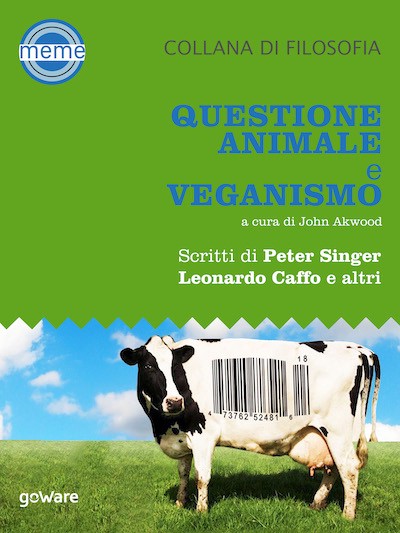
La animal matter will become the crucial question of this century. Man cannot continue to consider and treat animals as he has done so far. He is mathematician. He can't because he is unethical, destroys the planet and harms health.
NYT: Let's go back to the current situation. How are you now?
JG: I'm in the family home. We came to live here during the war. It was from my grandmother. I look out the window at the tree I used to climb as a child and I look at all the books I read, Dr. Doolittle, Tarzan. I'm meeting my dog, Rusty. There is an image of him in front of me, the dog who taught me that animals have minds, personalities and emotions.
NYT: Any personal advice to help people cope with the isolation?
JG: A sense of humor. There's all this nonsense about toilet paper. There are also two very funny videos. One has a man sitting on the toilet and a dog comes in and steals his paper roll. And then there's another one again of a man sitting on a toilet. He comes the dog and grabs one end of the roll and starts running. He goes downstairs and the man looks at the paper unrolling all over the house. Then the dog takes her to another person on the toilet.
We have to keep a sense of humor.