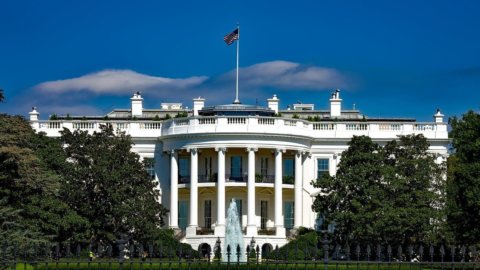
The re-election of Donald Trump to the White House in 2024 – marked by the achievement of a majority (albeit a relative one) of the popular vote, victory in all seven swing states and the Republican Party's gaining control of the House and Senate – was one of the most sensational surprises in US politics in recent years.
The response from the polls and its dimensions were so unexpected that, despite his usual arrogance and bravado, even the tycoon showed his incredulity right from the start, to the point that, when addressing his supporters on the night the results were announced, he let slip a “Look what happened, isn’t it crazy?”
Indeed, there was something truly incredible in the triumph of a misogynistic, xenophobic candidate with a criminal record, already having a civil and criminal conviction against him, accused in three other criminal proceedings, and instigator of a failed coup d'état with the occupation of the seat of Congress by his supporters. the January 6 2021 as well as accused of authoritarian – if not dictatorial – intentions by his own former collaborators.
Uncertainties about the Democratic Party's political introspection
While Republicans celebrated, Democrats began to question the reasons for Kamala Harris' defeatThe first to do so was the very candidate defeated by Trump who, last autumn, published her own reconstruction of the 2024 election campaign (107 Days, Simon & Schuster, 2025; trans. it 107 days, The Ship of Theseus, 2026).
More than an analysis of what happened between Joe Biden's withdrawal, July 21st, and the day of the vote, the volume is configured above all as aindictment against the main exponents of the party and the president's entourage, including First Lady Jill Biden, who would have essentially sabotaged Harris' candidacy.
However, it was above all those who felt the need to understand what went wrong in 2024 Ken Martin, the current chairman of the Democratic National Committee (DNC). Immediately after the electoral disaster, Martin ran for this office with the assurance that he would commission an in-depth investigation into the causes of the debacle against The Donald.
Her commitment was meant to be a show of transparency, given that no such step had previously been taken by Donna Brazile, the acting DNC chair during Trump's victory over Hillary Clinton in 2016, nor by Tom Perez, Brazile's successor as Democratic Party leader from 2017 to 2021.
Martin reiterated his intention after being elected to the DNC leadership on February 1, 2025. Nonetheless, the promised report – drafted but not signed by Paul Rivera and titled Build to Win, Build to Last, although known in political circles by the lugubrious epithet of “The Autopsy” – was long in being released.
The postponement has fueled suspicions about a hypothetical cover-up of it so as not to damage Harris's possible re-candidacy in 2028 as well as rumors that it had never even been drafted.
Under pressure from the television network CNN, last May 21st Martin finally agreed to release a version of this report, in a non-definitive form (as attested by the numerous comments within the text and by the marginal notes with requests for additions) and without conclusions, specifying that he considered the text profoundly unsatisfactory and using this assessment to justify the reason why he had until then refused to make it public.
Some merits of the report
Yet, even if in general terms, “The Autopsy” It raises several important points: the intrinsic weakness of Harris's candidacy, her lack of attention to opinion polls, the fragility and inconsistency of the Democrats' communications structure—operational, with a few exceptions, only in the months leading up to the election, rather than throughout the year, and therefore incapable of effectively countering the Republicans' constant propaganda—as well as the excessive focus on identity politics, to the detriment of economic issues, which had been particularly sensitive to the electorate, especially given the medium-term consequences of the jump in inflation to 9,1% in June 2022.
After all, the politically counterproductive excesses of ideology Woke had already been confirmed by analyses immediately following the 2024 vote (Maureen Dowd, Democrats and the case of Mistaken Identity Politics, “New York Times”, November 9, 2024) and even from criticisms prior to the presidential election, expressed even by progressives like Susan Neiman (Left Is Not Woke, Polity Press, 2024; trans. it. The left is not woke, Utet, 2025).
These reflections, in fact, had underlined how the ideology Woke if it were progressively involuted, moving from the promotion of forms of social justice to overcome ethno-racial and gender inequalities and discrimination to paroxysmal manifestations, such as the obsession with inclusive language and the inveterate defense of some aspects of cancel culture (for example, the removal from public spaces of monuments dedicated to figures of the past whose ideas are no longer in tune with today's sensibilities and the censorship of literary classics for the use of expressions now considered racist).
Furthermore, “The Autopsy” recalls, albeit in vague terms, the Democratic Party's failure to consolidate its following among the employees, that cohort of the electorate that was once defined as the working class.
In fact, although the report does not indicate the percentages of votes, the main contribution to Trump's victory in 2024 came above all from working class Euro-descendant, who awarded him 66%, compared to the 32% that went to Harris.
Thanks to this contribution, the support of the working class overall (including racial minorities) the vote for the tycoon reached 56%, while that for Harris stopped at 42%.
However, the relationship does not delve into the transformation of the Democrats, at least at the level of public perception, from the workers' party to that of a wealthy and beleaguered elite politically correct, rather than by economic problems such as the purchasing power of wages.
The campaign against Martin and the internal divisions within the Democrats
The inconclusiveness and superficiality of “The Autopsy” have been exploited to attack Martin. For example, Michelle Goldberg wrote a vitriolic editorial in the “New York Times” (The Agony Around the Democrats' Mysterious, Ridiculous Autopsy, May 22).
For the author, a commentator with a past prone to controversy, the real "disaster" would not have been the 2024 electoral campaign but rather the report on the dynamics of the vote that year and, consequently, Martin's management over the last year and a half, of which “The Autopsy” would be the paradigmatic example.
After a cursory reference to the report's shortcomings (especially the observation that in its 192 pages of text it never mentions either Israel or Gaza) and its supposed truisms, Goldberg's merciless conclusion is that the Democratic Party must replace Martin.
David Hogg, the former DNC co-vice chair, who was removed from office last year by Martin's initiative after just a few months in office, also joined the request. In an interview with Politico, reported by this online newspaper on May 21, Hogg said that Martin is not “the best person” to lead the Democrats “at this time.”
To dismiss or induce Martin to resign less than six months after the elections midterm of November 3 would seem to be a risky gesture to say the least, almost a reiteration of Biden's withdrawal from the 2024 campaign.
Furthermore, thinking that the problem for the Democrats is Martin's direction seems to want to hide the political impasse that has been characterizing it for some time. a deeply divided party between a moderate and a reformist wing and incapable of making a clear choice between these two orientations.
In terms of electoral strategies, the first component aims to snatch the least Trumpian voters away from Republicans; the second intends to mobilize the most progressive voters in order to offset and outnumber the reactionaries Trump managed to bring to the polls not only in 2016 and 2024, but even in 2020, when—despite his defeat against Biden—the tycoon managed to secure over eleven million more popular votes than he had in his victory four years earlier.
From postponement of a decision on the political line to be adopted The Democratic Party's most recent troubles have begun. Biden's ill-advised re-candidate in 2024, justified on the basis of a "safe-for-hire" principle and the result of a cover-up over the president's condition, allowed the showdown between the two factions to be postponed, avoiding deeply contentious primaries, whose divisions might not have been resolved in time for the November elections.
Replacing Biden with Harris, simply out of respect for a presumed pre-established hierarchical order, would have prevented an internal vote between progressives (who would have supported the candidacy of California governor Gavin Newsom, the choice of the still very influential former Speaker of the House Nancy Pelosi) and moderates (who would probably have rallied around the name of Pennsylvania governor Josh Shapiro) with equally devastating consequences, especially given the short time remaining before the vote.
Playing dead
The cover-up of “The Autopsy” was both a metaphor and a a reflection of the disappearance of the Democratic Party from the national political scene in the first year and a half of Trump's second presidency, almost as a result of a sort of post-traumatic shock following Harris' defeat.
Effective February 22, 2025, the New York congresswoman Alexandria Ocasio-Corteze the senator from Vermont Bernie Sanders They embarked on a “Fighting Oligarchy tour,” a series of rallies and rallies held in various cities across the country to mobilize the progressive component of American society against the authoritarian turn taken by the tycoon after his return to the White House.
This initiative, however, was one of the few demonstrations of visibility of the Democratic Party, together with Newsom's positions against both the raids of illegal immigrants by Immigration and Customs Enforcement (ICE) in his State and the gerrymandering implemented by Republicans in an attempt to retain their majority of House seats in the upcoming elections midterm.
The Democratic eclipse has even been theorized. James Carville, the party's longtime strategist and the main architect of Bill Clinton's election to the presidency in 1992, openly advised Democrats: to “throw oneself to the ground” and “play dead”, waiting for Trump's approval ratings to naturally decline after peaking at the end of 2024.
In this way, by remaining in the shadows, the Democratic Party would not have incurred errors that could have jeopardized its chances of victory in 2028 and, without a fight, it would have taken advantage of the rash decisions and policies that sooner or later would inevitably characterize the tycoon's administration (It's Time for a Daring Political Maneuver, Democrats, “New York Times”, February 25, 2025).
In other words, to return to success, it would have been enough for the Democrats wait for the Trump presidency to implode under the weight of the mistakes The Donald has allegedly made.
To paraphrase one of the most famous Zen maxims, one might conclude that for Carville, the Democrats should have sat on the banks of the Potomac and waited for Trump's political corpse to pass by.
The controversy over "The Autopsy" amid internal conflict within the Democratic Party
The controversy against “The Autopsy” takes place in the context of the clash between the two factions of the Democratic Party and is fueled by the progressive wing.
The criticism of the fact of not having mentioned Gaza, for example, suggests that the party would be reluctant to admit that it lost the 2024 election due to declining support among younger voters caused by the Biden administration's backtracking on Israel's military solution to the Palestinian crisis.
After all, Build to Win, Build to Last He presents the strategy to follow to relaunch the Democrats by placing them in the “vital center” of the political spectrum, following the model of what Ron Brown, the chairman of the DNC between 1989 and 1993, had done, paving the way for Bill Clinton to conquer the White House in 1992, after the three consecutive administrations of Republicans Ronald Reagan and George H.W. Bush.
Not coincidentally, one of the very few Democratic representatives to express appreciation for “The Autopsy” was Liam Kerr, co-founder of WelcomePAC, a political action committee that finances the campaigns of candidates linked to the centrist Blue Dog Coalition.
A sign of theimpasse that still reigns supreme in the Democratic Party is the observation that each of the 192 pages of Build to Win, Build to Last It opens with a red disclaimer: “This document reflects the views of the author, not the DNC.”
The assertion amounts to declaring that, continuing to be divided between moderates and progressives, the Democratic Party has failed to establish why it lost the 2024 elections, much less is it able to officially state a unified strategy for bridging the gap with the Republicans.
The Democrats' Prospects
Secondo The Economist,, two days ago the index of Trump's approval had dropped to 34%, with a decrease of 1,9 points compared to the previous week, reaching the lowest level for a US president since 2009, that is, since the authoritative British periodical has been evaluating the approval ratings of the White House tenants.
What is undermining the consensus for the tycoon is the war against Iran and its consequences, especially with regard to the trend of inflationFor example, the average price of a gallon (about 3,78 liters) of gasoline has risen from less than $3 before the outbreak of hostilities to $4,48 today.
Secondo The Economist,, Trump's growing unpopularity would give Democrats have a 90% chance to conquer majority in the House in the elections of midterm and the game in the Senate would be open.
In light of these estimates, it would appear that Carville's strategy is proving successful. The aversion to Trump is, in fact, the element that unites and unites the DemocratsThis is confirmed by a recent poll by the New York Times, according to which the tycoon's performance in the White House is approved by just 5% of registered Democratic voters.
Furthermore, 95% are opposed to the war that The Donald has unleashed against the Tehran regime and 84% think that the cost of military operations constitutes an unnecessary waste of financial resources.
However, opposing Trump also seems to be the only real factor that unites the Democrats. On numerous other issues, which are certainly not secondary, the party continues to present itself as dividedFor example, nearly half of its potential voters believe their party is too aligned with Israel's positions.
Fifty percent want him to propose more effective tools to combat crime, and 46% want him to promote tougher measures against illegal immigration. Fifty-two percent want the 2028 presidential candidate to shift toward the center, and 25% want him to lean more to the left. Overall, only 55% of registered Democratic voters share the party's current ideology.
Next November, with the tycoon still in the White House, anti-Trumpism could help the party close ranks and win seats in the House and Senate.
This element of unity for the Democrats, however, will be lost in 2028, when The Donald will be at the end of his term and will not be able to appear on the ballot for a fourth time.
In the medium term, therefore, The Democratic Party's prospects may be less rosy than the predictions for next November's vote seem to suggest.
. . .
Stefano Luconi
He teaches US History in the Department of Historical, Geographical and Ancient Sciences at the University of Padua. His publications include: The "Indispensable Nation." A History of the United States from the Colonies to Trump's Second Presidency (2026) US institutions from the drafting of the Constitution to Biden, 1787–2022 (2022) The black soul of the United States. African Americans and the difficult path to equality, 1619–2023 (2023). The race for the White House 2024. The election of the president of the United States from the primaries to beyond the vote on November 5 (2024).