The two armies of Cop28 they have been battling it out with no holds barred for almost a week. And it will continue like this until Tuesday. Never has an international conference experienced such a bitter conflict as the one taking place at Dubai, a tourist destination invaded by opposing troops of partisans offossil energy against the paladins of renewable. On the one hand, a formidable army, the most powerful and organized army of lobbyists: more than 1.300 experts mobilized by the majors of the Petroleum allied for the occasion with the crude oil producing countries. On the other the compact group of environmental movements, strengthened for the occasion by hundreds of scientists determined to demonstrate that it is already too late to save humanity from the effects of global warming. The outcome of the conflict is uncertain. And it will remain so until the end, set for Tuesday. And even further because, barring surprises, a final document is not expected that summarizes the opposing positions. But it would be a mistake to speak of failure.
Because Cop28 is not a failure
For the first time, environmentalists and oil companies, both private and state, are together addressed without too much hypocrisy. Sheikh El Jaber, leading the meetings but also representing the United Arab Emirates, burst out in front of Mary Robinson, former president of Ireland, shouting that "I have been studying these problems all my life, so I feel like saying that there is no relationship between climate pollution and fossil energy".
No less explicit Exxon's number one, Darren Woods. “It seems to me – he said – that here there is a lot of discussion about how to limit fossil energy, much less about it how to limit the damage." The thesis is that we will only get out of energy when we know how to master hydrogen or develop clean nuclear energy.
In the meantime let's make do with partial remedies. Like theagreement between Dubai and several African countries (Liberia, Zambia, Zimbabwe): one or more crude oil producing powers they buy the right to pollute on a large scale, but no one has so far been able to put a fair price on pollution.
From the clash in Dubai to the tug-of-war on the markets
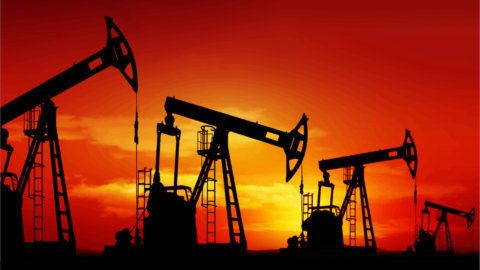
The clash in Dubai reflects the tug-of-war on the markets front. The Petroleum he has just returned from a week of deep declines which pushed prices downwards, just above the threshold of 74 dollars. The decline, a real boon for the financial markets already hit by high crude oil, was favored by the decline in consumption in both China and the USA, thanks to the risk of recession. But what accentuated the trend was the choice of Big Oil pump at full speed, frustrating efforts by Saudi Arabia and Russia to cut supplies.
“The markets gave credit to the companies and not to OPEC+ – explains Antonio Cesarano – because the producing countries moved in no particular order, on a voluntary basis without favoring a common direction”. The result is that oil, despite a slight increase during the day, is showing signs of decline a decrease of 13% since the beginning of the year.
Crude oil remains "stunned" by five consecutive heavy drops, -4% yesterday, which crushed the price to new five-month lows. The decline picked up speed. Reuters found that OPEC oil production fell in November, recording the first monthly decline since July, due to lower shipments from Nigeria and Iraq, as well as continued cuts in market support from Saudi Arabia and other OPEC+ members: Let's see how long this worthy situation will last of the Far West, as the representative of an NGO defined it.