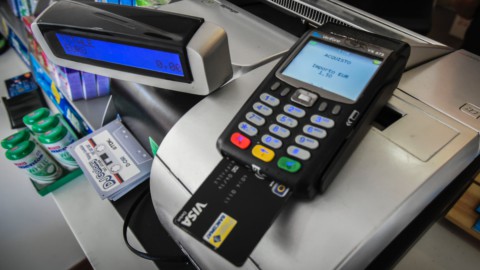
They are reduced commissions on payments made with the Pos. The Italian banking association (Abi) and the Apsp (Italian Association of Payment Service Providers) have reached an agreement with CNA, Confartigianato, Confcommercio, Confesercenti and FIPE on the costs of transactions via Pos, with debit or credit cards. ABI is ready to issue the circular to the associated banks which contains the indications for making the agreement signed with the Ministry of the Economy operational, with the associations of merchants and payment circuit and credit card managers, in order to reduce transaction fees within 30 euro and more significantly within 10. But be careful, this is a Memorandum of Understanding which contains a strong wish, but it is not mandatory. The protocol leaves lenders free to make their offers. The Antitrust has given the go-ahead to the agreement reached between the Abi and trade associations as long as the credit institutions are free to act in competition with each other.
The goal is obviously to "normalize" payments via Pos. If customers have already shown that they are inclined to change, increasingly opting for digital payments, the same could not be said for merchants, who were burdened with high commission costs .
Le low-value digital transactions, on the other hand, represent an important part of the total payments made with ATMs and cards in Italy. According to data from the Innovative Payments Observatory of the Milan Polytechnic, a large part of electronic payments fall within the range covered by this agreement: in 2022, 21% of total transactions with cards or debit cards were for 10 euros or less, the 32% of 15 euros or less, while payments of up to 30 euros were 58%. “And in small businesses in the trade, tourism and catering sectors, the share of micro-transactions is even higher,” Confesercenti points out.
Pos payments, discount on commissions: what changes?
The initial goal was much more ambitious, as it envisaged reducing the costs of commissions below 30 euros and zeroing them below 10 euros: a possibility which was then considered technically not feasible. The compromise reached, however, is good news for exhibitors. According to the protocol, according to what was communicated, banks and card and circuit operators will have to “promote commercial initiatives towards merchants, aimed at reducing the impact of the costs of low-value transactions, i.e. of an amount not exceeding 30 euros. In particular, these commercial initiatives should be significantly competitive as regards transactions of a unit amount of at least up to 10 euros".
The protocol also provides that "in order to increase transparency, a specific standard format attached to the agreement must be used for the summary representation of the conditions envisaged by the quote Business. This scheme is aimed at ensuring immediate comparability between the commercial initiatives”.
On balance, the agreement to cut fees on electronic payments could lead to a saving on commissions up to 500 million euros the year according to Confesercenti.
Pos agreement: voluntary adhesion
The agreements apply to merchants with annual turnover of less than 400 euros and the signed protocol is open, thus allowing other trade associations and other payment service operators to join.
The adhesion of the operators, as mentioned, remains voluntary but in case of signing the commercial promotion which provides for the discount on micro-payments, it must be advertised for at least six months and last no less than 9 months. An agreement which, in any case, will be valid for one year from the moment of signing, at the end of which the adherents will be able to evaluate the adoption of other initiatives on the subject.