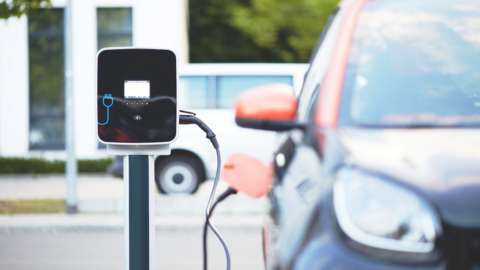
After boom in incentives for electric cars, the Minister of Economy and Finance, Giancarlo Giorgetti, opened to possibility of new funds for the ecobonus intended for the purchase of zero-emission cars. “The money is not infinite, it is limited and therefore we must be somewhat very selective,” said Giorgetti, answering questions from journalists during a visit to the Technological Innovation Center in Dalmine, Bergamo. The minister underlined the need for one careful management of available resources, specifying that further funding could be allocated, but always with particular attention to where and how to allocate it.
Mimit checks: "no anomaly"
Since the opening of the Invitalia platform, the funds allocated to incentives for the purchase of electric cars have been quickly sold out. In less than ten hours, the 200 million euros foreseen for cars with emissions between 0 and 20 g/km were booked, a fact that aroused surprise between operators in the sector and potential buyers. One phenomenon has led to a deeper examination of the dynamics that led to the depletion of resources so rapidly.
In-depth checks were thus conducted by the Ministry of Business and Made in Italy (Mimit), led by Adolfo Urso, for evaluate any anomalies in ecobonus bookings. According to preliminary results, nothing strange emerged. 62% of bookings were made by natural persons through dealers, while 38% comes from legal entities, including long-term rental companies. Mimit found only 5% of potentially anomalous cases, a figure considered physiological and in line with previous market dynamics.
For Unrae, almost 180 million euros are missing
According to the National Union of Foreign Motor Vehicle Representatives (Unrae) not all the funds expected have actually been made available: they would be missing about 178,3 million euro. The president of Unrae, Michele Crisci, underlined the importance of a new Decree of the President of the Council of Ministers (Dpcm) for unlock these resources and hoped for rapid intervention to avoid uncertainties in the automotive market.
He also expressed his opinion on the depletion of funds Carlos Tavares, CEO of Stellantis, calling it an astonishing phenomenon. Tavares said: “Something strange happened, we were surprised too. We are trying to understand what triggered this anomalous phenomenon" commented Tavares who, during a meeting with the press in Melfi, also confirmed Stellantis' commitment to keeping all Italian factories operational by 2030, with the aim of producing one million vehicles.
For the other categories incentives are still active
As funding for electric cars dries up, they remain incentives still available for the plug-in hybrid cars and for those with emissions between 61 and 135 g/km of CO2. The incentives for plug-in hybrids can reach up to 10.000 euros with the scrapping of Euro 0, 1, 2 vehicles, while for cars in the 61-135 g/km CO2 range, the maximum contribution is 3.000 euros.