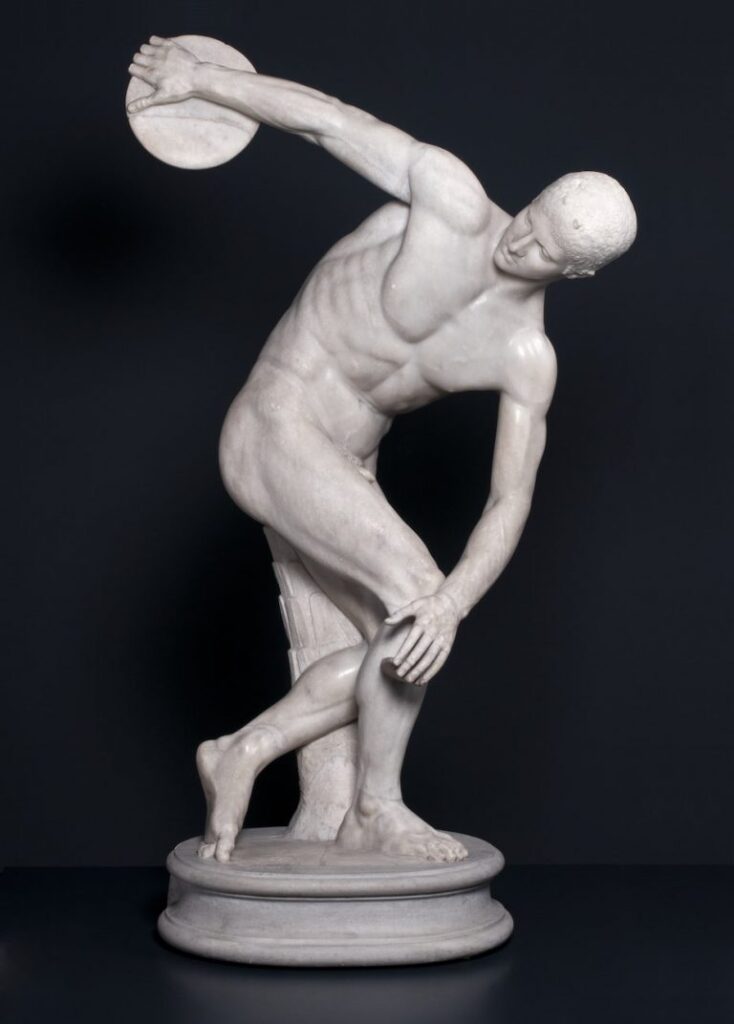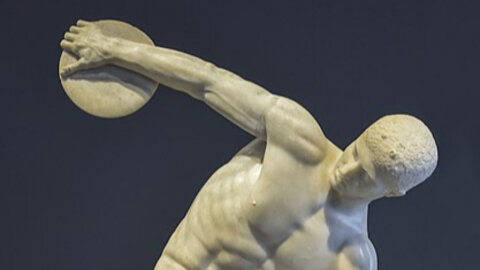
Il Discobolus was identified as the image of an athlete capable of "ideally connecting modern games with ancient ones and since then this image of Myron's masterpiece has been used for every form of communication, it can be found on posters, stamps and magazine covers and even more.
The sculpture is today preserved and exhibited in Palazzo Massimo, home of the National Roman Museum
Fu discovered at Villa Palombara, on the Esquiline, in 1781, and owes its name to Lancellotti family who owned it. Hitler fell in love with it to the point of forcing Mussolini to betray the law that established the "rules for the inalienability of antiquities and fine arts". It was also admired and desired by Hitler, who during his trip to Italy in 1938 saw in it the myth of the Aryan race and put pressure on the Italian government to have it. He obtained it in an exchange with Mussolini which at that time needed fuel for the country, and this is how the work went to the plaster cast gallery in Munich, where it remained until the end of the war, when in 1953 the Discobolus returned to Rome. Recently the director of the Munich Plaster Cast Gallery claims that the statue was purchased legally by the German state and that the repatriation to Italy, at the time, violated the law. At the moment the Discobolus belongs to the Italian cultural heritage.
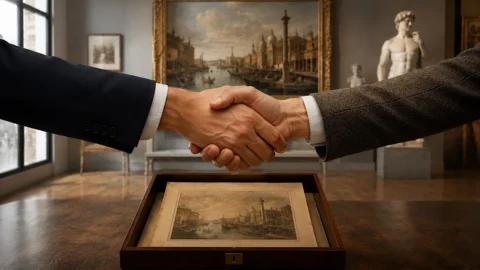
The exchange between Mussolini and Hitler
It was 1938. Mussolini needed fuel for the country and gave in to Hitler's request that he bought the work through a private sale between Goering and Prince Lancellotti for 5 million lire. The Superior Council of Sciences and Arts opposed the sale but everything was in vain, the sculpture crossed the Italian border to reach Germany.
The meaning of the Discobolus in ancient Greece
In the ideology of ancient Greece, physical superiority and moral perfection are two inseparable foundations. This is why in sculpture, ancient statuary, vases, mosaics or even wall frescoes, it is common to find numerous representations of athletes in action. The protruding muscles, the effective movement, the gesture as a tool that reminds us how necessary it is always to achieve perfect harmony between body and soul. In this sense, art has always tried to represent sport, even before the discipline was called that. One of the most famous statues of antiquity, attributed to the Athenian sculptor Myron and dated to the 5th century BC, represents an athlete throwing a discus. Call The Discobolus, this statue is geometrized, theoretical and presents us with a man with pure and ideal musculature.
Myron's most famous work is the Discobolos ("Disc Thrower"), of which a Roman copy survives