Does a kilo of hay or a kilo of lead weigh more? Prefer an 80% pure sweater cashmere or 20% wool blend? A 95% skimmed yogurt or a 5% fat one? And again: if you win 50 euros, would you rather keep 20 or give back 30?
We are always talking about the same thing. But the language used to describe options can influence systematically what we choose. It is the known "framing effect”. Discovered and experimentally verified by Daniel Kahneman, who had communicated it in 1981 on Science. Twenty-five years later, research by Benedetto De Martino and Raymond Dolan of University College London, published in the same journal, confirms the Nobel Prize winner's happy intuition on neurobiological grounds. At the same time, the studio deals another blow to one of the cornerstones of the economic rationality – the so-called principle of "invariance", according to which we should appear logically consistent in our decisions regardless of the way in which the available choices present themselves to us.
The experiment involved twenty students whose brain activity was monitored with functional magnetic resonance imaging (fMRI). Each participant was initially endowed with a sum of 50 euros, then invited to make a series of choices in succession, each of which included two options:
- a certainty (to keep or lose part of the money);
- a bet (expressed as x likelihood of keeping everything or losing everything).
Note well, there were two formulations of each "certainty option":
- a framed in terms of win (for example, keep 20 euros out of 50);
- the second framed in terms of perdita (for example, you lose 30 euros out of 50).
The formulation of the “bet option” was always the same: a graphical representation of the probability of keeping or losing everything (in our example, the 40% probability of keeping all 50 euros and 60% of losing it). The data reveal an interesting relationship between different individual behaviors and the activation of different brain areas.
The amygdala, a neural region of the famous limbic system responsible for processing emotions (such as fear), is vigorously activated by "intercepting" the framing effect in all subjects. But to a greater extent among those who are victims of it: that is, among those who choose the "certainty option" in the event that the choice is framed in terms of win (keep 20 euros out of 50) and the "bet option" where the choice is framed in terms of perdita (you give back 30 euros out of 50!).
While a significant correlation emerges between the activation of the prefrontal cortex (medial and orbital) – the noble and phylogenetically most evolved part of our brain – and rational choices (FIGURE 1). A greater activation of this area makes it possible, in fact, to predict that the subject will neutralize the framing effect, demonstrating coherence in their decisions.
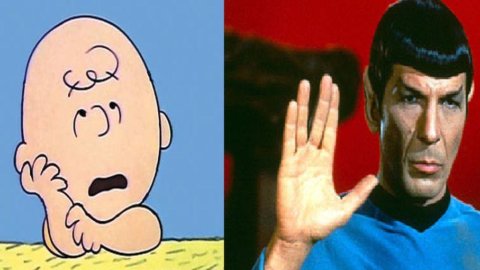
As marketing and advertising experts well know, more or less, We are all influenced by our emotions. None, except perhaps thehomo economist or the inaffective and hyper-rational pointy-eared Vulcan Dr. Spock from Star Trekis entirely free.
It is noteworthy that some participants in the experiment later stated that they knew full well that they were making inconsistent choices, but that there was simply nothing they could do about it! As if a little emotional homunculus (barred in the amygdala) ranted inside them without letting them think. Well, even in the subjects who exhibited rational behavior the amygdala was active (and the emotional homunculus probably ranting), but they showed that they knew how to manage and "overwrite" the emotional message.
More than Dr. Spock, therefore, we tend to look like Charlie Brown. Like his, our head is often "hot and stupid". However, there is a method in "stupidity": the mistakes we make are pervasive, recurring and predictable. They are the result of a logic different from mathematical, but no less systematic, the result of an incessant negotiation between "automatic" and "controlled" processes, between "affects" and "cognition" or, more commonly, between passions e reason – and by the play of synapses of the corresponding brain areas. The two processes can easily be in competition, as when we make an irrational choice by falling into some cognitive trap (e.g. the framing effect) or like when we throw ourselves on a plate of french fries driven by our "gut impulses", thus sacrificing a little of our future well-being for immediate pleasure.
Yet, as Antonio Damasio masterfully documented, in the light of numerous cases of his patients with brain lesions in the ventromedial prefrontal region, to make a "right" decision it is not enough to know what one should do, but it is also necessary for the body to do it. "feel". As if “pure reason” needed special assistance to implement her plans: a little passion to help!
After all, it's not that surprising that the rational individuals both those who have a more precise and more refined mental (meta)representation of their emotional conditioning and cognitive processes and those who have a prefrontal cortex capable of integrating and modulating this information, adapting it according to the circumstances. The study of the neural basis of the decision would seem to confirm this and, as Kahneman commented, "the results could not be more elegant".
In a subsequent work (2009), De Martino was able to demonstrate the causal role of the amygdala inloss aversion. Imagine participating in this investment game. You can decide if keep 100 euros or invest it. The investment consists in giving them to the experimenter, who will toss a coin: if heads come up you will have lost 100 euros, if tails come up you will have won 250. The game involves twenty rounds.
Anyone who wants can do the calculations, but anyone will notice that it is worth investing being the largest expected value for each turn. Yet, precisely why our brains are “designed” to avoid losses, most of healthy subjects (in this experiment 60%) prefer to earn less overall to avoid potential losses. Not only that, the decision to invest is heavily influenced by the outcome of the previous round. After one losing bet, the willingness to invest in the next decreases significantly.
But is it like this for everyone? De Martino and colleagues (2009) subjected to similar investment decisions two patients with a very rare focal lesionsymmetric and bilateral to the amygdala and compared them with those of healthy subjects. Subjects brain-damaged people acted in a “perfectly rational” wayi.e. taking full advantage of the earning opportunities inherent in similar investment games. Having a deficient amygdala evidently makes these people insensitive to the effects of the psychological disparity between gains and losses.
As strange as it may seem, the people who have a damaged emotional system are more rational in certain types of decisions: precisely those in which, as efficient utility calculators, it is necessary not to suffer the "emotional" effect of loss aversion. While this concept may seem vague to an economist, it is the one that best captures the complexity of human behavior in the flesh.
"Think of an animal - explains De Martino - it must obtain food, but at the same time protect itself from predators: from the point of view of evolution, being equipped with a system that weights losses more than gains is extremely wise". Today predators are no longer what they used to be, but it is likely that it is still the amygdala at the basis of that biological mechanism which inhibits risky behavior in the financial sphere associated with the possibility of a loss.