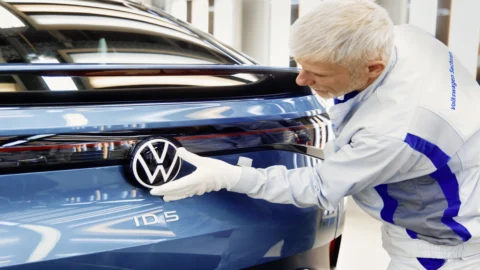
The first half of 2025 is anything but brilliant for Volkswagen.The German automotive giant recorded a operating profit of 6,7 billion euros, down by 33% compared to the same period in 2024. Thenet profit fell by 38,5%, going from 7,28 to 4,47 billion euros, while the operating margin fell from 6,3% to 4,2%. Excluding extraordinary charges related to duties and restructuring, the margin would stand at 5,6%, still lower than initial expectations.
Il the group's turnover remained almost stable, down 0,3% to 158 billion euros, while the global deliveries rose slightly to 4,36 million vehicles (+0,5%). Weighing on the accounts, however, they were above all the costs: 1,3 billion linked to the new duties American carmakers on European cars, €700 million in provisions for the restructuring of the Audi, Volkswagen Passenger Cars and Cariad divisions, in addition to regulatory burdens on CO2 emissions and the impact of an unfavorable mix of products, currencies and prices.
Volkswagen: The High Price of American Neo-Protectionism
La A real thorn in Volkswagen's side is called Donald Trump.In April, the US president introduced a 25% tariff on imported cars, adding to the existing 2,5% tariff. While the United Kingdom and Japan have already negotiated tariff relief, the European Union is still at a standstill. The result? A a blow of over a billion euros on the accounts of Wolfsburg and a North American sales drop by 16%.
The company admits that thehigh uncertainty on the permanence of these measures makes it difficult to make reliable forecasts. For this reason, revised its estimates downwardsThe German carmaker now expects an operating margin of between 4% and 5%, compared to the previous range of 5,5% to 6,5%. The automotive division's cash flow has also been revised downward, from €2-5 billion to €1-3 billion.
Markets in mixed conditions: South America and Europe are up, while North America is down.
On the commercial front, the group still manages to maintain a certain resilienceSales are increased in South America (+ 19%), Central and Eastern Europe (+5%) ed Western Europe (+2%), where vehicle orders grew by 19% thanks to new electric models such as the VW ID.7 Tourer, Cupra Terramar and Audi Q6 e-tron. battery-powered vehicles recorded a +62% of orders compared to the previous year.
The difficulties, however, are concentrated above all in China (–3%) and North America (–16%), with Porsche and Audi particularly exposed. Also the production has suffered a slight contraction in the second quarter (–0,6%), while deliveries to customers grew by 1,3% in the first half of the year.
Volkswagen: forecasts scaled down
Volkswagen has also cut the investment and liquidity forecastsThe expected investment index for 2025 was confirmed between 12% and 13%, but the automotive division's net liquidity is estimated at between 31 and 33 billion euros, versus the previous forecast of 34 to 37 billion. The environment, the group explains, is marked by "geopolitical tensions, new trade restrictions, volatility in raw materials and energy prices, and increasingly stringent environmental regulations."
Faced with a fragile macroeconomic scenario and a more stringent regulatory environment, the group is preparing for a second half of the year still complexIf U.S. tariffs remain at their current level of 27,5%, margins could fall at the lower end of the new projected range. Conversely, a reduction in tariffs could offer some respite.
Meanwhile, after a bad start, Volkswagen stock show one positive reaction on the stock market, up 3,1% to 99 euros.