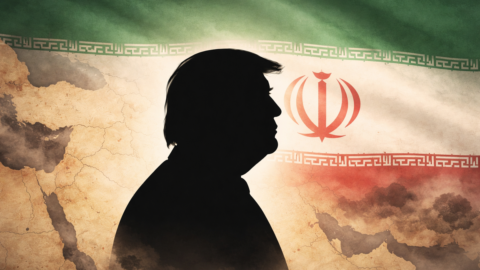
The criticisms leveled at Operation Epic Fury, the joint US-Israeli preemptive strike on Iran that began on the morning of February 28, concern not only its significant contribution to further destabilizing the Middle East and, in Donald Trump's case, its breaking of his campaign promise not to drag the United States into new wars.
For the tycoon, the objections also raise the possibility of abuse of power for starting a war without Congressional consent. The most vocal disapproval of The Donald's decisions came from Democratic Senator Tim Kaine of Virginia, a member of the House Committees on International Relations and the Armed Services Committee.
In an article published in the “Wall Street Journal” on March 1st (An Unwise and Unconstitutional Attack on Iran), Kaine called Trump a "warmonger" and raised the question of the unconstitutionality of the president's actions. The military initiatives against the Tehran regime, in fact, have reopened the age-old question of who holds war powers in the United States.
Constitutional theory and practice on the declaration of war
Under the Constitution, the president is the commander-in-chief of the armed forces (Article II, Section 2), but the authority to issue a declaration of war is the exclusive prerogative of Congress, which is the sole holder of the "war powers" (Article I, Section 8, Clause 11). In other words, to legally lead the United States into a military conflict, the president must have the official authorization of the House and the Senate.
This was the case, for example, with entry into World War II. Although Japan had attacked the United States by bombing Pearl Harbor on December 7, 1941, and therefore the existence of an ongoing armed conflict was an incontrovertible fact, President Franklin Delano Roosevelt still needed a formal declaration of war from Congress to conduct military operations against Tokyo.
The same thing had happened in one of the most brutal wars fought by the United States, the war of outright aggression against Mexico, waged between 1846 and 1848. On that occasion, President James K. Polk extorted the declaration of war from Congress with the first of a series of fraudulent manipulations of information and intelligence sources by the White House that have subsequently characterized the nation's history.
There was a long-running dispute between Mexico and the United States over the border between the two countries. Polk ordered a detachment of soldiers to move into an area that Washington claimed as its own, but which the Mexican government considered part of Mexico.
Some of these soldiers were killed by Mexican troops who considered them invaders. Therefore, arguing that American blood had been shed on American soil (and not Mexican territory), Polk requested and obtained a declaration of war against Mexico from Congress.
Military conflicts without formal declarations of war
Over a century later, U.S. participation in the Vietnam War was legally possible under the “Gulf of Tonkin Resolution” of August 7, 1964.
President Lyndon B. Johnson blatantly lied to lawmakers, claiming that U.S. Navy units had been attacked by North Vietnamese forces in international waters in Southeast Asia, off the Gulf of Tonkin. None of this had actually happened, but few dared question the president's claims.
Thus Johnson succeeded in having Congress pass the “Gulf of Tonkin Resolution,” which authorized him to employ “all necessary means to repel any armed attack against the United States and to prevent further aggression.”
It was a sort of blank cheque for the use of military force against North Vietnam, which Johnson used to directly employ the army, navy and air force in war operations, causing an escalation of Washington's involvement, which until then had been limited to providing advisors and instructors to the Southern regime.
Something similar happened with the invasion of Iraq on March 19, 2003. President George W. Bush pretended that Iraq possessed weapons of mass destruction that could be used against the United States and its allies.
Misled by these lies (the alleged weapons were never found, despite the US occupation of the country), on October 16, 2002, the House and Senate overwhelmingly approved a document authorizing the president to “use the United States armed forces as he deems necessary and appropriate to defend American national security against Iraq.”
Neither the 1964 Gulf of Tonkin Resolution nor the 2002 authorization were true declarations of war, but rather constituted a delegation of the war powers to the president, a clear sign of their shift from Congress to the White House.
Indeed, despite repeated military operations conducted by the United States since the Second World War, the last formal declaration of war issued by Congress dates back to June 4, 1942, when the House and Senate declared Bulgaria, Romania, and Hungary – countries whose governments were under the control of Nazi Germany – to be enemies of the United States.
McKinley and the first waiver of Congress's war powers
The need to quickly counter threats to national security has increasingly allowed the president to fail to comply with the letter of the constitutional provision.
The first to attempt this kind of forcing was William McKinley, not coincidentally one of Trump's most admired predecessors. In 1900, McKinley decided to add American soldiers to the international contingent sent to the Chinese Empire by Western powers and Japan to quell the Boxer Rebellion against foreign interference. This decision was consistent with McKinley's imperialist and expansionist policy, which nevertheless met with resistance from some public opinion.
The president, therefore, did not want to risk Congress denying him authorization to send troops to fight the rebels in China and refused to ask for it, arguing that the military operation was urgent and there would not be enough time to convene Congress, which was not in session at the time.
McKinley's tactics were not significantly challenged, and his move thus set a dangerous precedent.
The Cold War and the President's Avocation of War Powers
It was above all the Cold War that created the conditions for the president to partially assume the “war powers” for himself, taking them away from Congress, in the name of the national security of the United States and its allies.
In the face of the development of nuclear weapons, the doctrine of deterrence – based on the principle of MAD (Mutual Assured Destruction), according to which Moscow would not attack the United States with nuclear weapons based on the certainty that an instant retaliation from Washington would in any case wipe out the Soviet Union – inevitably had to entail an exemption, albeit a theoretical one, from the declaration of war by the House and the Senate.
The decision to launch missiles against the enemy would have been made by the president, not Congress. However, during the Cold War, the "war powers" of Congressmen and Senators were effectively circumvented for conventional conflicts.
In 1950, President Harry S. Truman involved the United States in the Korean War without Congressional authorization. Washington participated in the conflict pursuant to a United Nations Security Council resolution that committed member countries to the use of military force to restore the status quo ante after North Korea invaded South Korea.
Truman's justification was that the Senate had approved U.S. membership in the United Nations in 1945 and, therefore, automatically bound Washington to implement the Security Council's decisions, whatever they might be, without any discussion or vote on subsequent measures adopted by this international organization.
Subsequently, the “Gulf of Tonkin Resolution” left it to Johnson to determine what the “means necessary” were to counter and preempt armed attacks against US forces in Southeast Asia, whether to use them, and when and how.
A similar consideration applies to the consequences of a previous crisis involving the islands of Quemoy and Matsu in the Taiwan Strait. When the People's Republic of China threatened military intervention to occupy them, aiming to discourage the Beijing regime, on January 29, 1955, President Dwight D. Eisenhower obtained preemptive authorization from Congress to deploy U.S. forces to ensure the security of Taiwan and the surrounding islands.
Here again, the House and Senate essentially signed a blank cheque for the president, abdicating part of their “war powers”.
The “War Powers Resolution”
President Richard M. Nixon's abuse of the partial delegation of war powers in the Vietnam conflict prompted Congress to take back what it had unwittingly ceded to the White House in previous years.
In 1970, Nixon used the Gulf of Tonkin Declaration, which was still in force, to extend military operations in Southeast Asia to Cambodia, which was first bombed and then invaded by the United States to cut off supplies from that country to the communist Vietcong guerrillas fighting in South Vietnam against the Washington-backed regime.
Nixon operated in absolute secrecy, keeping not only the American public but also Congress in the dark. When this military intervention finally came to light, the House and Senate took advantage of the partial easing of tensions between Moscow and Washington in the early 1970s to gradually regain war powers.
After repealing the Gulf of Tonkin Resolution in 1971, they passed a new document in 1973, the War Powers Resolution, also known as the War Powers Act. The measure specified the attribution of war powers in response to sudden national emergencies, caused by an "attack against the United States, its territories or possessions, or its armed forces."
In particular, it established that in the event of the use of American soldiers in combat outside the national borders in the absence of a formal declaration of war by Congress, the president was obliged to inform representatives and senators within 48 hours and to withdraw the combat units within 60 days (extendable to 90) in the absence of an explicit authorization for their use.
Nixon vetoed the War Powers Resolution, arguing that it jeopardized national security because it would interfere with the president's ability to act quickly to respond to sudden military crises.
However, Nixon was politically discredited by the Watergate scandal, which would force him to resign from the White House a few months later, and on November 7, 1973, Congress easily overrode his veto and the new war powers provisions, still in effect today, became effective.
War Powers and Previous Middle Eastern Crises
The “War Powers Resolution” was implemented during the Ronald Reagan administration in 1982 to authorize the deployment of US troops to Lebanon as part of the international contingent – also made up of units from the United Kingdom, France and Italy – which operated as an interposition force between the militias of the Palestine Liberation Organization and the Israeli army that had invaded the south of the country.
The War Powers Resolution was also responsible for Congressional approval of Operation Desert Storm, with which the George H.W. Bush administration militarily liberated Kuwait from Iraqi occupation in 1991. Although it had received approval from the House and Senate, Bush deemed it non-binding.
Indeed, partly echoing Truman's argument in 1950, the president argued that the use of U.S. armed forces complied with a resolution of the United Nations Security Council and, therefore, could not be subordinated to a decision by Congress.
An unresolved dispute
Despite the legislators' intentions, the War Powers Resolution did not definitively resolve the issue of the attribution of war powers and gave rise to new controversies.
For example, after the killing of eighteen U.S. service members in Mogadishu in October 1993, President Bill Clinton agreed to advance the withdrawal of U.S. troops from Somalia to comply with a Congressional recall of the 1973 provision.
In contrast, Clinton continued to order bombings of Serbia in 1999, during the so-called humanitarian war for Kosovo, for two weeks after the 60-day deadline for ceasing military operations had passed because they had not been formally approved by Congress.
The president, however, believed he was not violating the law because the House and Senate had allocated funds for the pilots' flights, the bombs that were dropped, and the missiles that were launched and, therefore, according to Clinton, had also implicitly authorized the fighting. Yet the "War Powers Resolution" establishes that the allocation of funds to military operations is not equivalent to their endorsement.
In 2011, during the civil war in Libya, President Barack Obama refused to ask Congress for authorization for US aircraft to participate in raids to enforce a no-fly zone over the Benghazi region, in order to prevent dictator Muammar Gaddafi's air force from massacring the insurgents against his regime.
The raids had been decided by the Council of the Atlantic Pact, the military alliance that the United States had joined in 1949. Consequently, in Obama's opinion, who echoed the reasoning of Truman and Bush Sr., albeit in reference to another international organization, NATO, the United States was bound by the decisions of its allies and Congress could not question them.
The war powers issue arose again with the civil war in Syria. In 2014, a joint resolution by the House and Senate banned the involvement of U.S. forces.
However, both Obama and Trump ignored the measure and deployed special forces units on the ground against ISIS militias. On April 7, 2017, Trump even fired 59 Tomahawk missiles at the al-Shayrat Air Force Base, controlled by Bashar al-Assad's regime, in retaliation for the dictator's use of chemical weapons against Syrian civilians.
Failure to Integrate the “War Powers Resolution”
To address the limitations of the War Powers Resolution and create the legal framework to hold the president accountable to Congress for his military actions, in 2014, the aforementioned Senator Kaine and his Republican colleague John McCain of Arizona introduced a bill to establish a fourteen-member permanent congressional committee. It would have included the leaders of the two parties in the House and Senate and the chairmen of the congressional committees with jurisdiction over national security.
The president was required to consult with this body before ordering the deployment of U.S. troops abroad in "significant" armed conflicts and at least every two months during significant, sustained war operations. However, the bill was never approved.
“War powers” and terrorist threats
Disputes between the White House and Congress over the application of the War Powers Resolution have arisen especially in cases where military interventions abroad have targeted not the regular armed forces of sovereign states but terrorist groups and their members.
Concerns about whether such actions would be subject to scrutiny by the House and Senate were raised as early as the 1980s by the Reagan administration, which viewed counter-terrorism operations as equivalent to international law enforcement actions rather than war initiatives.
In any case, after the al-Qaeda attacks of September 11, 2001, it was the legislators themselves who granted the president broader discretion and autonomy from Congress to fight terrorism outside the national borders of the United States.
On September 18, 2001, a joint resolution of the House and Senate authorized the use of force against anyone who planned, committed, or aided the previous week's attacks on the World Trade Center and the Pentagon. The measure targeted al-Qaeda.
However, the opposition to this specific organization was interpreted broadly and came to include any terrorist group that targeted the United States.
Thus, over the past quarter century, the 2001 resolution has served to legitimize U.S. military actions against organizations other than al-Qaeda in countries including Somalia, Yemen, Ethiopia, Eritrea, and Kenya.
Trump's authoritarianism in military policy
Trump appealed to the fight against alleged terrorism, no longer of Islamic fundamentalist origin, to feel justified in attacking Venezuela.
It is no coincidence that the deposed president Nicolás Maduro was accused of narcoterrorism by The Donald and his capture, last January 3, was presented as a simple international police operation, despite the fact that it involved the use of around 150 fighter planes and the USS Gerald R. Ford, the most powerful aircraft carrier available to the US Navy.
However, regarding the sinking of 45 Venezuelan vessels, which were supposedly part of a network smuggling drugs into the United States between September 2025 and last February, the tycoon felt he had the right not to seek authorization from Congress to use force, because these were individual actions so isolated from each other and so short-lived that they could not be considered acts of war.
To avoid being subjected to the scrutiny of Congressmen and Senators, Trump referred to the rapid deployment of Washington's military apparatus also in relation to the failure to request authorization from Congress for the bombing of the Iranian nuclear sites of Fordow, Natanz, and Esfahan on the night of June 22, 2025. What for his Israeli ally was a declared war against Iran, for the tycoon was configured as a fleeting raid.
This paradigm is obviously not applicable to Operation Epic Fury, for which Trump – despite his ostentatious optimism – still foresees fighting lasting four or five weeks.
For this reason, The Donald justified the military intervention by citing national security reasons, in particular “to ensure that Americans never have to face a bloodthirsty, terrorist regime armed with nuclear weapons.”
Yet the Central Intelligence Agency was the first to maintain that there was no imminent Iranian threat of a nuclear or conventional missile nature. Given the available intelligence, therefore, there would have been plenty of time to seek authorization from the House and Senate for military operations.
However, concerted action is a method completely alien to Trump's authoritarianism, which he is demonstrating is seeking to evade Congressional control even in the sphere of military policy, because it is incompatible with his personalistic and despotic conception of power and decision-making processes.
The co-responsibility of Congress
Also encouraging Trump to abuse his war powers is the lack of "backbone" among some lawmakers, to quote the expression Kaine used in the "Wall Street Journal" regarding some of his colleagues: last Wednesday, the resolution that Kaine himself had introduced in the Senate calling for the immediate withdrawal of US armed forces from the war against Iran and prior congressional approval of future military operations against Tehran was defeated by a vote of 53 to 47.
A similar document was rejected by the House on Thursday. On this occasion, House Speaker Mike Johnson, a Republican, engaged in an incredible contortion of argument to justify Trump's military policy and sidestep the question of the unconstitutionality of the intervention against Tehran.
He, in fact, claimed that Iran had declared war on the United States by attacking three of its embassies in the Middle East (leaving aside the not insignificant fact that this was a retaliation following the start of Operation Epic Fury), but the United States was not currently at war with Iran.
Mike Flood, a Republican member of the House representing Nebraska, argued that there wasn't even a war underway, but rather a "significant military operation," a euphemism that closely resembles Vladimir Putin's refusal to call the Russian attack on Ukraine a war and his preference for the term "special military operation."