The Italy stay on top of the Europeans' travel wishes. For 2026 summer, 54% indicate it as their favorite holiday destination, ahead of Spain, chosen by 51%, Greece, at 46%, France at 41%, Croatia at 34% and the United Kingdom at 30%. This data emerges from the focus "Europeans' summer holidays", carried out by Confturismo Confcommercio In collaboration with Swg & Polling Europe, this confirms the competitive strength of Italian tourism in the Old Continent. The appreciation for our country exceeds the European average especially among Spaniards, where it reaches 61%, among Poles 60%, among citizens of Southern Europe 62% and among those of Central-Eastern Europe 60%.
In a phase marked by economic and geopolitical uncertainties, Italy continues to propose itself as a reference point for continental tourism, supported by a difficult-to-replicate mix of artistic heritage, historic cities, landscapes, widespread culture and food and wine.
Holidays in Italy: Art cities, museums, and villages drive demand
In the ranking of tourist perceptions, theItaly is considered the Most interesting country to visit. The Spain It is distinguished by its better climate, while the Greece It is perceived as the most authentic destination. The Bel Paese also takes second place for the quality of its accommodations and its ability to offer a fun trip.
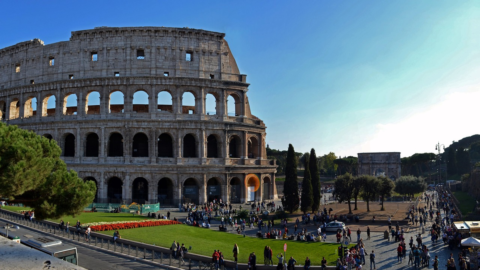
The main factors driving Italy's attractiveness are: large historic cities, chosen by 46% of Europeans. Museums and archaeological sites follow, chosen by 31%. But tourism to Italy isn't limited to visits to major cultural centers. More than one in four Europeans also consider the country as a destination to experience afood and wine experience in a typical territory, indicated by 28%, or to discover small villages, reported by 27%.
Italy's charm, therefore, lies not only in its most famous monuments. Its regions' ability to offer identity, local traditions, landscapes, and less-traveled itineraries also plays a key role, elements that are increasingly central to the choices of European travelers.
The challenge of overtourism and off-the-beaten-track routes
The success of Italian tourism also brings with it an increasingly urgent issue. If art and history remain the primary drivers of the desire to visit the country, it becomes strategic to direct flows towards less congested destinations, promoting sites off the beaten track and reducing the risk of overtourism in the most exposed destinations. And here lies the need for authentic experiences, with 24% of European travelers listing Italian traditions and folklore among their top three favorite things, while 22% are drawn to slow walks in nature. This demand could become a lever for rebalancing tourist flows, distributing economic value across regions, and improving the quality of the travel experience.
The following also fits into this framework: debate on Venice, where the new mayor Simone Venturini has proposed raising the entrance fee during peak tourist season. Today, the ticket costs between 5 and 10 euros, but the the proposal is to raise it "from 30 to 50 euros for certain days", with the aim of making the ticket a more effective deterrent against day tourism.
Less shopping, more experiences
Unlike other European destinations, Italy isn't chosen primarily for shopping, shopping, or nightlife. Only 12% of Europeans associate a holiday in our country with shopping or entertainment, 9% with nightlife, and just 6% with sports activities. This data confirms a broader trend: travel is increasingly built around the experiences to be lived, not just the destination. Industry reports like Barceló Hotel Group's Travel Trends 2026 highlight that 40% of travelers plan their trips based on their desired experiences. This is the logic of whycation, that is, vacations tailored to personal passions, interests, and needs.
For Italy, this evolution represents a competitive advantage. Culture, villages, food and wine, nature, wellness, and major events can strengthen the country's positioning, provided that strong European demand is transformed into a more sustainable model, less focused on the usual destinations and capable of better distributing attendance, revenue, and value along the entire tourism chain.