Il Meloni government's housing plan becomes readers after the vote of confidence in the Senate, which approved the measure with 106 votes in favour, 62 against and two abstentions. The decree, already passed in the Chamber without amendments, is now final and confirms its original structure: redevelopment of 60 public housing units, new financing tools, and incentives for private individuals to build affordable housing.
The President of the Council Giorgia Meloni He commented on the approval on social media using the formula "from words to action," calling for the Housing Plan to be operational. Now, however, the decisive phase will be the concrete implementation of the measures, which will require time, resources, and an administrative structure that is still being built.
Housing Plan and 60 Social Housing Units: Here's What It Includes
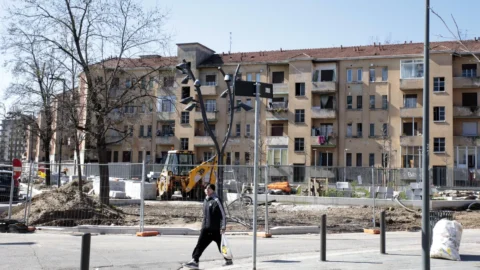
One of the central points of the 2026 Housing Plan concerns the recovery of approximately 60 public housing units Currently, they are not eligible for assignment because they are degraded or non-compliant. The goal is to restore them to the public housing stock through a redevelopment plan coordinated by a special commissioner, the architect. Happy Squitieri.
The government has indicated an ambitious timeframe, with the hypothesis of completing the interventions in one year, as indicated by Matteo SalviniA deadline that appears complex to meet, considering the need for technical assessments, planning, and resources. The initial phase will be dedicated to inspecting the properties and defining the operational program, a key step in estimating the plan's real timelines and feasibility.
According to the tenants' unions (Sunia, Sicet, Uniat, and Unione Inquilini), the actual need could be higher, with over 100 potentially unusable homes and approximately 350 families on the waiting list for public housing. The same organizations also judge the resources provided are insufficient, equal to approximately 970 million euros up to 2030.
Housing Fund and Housing Policies: Resources and Management by Invimit
The second pillar of the Housing Plan concerns the Housing Cohesion Fund, entrusted to the management of Invitation (a company of the Ministry of Economy). The fund will coordinate public and private resources for social housing and urban regeneration.
The overall endowment is estimated at about 3,6 billion of euros to be used in ten years, with the involvement of local authorities in the presentation of projects and the valorization of unused real estate assets.
The parliamentary debate also raised the possibility of integrating resources linked to the revision of the Pnrr, initially estimated at approximately €1,2 billion for affordable housing projects and earmarked for the National Housing Fund managed by CDP. However, the review process has not yet been approved at the European level, and the resources remain uncertain at the moment.
Building simplifications and private investments in the 2026 Housing Plan
The third pillar of the Housing Plan concerns the private investments in the real estate sectorThrough simplified procedures for integrated and subsidized building projects.
The initial version provided for easier access for transactions involving foreign capital exceeding one billion euros. This restriction has been removed, but the one billion threshold for accessing the fast-track administrative process remains. The model therefore remains geared toward large real estate transactions, while small and medium-sized projects are less affected by the simplifications.
Industry players have highlighted the need to complete the regulatory framework, with particular attention to the economic sustainability of projects and tax leverage. Among the critical issues reported include the 70% subsidized housing requirement, the average discount of 33% on sale and rental prices and the theme of the VAT deductibility for residential rental activities.
Residential and non-residential construction: hotels and offices in the new Housing Plan
The Housing Plan allows for the implementation of interventions with mixed intended uses, residential and non-residential. In these cases, the minimum 70% share of subsidized housing required to access the incentives is calculated exclusively on the residential portion.
Non-residential areas, such as hotels, offices, or commercial spaces, are excluded from the calculation, with the aim of making urban regeneration projects more flexible.
Rent-controlled housing: more beneficiaries under the Housing Plan
The Housing Plan also expands the range of rent-controlled housing, including in addition to the categories already foreseen also public employees in essential services, such as teachers, healthcare workers and law enforcement.
The goal is to address the growing problem of high rents in cities by supporting middle-income groups excluded from both the free market and social housing.
Housing Plan and Municipalities: More resources for public housing
The Housing Plan strengthens the role of Municipality and Local societies, which will be able to directly intervene in the redevelopment of unusable public housing properties. The program's total resources are estimated at approximately €7 billion, including €4,3 billion in urban regeneration funds for the period 2027–2034.
Overall, the government estimates the possibility of activating up to 10 billion euros by 2034, including existing funds and European and national resources.
First-time homebuyers' fund and subsidized mortgages: new measures for vulnerable families.
The conversion law finally intervenes on the First Home Guarantee Fund, introducing a priority lane for families with severely disabled members. The measure aims to facilitate access to state-guaranteed mortgages for families experiencing greater economic and social vulnerability, strengthening housing support policies.