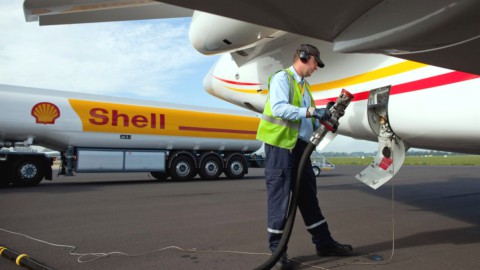
Shell is reportedly evaluating an operation that could rewrite the history of the oil industry global: theacquisition of British rival BP (British Petroleum). As reported by Bloomberg, the Anglo-Dutch major would have exploratory talks started with its consultants to analyze the feasibility of the operation, taking advantage of the drop in crude oil prices and the collapse of BP shares.
A window of opportunity
Le BP shares have lost around 27% of their value in the last twelve months, with a further 10% decline in the first months of 2025. The market today values the British company at around 56 billion pounds, less than half of Shell's capitalization, which stands at around 149 billion. This imbalance, combined with investor disappointment with BP's financial results and strategic uncertainties, is fueling interest from potential buyers.
Not just Shell: according to industry sources, other energy majors are also considering making an offer.
BP, a giant in trouble: the green plan under accusation
La BP's current situation It is largely the result of strategic transition launched by former CEO Bernard Looney, who had firmly placed his bets on decarbonisation and renewables. A choice that but it did not convince the markets, especially in light of the recent drop in Brent oil prices, which have fallen below $70 a barrel.
The new CEO Murray Auchincloss attempted a U-turn in February, with a plan that includes returning to oil, selling assets and cutting share buybacks. But the market remained skeptical, and the activist fund Elliott – today owner of a 5% stake – has increased the pressure by demanding radical changes and greater ambition, warning that otherwise Bpri seriously risks become a “prey”.
Shell in health, rigor and strategic positioning
On the contrary, Shell followed a more orthodox trajectory. Has reduced costs, eliminated the less profitable divisions in the renewable sector and refocused the business on fossil fuels. The CEO Wael Sawan, while declaring himself cautious on extraordinary transactions, said that Shell will continue to look for growth opportunities "where it can create value".
"We want be valuable hunters“, Sawan said, while stressing that “before making any big acquisitions, we need to get our own house in order.”
The acquisition of one of its historic rivals would represent a significant strategic leap for Shell: it would in fact give new critical mass in oil and gas production, bringing it back to the forefront of the North American market, after the sale of shale assets at ConocoPhillips in 2021. It would also surpass the $50 billion acquisition of BG Group in 2016.
Market unknowns and next moves
The possible operation remains, to date, in a exploratory phase. Sources close to the dossier say that Shell may be waiting for a further decline in BP shares, or thepossible entry of another potential bidder to break the ice.
The macro context does not help: the recent trade war between the United States and China, combined with the unexpected increase in production decided by OPEC+, has pushed oil prices down, worsening tensions on European energy stocks.
Shell has not confirmed interest in BP, but reiterated its focus on “performance, discipline and simplification”. No comment from BP, which is now at the centre of growing turmoil, between pressure from shareholders and the shadow of a possible takeover.
A historic merger
If it materializes, the Shell-BP deal would represent one of the largest acquisitions in energy history, uniting two giants that are symbols of the British oil tradition. It is a hypothesis that has been circulating for decades, discussed at various stages, but which today – thanks to the unfavourable economic situation and the strong downsizing of BP on the stock exchange – seems more plausible than ever.