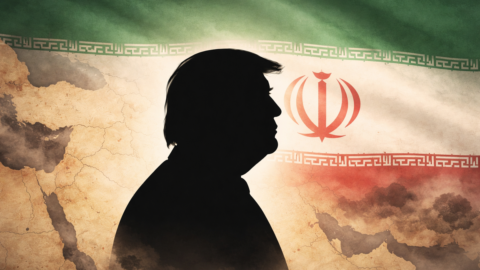
In the background of President Donald Trump's moves there are often the Rare landsWe saw it in the peace negotiations in Ukraine, with the intention of "sharing" the precious minerals with Russia, and we see it in these difficult weeks tariff negotiations. Energy is at the centre of everything and it is no coincidence that inagreement reached With the European Union, the US president managed to extract a promise from Brussels to purchase more liquefied natural gas from the US. The same goes for the Brazil, which among the countries hit by the latest round of tariffs, announced about a month ago, is literally the only one with which Washington actually has a positive trade balance. In this case, the hostility is political, to undermine the socialist Lula government and support former President Jair Bolsonaro, against whom, according to the tycoon, a "witch hunt" is underway.
Brazil has a quarter of the world's rare earth reserves, but does not mine
Beyond this, however, Brazil is also the second country in the world with the largest reserves of rare earths, behind only China, with 21 million tons, half that of Beijing (44 million) but four times that of Australia and more than ten times that of the United States, which holds 2% of the planet's critical minerals on its territory, compared to Brazil's 24%. The South American country is also attractive for another reason: its energy companies, such as the giants Petrobras and Vale, are focusing more on fossil fuels or the extraction of other minerals, and therefore the Brazilian potential (like that of Latin America in general, just think of Bolivia's lithium, which is almost all still there) is unexplored and therefore more inviting. Currently in Brazil only one company specializes in the extraction and export of rare earths, and coincidentally, it is American: its name is Serra Verde, and in the first half of this year it exported 700% more of these strategic raw materials than in the whole of 2024.
Rare earths in the tariff negotiations
Not only that: the economic manager of theUS embassy in Brasilia, who as luck would have it is called Gabriel Escobar, has already made it clear to the Brazilian vice-president Geraldo Alckmin, charged by Lula to follow the negotiations on the duties, that an agreement could in fact be found, in exchange for a commitment to rare earthsIn short, the trick is clear: threaten to apply extremely high tariffs and, faced with the other party's concern about seeing its exports crippled (in the case of Brazil, this would be dramatic for beef and coffee), offer a counter-favor to desist.
Serra Verde operates in Minaçu, in the State of Goiàs, and intends to become the first factory outside China to produce four critical magnetic elements such as neodymium, praseodymium, terbium and dysprosium. And Brazil is also rich in niobium, a key mineral for revolutionizing the electric car market, as it can significantly reduce battery charging times compared to lithium. In total, let's remember, rare earths are 17 chemical elements abundant in the Earth's crust, but they are difficult to extract and, at the same time, crucial to the economy of today and tomorrow: electric cars, solar panels, wind turbines, and other functions related to space and—not to be underestimated in times of war—defense.
Why does Serra Verde sell almost exclusively to China?
The curious aspect of Serra Verde's activity, which has undisturbed access to reserves in a foreign country (and after the tariff negotiations, it may no longer be the only one) is that almost all exports go to Beijing, that is, they are sold to Chinese rivals. Why? Because in reality, rare earths aren't even mined enough. they need to be separated and refined and in this, China has acquired an enormous competitive advantage in recent years, so much so that it owns not only half of the reserves but above all 90% of the refineries of critical minerals in the world. This is why, after an intense extraction phase, according to the Brazilian press, Serra Verde has suspended the activity To invest in technology and no longer depend on Beijing. And what is Brazil's position in all this? Lula says that "no one can get their hands on our resources," but in reality, that's what risks happening.