As is known, the 2026 World Cup will not see the participation of the Italian national team, which for the third consecutive time has failed to qualify for the top football competition for nations. However the Italian Serie A will be very well represented in the tournament being played this year between the USA, Mexico and Canada, with over 60 footballers distributed among several of the 48 national teams Participants. This figure nonetheless confirms the international standing of the Italian league and its ability to attract talent from every continent, although perhaps this is precisely the reason for our flop: too many Italian clubs rely on foreign players.
2026 World Cup: Italy represented by 3 coaches
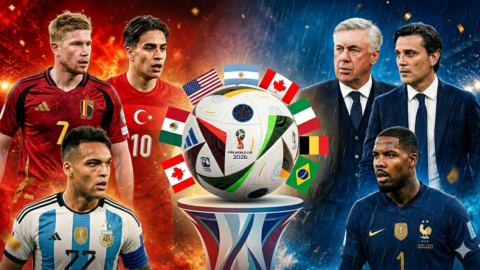
The national team with the most players in our Serie A is Croatia with 7, while the most represented Italian club is Milan with 10. Curiously, not a single Spanish player has been called up among those playing in Italy: Spain is the favorite, along with France, which has four "Italians." The most represented club globally is Manchester City, with 19 players called up. Another curious fact: only eight out of 48 national teams have a squad composed entirely of players born in their own country. Curaçao's case is particularly striking: 25 out of 26 players were not born there. Finally, Italy is also well represented among the coaches, which are three: in addition to Ancelotti, Vincenzo Montella will lead Turkey and Fabio Cannavaro will lead Uzbekistan.
The full list of Serie A players called up, from Lautaro Martinez to Kevin De Bruyne.
Here is the complete list, updated as of June 8, 2026:
Algeria
Fares Ghedjemis (Frosinone) Rafik Belghali (Verona, relegated)
Argentina
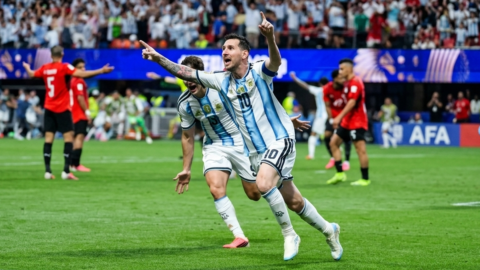
Lautaro Martínez (Inter), Nico Paz (Como)
Australia
Alessandro Circati (Parma), Cristian Volpato (Sassuolo)
Austria
Michael Svoboda (Venice)
Belgium
Charles De Ketelaere (Atalanta), Koni De Winter (Milan), Alexis Saelemaekers (Milan), Kevin De Bruyne (Napoli), Romelu Lukaku (Napoli)
Bosnia
Sead Kolasinac (Atalanta), Tarik Muharemovic (Sassuolo)
Brazil
Gleison Bremer (Juventus), Ederson (Atalanta)
Canada
Jonathan David (Juventus), Ismael Koné (Sassuolo)
Colombia
Jhon Lucumí (Bologna), Yerry Mina (Cagliari)
Ivory Coast
Odilon Kossounou (Atalanta), Ange-Yoan Bonny (Inter), Evan Ndicka (Roma)
Croatia
Mario Pašalić (Atalanta), Nikola Moro (Bologna), Martin Baturina (Como), Marin Pongračić (Fiorentina), Petar Sučić (Inter), Luka Modrić (Milan), Nikola Vlašić (Turin)
Ecuador
John Yeboah (Venice)
France
Marcus Thuram (Inter), Adrien Rabiot (Milan), Mike Maignan (Milan), Manu Koné (Roma)
Ghana
Kamaldeen Sulemana (Atalanta)
Japan
Zion Suzuki (Parma)
Morocco
Neil El Aynaoui (Rome)
Mexico
Johan Vásquez (Genoa), Santiago Giménez (Milan)
Norway
Torbjørn Heggem (Bologna) Leo Østigård (Genoa) Kristian Thorstvedt (Sassuolo) Marcus Pedersen (Turin)
Netherlands
Marten de Roon (Atalanta) Denzel Dumfries (Inter) Teun Koopmeiners (Juventus) Donyell Malen (Roma)
Portugal
Francisco Conceição (Juventus) Rafael Leão (Milan)
Scotland
Lewis Ferguson (Bologna) Scott McTominay (Napoli) Ché Adams (Turin)
Senegal
Assane Diao (Como)
United States
Weston McKennie (Juventus) Christian Pulisic (Milan)
Sweden
Isak Hien (Atalanta) Emil Holm (Juventus) Jesper Karlström (Udinese)
Switzerland
Remo Freuler (Bologna) Manuel Akanji (Inter) Ardon Jashari (Milan)
Turkey
Hakan Çalhanoğlu (Inter) Kenan Yıldız (Juventus) Zeki Çelik (Roma)
Uruguay
Mathías Olivera (Naples)