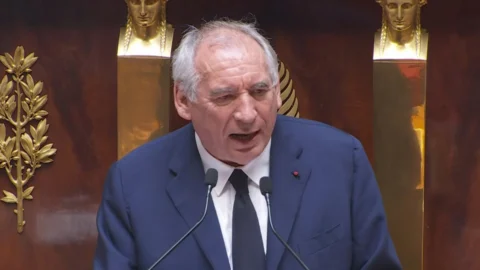
“The biggest risk was not taking any.” So the French Prime Minister François Bayrou opened his speech in Parliament, a few hours before the vote of confidence in which the "No" inevitably prevailed to his government. The fate of the executive was in fact hanging by a thread, after last week Bayrou, the centrist prime minister chosen by Emmanuel Macron to hold together a fragile majority, had a heavy alarm was raised on French debt, calling on parliamentarians to take responsibility through a vote that would decide whether to continue with the austerity measures proposed by this government or to change them. The outgoing prime minister had in fact proposed a very harsh package, with much-discussed proposals such as the abolition of two public holidays and the doubling of healthcare charges, but also much more to quickly restore public finances and meet the budget deficit targets.cit.
France, in fact, has a very high debt ("Debt is the game of life," Bayrou went so far as to say), which has exceeded 3.400 trillion euros, but above all, the figure in relation to GDP is worrying, which has reached the record percentage of 114%, and the deficit/GDP ratio itself, forecast at 5,4% this year and which Bayrou would like to bring back to 4,6%. The figure is even worse than the Italian one, historically higher but which in 2024 managed to drop to 3,4%. And in fact the markets have noticed this and for some time now it has been Paris under special observation in Europe: the stock markets today they didn't break down Because they had already metabolized the crisis, but in recent weeks the yield on ten-year OATs has risen, approaching that of our BTP, and a very likely rating cut by international agencies is looming at the end of the week. France still enjoys an A rating, better than Italy, which is at the lowest rung of investment grade, but this difference objectively no longer has any reason to exist.
Bayrou's words at the National Assembly and the verdict of the Chamber
Bayrou has therefore cashed in on a predictable defeat in Parliament, which however has more the flavour of an acknowledgement of a situation which he himself defined as unsustainable, and which therefore had very little chance of avoiding the vote of no confidence. In what Le Monde defined as a “poker game” played by BayrouIn an attempt to expose the bluffs of the majority and opposition, 194 out of 364 MPs voted against the government. Before the vote of confidence, which took place at the end of the afternoon, Bayrou reiterated the gravity of the situation and the urgency of the action in his speech to the National Assembly: "The country is now 'addicted' to debt," he said. "France's ordinary expenses, the expenses for our daily lives, for public services, for pensions, for the reimbursement of our social security forms, we have become accustomed to financing them on credit."
The Prime Minister used the metaphor of the sinking boat: “To save her and save ourselves and our children, we must act without wasting any more time.” The Prime Minister then defended his “plan to move towards debt reduction, so that France can escape theinexorable wave of debt which will submerge it within four years". "The generational pact has already been broken – Bayrou said in the Chamber -. Young people will have to bear, for twenty or thirty years or even more, the weight of the thousands of billions of debts that their predecessors have contracted and not to equip the country for the future as would have been necessary, but only to cover the current expenses of daily life that in a normal country each generation would have to support on its own", said Bayrou with harsh words but of great political responsibility.
The ball is now in Macron's court, but tensions are rising in the country: unions are promising barricades for Wednesday.
Words that however do not take into account a country on the ropes: the shock therapy proposed by the Prime Minister is on the one hand absolutely reasonable and indeed necessary, but theFrance has been a social powder keg for several years now, with approval ratings for President Macron dropping to unthinkable levels (77% of French people reject him), and tensions are poised to explode at any moment, especially at a time when sacrifices are being openly asked of the population. Proof of this is the initiative of some trade unions to block the country on Wednesday, September 10, to send a clear signal to the political class: serious disruption is expected and even the possibility that France will be ravaged by protesters, as happened in the recent past with the yellow vests in 2018 and the wildcat strikes in 2022.
Riding this discontent, Jean Luc Melenchon's France Insoumise, winner of last year's legislative elections and initially an ally of Macron, only to later become his fiercest opponent, has announced a motion to impeach the President of the Republic for next September 23rd. In fact, French law allows Macron—whom the opposition considers the main culprit in this situation, which Bayrou merely blew up—to be removed from office, although this would still involve a long and tortuous process. Current events, however, call on the President of the Republic to make a decision of great responsibility, while still fully in office: after receiving a vote of no confidence, Bayrou said: will leave the final decision on his mandate in Macron's hands, who tomorrow – Tuesday 9 September – will have to decide what to do.