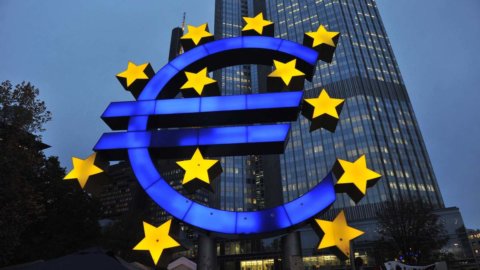
La European Central Bank, led by Christine Lagarde, has released its annual report dedicated to the year 2023, offering a detailed overview of the results achieved and the challenges faced. Over the course of the year, the ECB continued to tighten monetary policy and therefore contributed to further reducing inflation by curbing demand. Overall, from January to September, it raised the rates of interest for a total of 200 basis points. This restrictive policy has had significant impacts on financial markets, including iryields of Italian government bonds.
Fight against inflation and rate increases
The report highlights the importance of the strategy adopted by the ECB in 2023 to counter theinflation: The continuous rate hikes, which began in 2022, were a direct response to the need to curb price escalation in the euro area. The report highlights two crucial developments that helped reduce inflation over the year. First, there was a significant reduction in energy prices following the surge caused by the Russian invasion of Ukraine, with this factor accounting for half of the overall decline in inflation. Secondly, the ECB continued to tighten monetary policy, aimed at re-establishing economic and financial stability, thus contributing to further reducing inflation slowing down la question.
However, despite these restrictive measures, “underlying inflation remained high, with strong domestic pressures on prices,” as reported in the annual report published today. The European Central Bank has committed to maintaining rates at these levels for as long as necessary, while continuing to adopt an approach based on data analysis and the criteria already mentioned to determine the appropriate level and duration of the restrictive stance.
But now the ECB would be ready to change register, at least according to what President Lagarde said to CNBC on the sidelines of the spring meetings of the International Monetary Fund (IMF), always "if there are no serious shocks".
Quantitative Tightening and budget reduction
The ECB has started the process of Quantitative Tightening (QT) in 2023 by reducing its balance sheet, which had previously been expanded through the asset purchase program. This strategy resulted in a significant reduction of the Bank's balance sheet, with a decrease of over 1.000 billion during 2023. Furthermore, reinvestments of maturing securities were interrupted and reinvestments in the purchase program for the pandemic emergency.
The ECB's tightening initiative known as Quantitative Tightening (QT) has aroused concern in the Meloni government, as it has entailed not only the reduction of the Bank's balance sheet, but also the cutting of purchases of BTPs and other government bonds of the euro area carried out previously. This move suddenly deprived the new government bonds of a major buyer who had previously absorbed them in large quantities, propping up Italy's public debt. In particular, BTP yields rose by almost 200 basis points to a peak of around 5%, before falling to 3,5% after the latest rate increase by the ECB.
Financial risk management
The Eurosystem has continuously monitored and managed the financial risks linked to its monetary policy, with particular attention to the impacts of interest rate increases and downside risks to growth. Changes to the Eurosystem's risk management in 2023 included a greater diversification of credit rating sources and a more careful orientation towards corporate bond purchases in line with climate objectives.
Despite the challenges, the European financial environment remains resilient during 2023. Le banks they maintained good resilience, even if the non-bank financial sector remained vulnerable to liquidity and credit risks. The authorities have activated measures to strengthen the financial sector, maintaining adequate and stringent reserves and strengthening macroprudential requirements.
Innovations and future challenges
The ECB report also highlights the innovations and future challenges faced by the institution during 2023. Among these, the launch of the new T2 wholesale payment system, the digital euro project and the planning of a new series of euro banknotes. Furthermore, the importance of the expansion of the euro area is underlined, with the accession of Croatia in 2023, reflecting the attractiveness and stability of the single European currency.