An night on a cruise is taxed almost half of a night in a hotel, despite theenvironmental impact large ships continue to weigh on port cities and local infrastructure. This is what emerges from the latest Transport & Environment analysis, Europe's leading independent group for the decarbonisation of transport, estimated that in 2025, CO2 emissions and air pollution from the cruise sector will cost Italy, Spain and France between €790 million and €1,3 billion.
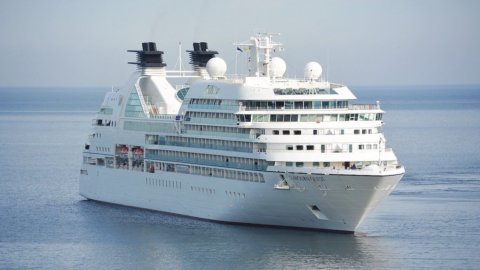
The key point, according to T&E, is the tax treatment reserved for cruisesShips are still legally classified as maritime transport, even though they actually perform a function increasingly similar to that of a tourist facility. Not simply means of reaching a destination, therefore, but true floating destinations, with services, attractions, and entertainment on board.
Cruises taxed less than hotels
The analysis compared the tax treatment of a €100 overnight stay on a cruise ship with that of a hotel night in France, Italy, and Spain, three Mediterranean countries that represent the world's second largest cruise hotspot after the Caribbean. The result? On average, those who sleep in hotels pay 23% of the price in taxes, while passengers of the cruises pay about 12%, almost 40% less. The reason lies in the legal nature attributed to the sectorCruises benefit from the incentives available for maritime transport, including tax exemptions such as those on fuel excise duties and VAT. For T&E, however, this approach no longer reflects the reality of the sector, which has grown over the years to become a separate form of mass tourism.
"Governments treat these floating hotels as if they were essential maritime transport, even though they are not a means of transport to a destination, but often the destination itself, full of attractions and entertainment on board. Yet, we grant them the same tax benefits as freight transport, which instead plays a much more strategic role in global trade," he said. Charles Tritto, Sustainable Fuels Manager of T&E Italia.
The environmental impact on port cities
The fiscal issue is intertwined with the environmental oneCruise ships, also due to their ever-increasing size, are indicated by the analysis as the boats with the highest carbon footprint among all types of ships. When they dock near port cities, they often remain with their engines running, generating greenhouse gas emissions and air pollutants such as sulfur oxides, nitrogen oxides, and particulate matter. The problem is not only for the climate, but also for air quality in urban areas near ports. According to T&E, these costs are currently not offset by adequate fiscal instruments or specific public policies capable of truly mitigating the impact of cruises.
In Italy, in 2025, the social and environmental costs of emissions The environmental costs generated by cruise ships are estimated at approximately €500 million. Of this, €389 million are related to CO2 emissions and €114 million to local air pollutants. The coastal regions of France and Spain experience external costs of approximately €190 million and €610 million, respectively. Overall, the climate and environmental costs of cruises in the three countries range between €790 million and €1,3 billion. On average, according to the analysis, the climate cost of these tourism activities is between two and three times higher than the current carbon emissions costs of cruise ships under the ETS. Furthermore, at the European level, there is no specific tax on the costs of air pollution caused by the sector.
T&E's proposal: a tax on tickets
To bridge the gap between environmental impact and tax contribution, T&E proposes introducing national taxes on cruise ticketsAccording to the organization, a tax of 15 euros per passenger for each stopover would allow for the collection of 335 million euros per year in Italy, France and Spain. The revenue, according to T&E, should be intended for the protection of coastal ecosystems and financing green infrastructure. Among these is the electrification of port docks, which would allow ships to turn off their engines while in port, thus reducing emissions in cities.
"Adequately taxing cruise ships would help cities combat pollution and address problems related to tourist overcrowding," Tritto added. Currently, in the European Union, only Greece has introduced a national tax of this type, with amounts varying between 5 and 20 euros depending on the season. Other cities, including Amsterdam, Barcelona, and Dubrovnik, are experimenting with similar measures, while in some cases a more stringent approach has been adopted. In Venice, for example, large ships have been banned from entering.
Not just taxes: the crux of European rules
For T&E, however, a ticket tax would only be the first step. The organization also believes it is necessary align the VAT applied to cruises with that of land-based tourism, thus reducing the imbalance with hotels. At the same time, it calls for more ambitious European standards on the adoption of sustainable fuels, as part of the FuelEU Maritime Regulation, and more stringent rules on the energy efficiency of ships.
Another front concerns the flow managementAccording to the analysis, it would be appropriate to limit cruise traffic by setting a maximum limit on the number of daily or annual stops, especially in areas most exposed to tourist overcrowding.