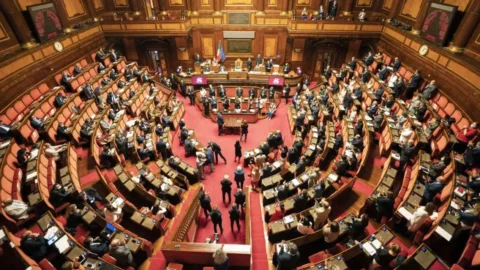
Il Senate gave the green light definitive to the reform of the Court of AuditorsThe bill, first signed by Tommaso Foti (FdI), has obtained 93 votes in favor, 51 against and 5 abstentions, confirming without modifications The text approved by the Chamber. All opposition amendments and the preliminary question of constitutionality were rejected. Once published in the Official Journal, the reform will officially enter into force.
The government presents the measure as a tool to unblock public administration action, while opposition figures and accounting magistrates denounce a weakening of oversight of public funds. Here's what's changing, with its stated advantages and critical issues.
Treasury liability and structural shield: what's changing?
The heart of the reform concerns the liability for damage to the treasuryThe tax shield, introduced during the pandemic in 2020 and extended until 2025, becomes permanent. In cases of damages without intent or unlawful enrichment, the Court of Auditors may order the responsible party to pay compensation of up to 30% of the assessed damages, within two years of gross salary. Intentional or grossly negligent conduct remains fully punishable.
La gross negligence It is only applicable in the presence of a manifest violation of the rules, misrepresentation of the facts or indisputably incorrect statements; acts committed with gross negligence are no longer included. more serious casesThe accounting judge may suspend a person from managing public resources for six months to three years, and anyone assuming roles involving the management of public funds must take out appropriate insurance. For mayors and councilors, liability is limited by the presumption of good faith, unless proven otherwise.
The new rules also apply to proceedings pending at the date of entry into force of the law, which have not yet been concluded with a final judgment. pecuniary sanctions for delays exceeding 10% compared to the timeframes established for procedures related to the PNRR-PNC. The Government maintains that this system will allow for more effective recovery of damages than the current one, which is stuck at around 10%.
Preventive checks and silent consent: "on-call" checks
The reform also modifies the preventive checks on public administration acts. Administrators may choose whether to request an opinion from the audit section, submit the act for prior review, or proceed directly with its adoption. The Court of Auditors will have 30 days to issue a ruling, extendable to 90 days for acts covered by the National Recovery and Resilience Plan (NRRP) or above the EU threshold. If no response is received within this period, tacit consent is granted and the act is deemed legitimate, exempting the administrator from liability.
Furthermore, administrations will be able to request opinions on legal issues related to the PNRR involving amounts exceeding one million euros. Once the opinion is received, gross negligence can no longer be contested. This measure, designed to reduce the “fear of signing”, According to the accounting magistrates, however, it risks increasing the Court's workload.
Reorganization of the Court of Auditors and delegated decrees
The second part of the reform will be implemented through legislative decrees Within 12 months, based on Parliament's delegation. The central and regional sections will be merged, and the functions of magistrates will be redefined, with magistrates responsible for oversight, jurisdiction, and advisory activities. The separation of prosecuting and adjudicating magistrates is envisaged, as well as strengthening the powers of the Attorney General, including over regional prosecutors. The goal is to increase the Court's efficiency and clarify the refund discipline of legal costs in administrative liability proceedings.
The majority's line: overcoming the "fear of signing"
For the Government and the majority, the reform serves to unblock administrative action. Pierantonio Zanettin (FI) explained that the Court of Auditors, in its current configuration, is perceived as a brake on development. Tommaso Foti speaks of a political shift to accelerate and make decision-making processes more reliable. The Undersecretary Alfredo MantovanoHe rejected the accusations of punitive measures against the accounting magistrates following the Strait of Messina Bridge incident, recalling that the process has been going on for about two years and that there is no cover-up for fraud or malicious crimes.
Criticisms from the opposition and accounting magistrates
Le opposition e the Association of Magistrates of the Court of Auditors They reacted harshly. PD, M5S and AVS consider the reform a weakening of controls on public spending, with excessive protection for administrators and politicians. Giuseppe Conte he called it a step towards a “Republic of Impunity”, while Francesco Boccia talks about possible preventive safe-conducts. accounting magistrates They denounce a "dark page for citizens," underlining that the compensation cap could reduce the recovery of damages to the public purse, shifting part of the cost to public finances.
The reform of the Court of Auditors marks a significant shift in the relationship between oversight and administrative decisions. For the government, it is a response to bureaucracy and delays; critics see it as a step backward in the protection of public resources. The concrete implementation of the new rules will determine whether the balance between efficiency and legality stands the test of time.