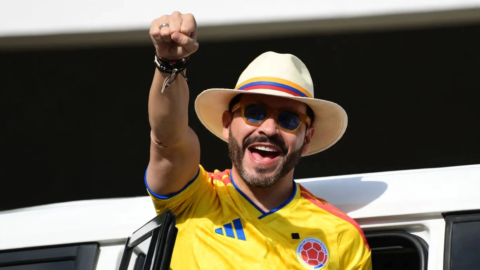
The process is going swimmingly “Trumpization” of South America, as the Economist called itSince Javier Milei was elected president of Argentina in December 2023, a continent that Washington wants to make its "backyard" again, taking it away from Chinese influence, he has been a crescendo of victories for right-wing or far-right candidates, and in any case of Latino exponents of Trumpism, in various capacities: Daniel Noboa in Ecuador, Rodrigo Paz in Bolivia, José Antonio Kast in Chile, and Keiko Fujimori in Peru. The only exception was Uruguay in 2024 with the election of Yamandú Orsi, now the sole socialist leader alongside Brazil's Lula, both isolated and surrounded.
De La Espriella takes office today: 11.000 police officers attend the ceremony
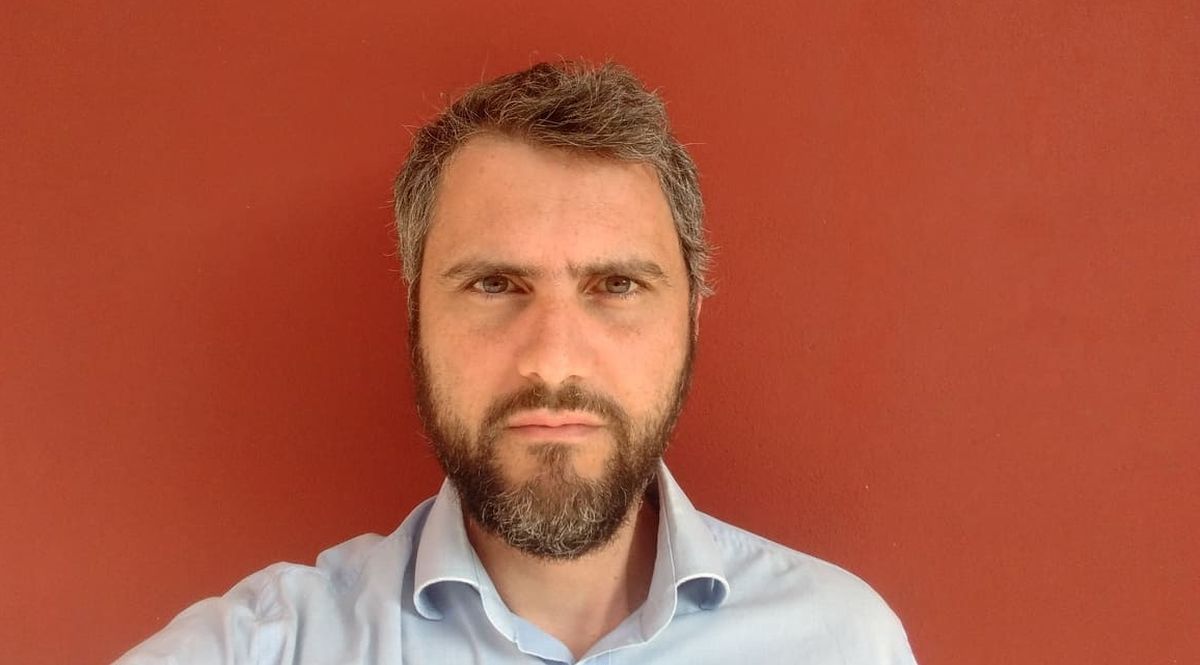
The latest “trumpito”, always according to the terminology provocatively coined by the Economist, is the Colombian Abelardo De La Espriella, an outsider who came out of nowhere, who until a few months before the June vote he was far behind the socialist Ivan Cepeda in the polls, representing outgoing President Gustavo Petro. Yet the outgoing majority in Colombia had done little to reduce poverty and improve essential public services like healthcare and education. However, Petro had antagonized Donald Trump, responding forcefully on the issue of migrant repatriations, drug trafficking, and tariffs.
So the tycoon ended up endorsing the 48-year-old lawyer De La Espriella, founder of the populist movement Defensores de la Patria, who benefited so much from this that he overturned the odds and narrowly prevailed in the June runoff election. With the blessing of the White House, De La Espriella officially takes office today, amidst a climate of high alert for possible terrorist attacks. The ceremony, which exceptionally is being held in Cali and not in the capital Bogotá, is highly secure and involves the mobilization of 11.000 law enforcement officers. All the far-right leaders of South America are expected to attend, but not surprisingly, Lula himself is not, as he is represented by Foreign Minister Mauro Vieira. King Felipe VI of Spain has also been invited.
The De La Espriella Plan: Fighting Drug Trafficking and Liberalizing Oil
During the election campaign Abelardo De La Espriella, nicknamed El Tigre and who has already expressed agreement with Giorgia Meloni, had promised first of all a hard line against drug trafficking, and in the economy a major plan for liberalization, especially in the energy sector, which had been restricted under the previous administration. Both proposals are obviously welcomed by the White House, which is eager to add Colombia to an ever-growing list of strategic allies on a continent rich in raw materials critical to the energy transition and the artificial intelligence market, and on which China has been dangerously controlling for some time.
In particular, the new Colombian president has made it clear that he will immediately unblock oil companies' investments in new extraction, which were hindered by the current regulatory plan. In fact, between 2023 and 2025, under the Petro government, Foreign investment in the mining and oil sectors fell by 34%, reaching approximately $6,9 billion. Over the same period, Colombian oil production fell 4%, averaging 746.000 barrels per day, while oil reserves fell by 54 million barrels. Natural gas imports, however, increased from 3% to 31% of consumption.
The United States is therefore in for a big oil deal, after having already obtained (by force) Venezuelan oil. And furthermore Colombia will finally be able to enter the Shield of the Americas, the Shield of the Americas, the military cooperation program launched by Washington with all politically aligned Latin American leaders to wage an unprecedented fight against drug trafficking. In other words, while Europe is talking about rearmament and war seems imminent, South America is also no slouch, and some countries, like Ecuador and Argentina, have already made military bases available to their North American ally and begun joint exercises.
Lula and Brazil increasingly isolated
It's strange to think that the country with the largest, most populous, and strongest economy in South America is isolated, but that's exactly what's happening. On the eve of the presidential elections in which Lula will seek a fourth term at 81, Brazil is precisely the country that finds itself in the grip of the continent's "Trumpification." The October vote is a too good an opportunity for Donald Trump to strengthen his soft power below the Equator and have his ally Flavio Bolsonaro elected.
Any means of pressuring Lula is legitimate: from tariffs, which for Brazil reach up to 25%, to outright intimidation, such as the recent revocation of the visa of the Brazilian ambassador to Washington, Maria Luiza Viotti. "An anomalous and extremely serious decision," diplomats from both countries claim, but the White House responds that the revocation will be reversed as soon as the new ambassador to Brasilia, Daniel Perez, receives clearance. Lula is stalling because he fears that Perez's appointment, so close to the elections, is a ploy to interfere in them. In the background is the issue of Brazilian organized crime, which the US would like to classify as an international terrorist organization, paving the way for unilateral Caracas-style interventions.